

A Tense Dance with Destiny: Trump’s High-Stakes Iran Gambit
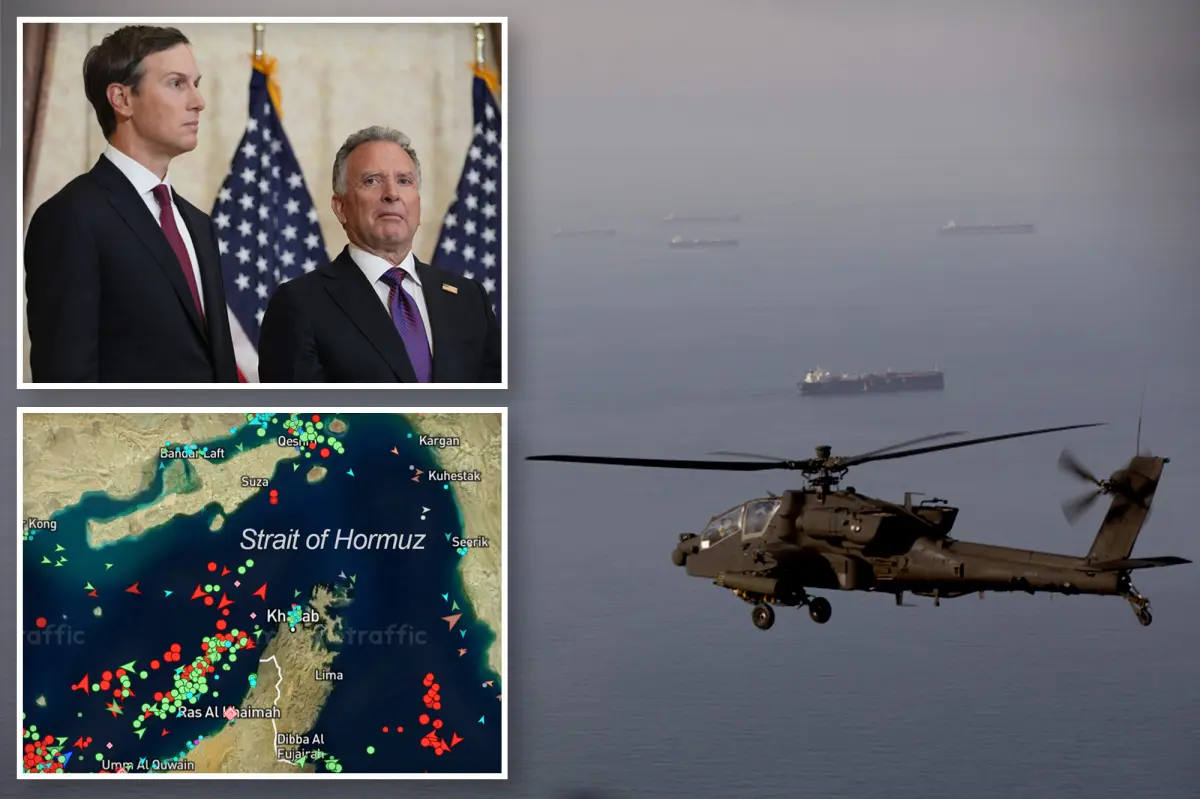
It was a crisp Sunday afternoon when I picked up the phone in my modest home office, expecting the usual barrage of calls from sources buzzing about the latest White House drama. But this one was different—it was President Trump himself, sounding unusually animated from his desk at the Oval. We talked for about 15 minutes, the conversation weaving through the labyrinthine world of Middle East diplomacy, and what emerged was a riveting snapshot of how the superpower juggles threats, deals, and personal egos. Trump confirmed that his special envoy, Steve Witkoff—a sharp, unflappable negotiator known for his real estate savvy and quick wit—was boarding a plane that very night, headed for Islamabad, Pakistan. “Steve’s going to be going there tomorrow night,” he said, his voice carrying that signature Trumpian flair, like he was announcing a big business win rather than the launch of what could be world-altering talks. The president was determined to restart negotiations to end what the world grappled with as the escalating shadow of an “Iran War”—a conflict that had simmered like a pot ready to boil over, fueled by sanctions, missile tests, and fiery rhetoric from both sides. Witkoff’s mission was to unfurl the second round of peace talks, aiming to douse the flames before they consumed more. And adding layers to the intrigue, Jared Kushner, the president’s son-in-law and a seasoned dealmaker from past Arab-Israeli accords, would join the effort remotely or perhaps in person, his quiet influence often acting as the glue in these high-wire negotiations. It was a move that lent credibility, given Kushner’s history of navigating treacherous diplomatic waters with a mix of charm and unrelenting focus. Meanwhile, Vice President JD Vance, who had spearheaded the initial round with his hawkish yet measured approach, wouldn’t be making the trip this time—a subtle shift that hinted at internal realignments within the administration, perhaps prioritizing experience over political optics in these perilous talks.
The backdrop of these talks couldn’t have been more volatile, unfolding against a canvas of real-time international drama. Just days prior, Iran had given the West a jolt by opening fire on tankers attempting to traverse the Strait of Hormuz, that perilous chokepoint where a fifth of the world’s oil sloshes through like a lifeline. Iranian officials had assured Trump the strait was reopened, promoting a facade of goodwill, but the gunfire proved otherwise—it was a visceral reminder of the regime’s fractured unity. Iran’s Parliament Speaker Mohammad Bagher Ghalibaf had publicly contradicted their own foreign minister’s claims, painting a picture of a government where words and actions clashed like discordant symphony notes. Trump, ever the showman, lambasted the incident on his Truth Social platform, calling it a “Total Violation” of their ceasefire agreement. “Iran decided to fire bullets yesterday in the Strait of Hormuz,” he posted, his words dripping with indignation and that trademark blend of mockery and menace. He highlighted how the Iranians were “helping us without knowing,” turning their aggression into a boomerang that cost them dearly while benefiting the U.S. with heavier shipping traffic to ports like Texas, Louisiana, and Alaska. “NO MORE MR. NICE GUY,” he declared, a phrase that encapsulated his pivot from negotiation to potential confrontation. This cease-fire, a fragile two-week pause in hostilities, was ticking down to expire on Wednesday unless extended—a deadline that loomed like a storm cloud over the talks, forcing Witkoff and his team to sprint against time to secure something tangible. Trump remained bullish, telling reporters that an agreement would materialize “one way or another,” though his threats of military escalation if Iran refused to bend underscored the perilous edge of brinkmanship.
As our conversation veered into the personal, Trump expressed a cautious openness about visiting Pakistan himself, a prospect that could elevate the talks from bureaucratic huddle to global spectacle. Officials from Qatar had been spotted lingering in Islamabad, a not-so-subtle signal of their eagerness to host him, possibly in a bid to mediate or simply to bask in the proximity to power. “I would say maybe at a little bit later date,” he said when I brought it up, not sounding surprised at all. It was classic Trump—teasing the idea without committing, letting the mercenaries of diplomacy dangle like bait. He reiterated that he might show up if an agreement crystallized, a move that would turn the negotiation table into a personal podium, broadcasting his dealmaking prowess to the world. But he kept his cards close, insisting we “have to see how it works out tomorrow,” a reminder that in geopolitics, as in real estate, timing is everything. The call wrapped up abruptly, with military advisors waiting in the wings, underscoring the gravity of the moment—these weren’t just talks; they were a gambit to reshape the Middle East and safeguard American interests against a regime armed with nuclear ambitions. I hung up feeling the weight of history pressing down, wondering if Trump’s blend of bluster and brilliance could forge peace or ignite catastrophe.
Diving deeper into the president’s vision, Trump had been gushing about a supposed breakthrough just before our chat, proclaiming on Friday that the Strait was “COMPLETELY OPEN AND READY FOR BUSINESS AND FULL PASSAGE”—a triumphant declaration that rang with his characteristic hyperbole. He boasted that the U.S. would seize Iran’s “nuclear dust,” a catch-all term for assets he demanded back, whether enriched uranium or dismantled centrifuges. Yet, even as he hailed progress, he maintained the blockade on Iranian ports, a punitive lock that starved the country’s economy while talks proceeded. This duality exemplified Trump’s strategy: reward carrot-and-stick diplomacy, where concessions dangled tantalizingly but punishment remained at the ready. Iran’s leadership, however, presents a mosaic of dissent—Mullahs who project unity abroad while quarreling in hushed tones within their halls. Abbas Araghchi, the foreign minister, had echoed Trump’s optimism, but Ghalibaf’s swift rebuttal and the ensuing tanker attacks exposed chinks in the armor. It painted Iran not as a monolithic foe but as a cacophony of voices, some eager for detente, others clinging to defiance. Trump’s responses have been theatrical, railing against the regime on social media with jabs at their “tough guy” antics, while puffing up American resilience. Euphemistically calling the conflict “the Iran thing” to obscure casualties, he framed economic sanctions as painless for the U.S., claiming lost oil revenue was a bonanza for home-base refineries. But beneath the bravado lay real stakes: a lasting peace to stabilize oil markets, thwart nuclear proliferation, and project strength without more boots on the ground—a delicate balance for a president who had campaigned on America First yet found himself entangled in Islamic Republic.
Optimism flickered like a flame in the wind for Trump, who told ABC’s Jonathan Karl with unyielding confidence that a deal would happen, be it amicably or through force. “It will happen. One way or another. The nice way or the hard way,” he asserted, his words carrying the weight of a man accustomed to bulldozing obstacles. In another interview with Fox’s Trey Yingst, he warned ominously that failure to sign would mean “the whole country is going to get blown up,” a phrase that sent shockwaves through international circles. This wasn’t idle talk—Trump has repeatedly threatened strikes on Iran’s bridges and energy infrastructure, infrastructure that powers their cities and fuels global reliance. His focus remained laser-sharp on dismantling Iran’s nuclear program entirely, demanding the handover of remnants to prevent clandestine restart. Rumors swirled that he mulled a daring raid to seize the nuclear material militarily, a high-risk gambit echoing covert operations of yore. Satellite surveillance watched Iran’s sites around the clock, intelligence agencies piecing together the puzzle of enrichment facilities and missile depots. And Trump hinted at superior firepower beyond what was deployed in the early throes of Operation Epic Fury, a reference to a brief but intense campaign that hammered Iranian naval assets and command structures. It was a reminder that the United States held the cards—drones, stealth aircraft, and precision munitions capable of surgical strikes without all-out war. As Witkoff touched down in Islamabad, the world held its breath, knowing that Trump’s mix of flair and fury could either rewrite history or unravel it further.
Reflecting on it all, this saga feels less like a policy playbook and more like a modern epic, with larger-than-life figures jockeying for control amidst the sands of ancient rivalries. Trump’s approach humanizes the cold calculus of diplomacy—he’s not just a commander-in-chief but a dealmaker at heart, blending intimidation with incentive, much like negotiating a land grab in Manhattan. His unorthodox style, from social media tirades to impromptu calls, keeps adversaries guessing and allies on their toes, injecting a human element into what could otherwise be dry statecraft. Yet, beneath the optimism lies vulnerability; a misstep could escalate into full-scale conflict, costing lives and livelihoods. Witkoff’s journey to Pakistan symbolizes hope—a chance to broker peace before threats materialize. As the talks unfold in the shadow of Hormuz’s waters and nuclear shadows, one can’t help but ponder the fragility of global peace, where words from a phone call can tip the scales. Whether Trump arrives in Islamabad later remains uncertain, but themen’s efforts underscore a universal truth: in the end, even superpowers rely on human connections—trust, bluff, and perhaps, a bit of luck—to avoid the abyss. It’s a story unfolding in real time, a reminder that history’s writers are often flesh-and-blood beings grappling with ego, ambition, and the quest for enduring peace.