

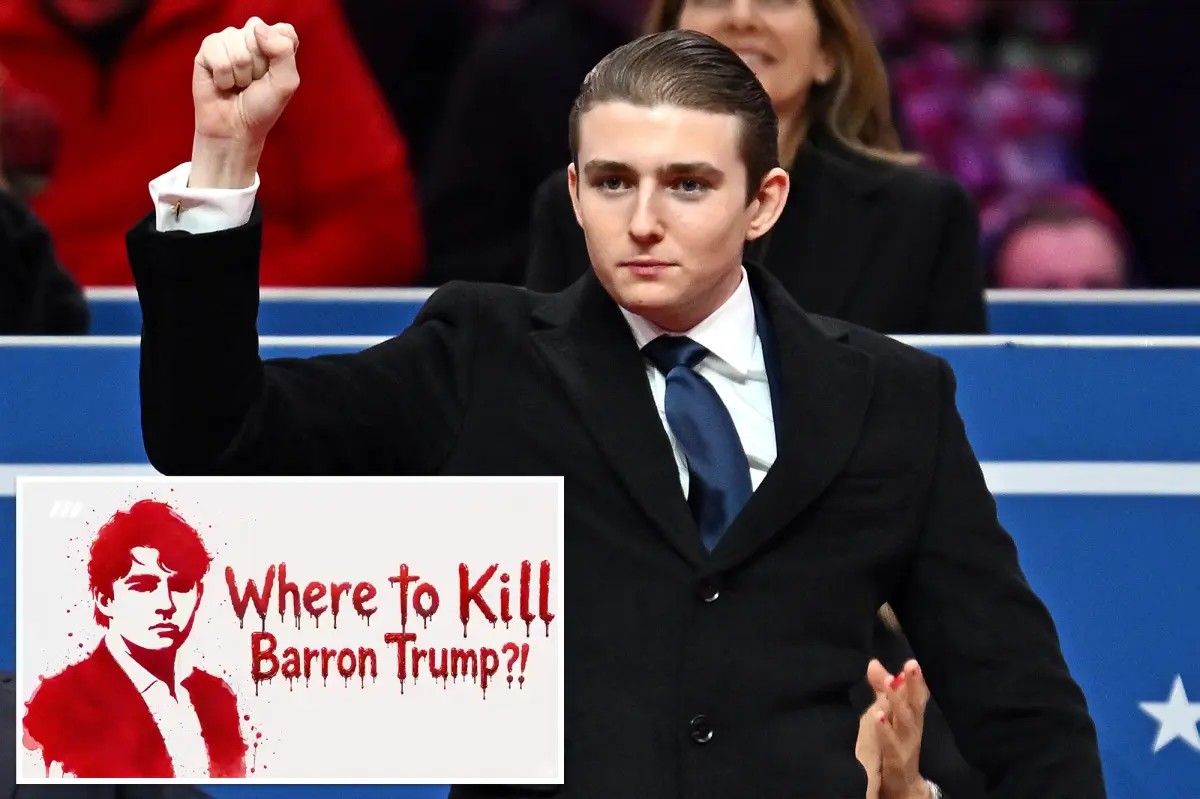
Barron Trump is turning 20, and his life remains intentionally shielded from the public eye—a deliberate choice shaped by the intense security threats that have defined his family’s recent years. According to those familiar with the family’s dynamics, the youngest Trump son is notably reclusive, preferring the quiet confines of his family’s properties over the bustling social scene typical of young adults his age. This ultra-private lifestyle is not merely a personality preference but a direct response to the heightened dangers his father, former President Donald Trump, has faced. The New York Post reports that this bubble of protection is a carefully constructed sanctuary, allowing Barron to navigate his college years and early adulthood away from the constant glare of media attention and the very real risks that come with his surname.
The necessity for such a high level of security became tragically clear during the 2024 presidential campaign, which was marred by multiple assassination attempts against his father. Barron witnessed firsthand the shooting at a rally in Butler, Pennsylvania, the foiled plot at his father’s West Palm Beach golf course, and another incident at the White House Correspondents’ Dinner. Beyond these direct threats to his father, intelligence officials also uncovered an alarming plot by Iranian operatives who not only targeted the former president but also specifically surveilled Barron and his mother, Melania. The arrest of a Pakistani man with ties to Iran who had traveled to New York with plans to assassinate both father and son underscored the severity of the danger, making the family’s decision to keep Barron close and heavily guarded an unfortunate but necessary reality.
Adding another layer to this protective strategy is the fact that Melania Trump has been identified by intelligence as a target herself. The Iranian operatives were reportedly tasked with surveilling her movements and activities, and she was slated for assassination as part of the same covert operation. This revelation explains why the First Lady, who has always been fiercely protective of her son, works so closely with the Secret Service to control Barron’s exposure and movements. Their relationship is described as incredibly close, with Barron acting as a grounding force for his mother. The security measures surrounding Barron are so comprehensive that they extend to every aspect of his life, from custom-designed living quarters in family residences to a security detail that never leaves his side, ensuring that even his everyday routines are carefully planned and executed.
The psychological impact of growing up under such constant threat is significant, and those who know Barron describe him as a young man who is acutely aware of his surroundings. Dr. Azita Sayan, a trauma therapist who has worked with adolescent clients in similar high-profile situations, suggests that Barron’s reclusive nature is a logical and self-protective response to his circumstances. Rather than viewing his withdrawal as a sign of maladjustment, experts see it as a mature and conscientious way of managing an extraordinary reality. The constant presence of security agents and the knowledge that his family is a target naturally instills a sense of caution that most people will never experience. This heightened awareness, while born from difficult circumstances, has fostered a level of astuteness and self-reliance in Barron that those around him describe as impressive for his age.
Barron’s experience is not entirely without precedent, drawing comparisons to other presidential children who navigated their formative years in the White House. Chelsea Clinton, who was 12 when her father Bill Clinton took office, has spoken about the challenges of maintaining a semblance of normalcy while living under the watchful eyes of the Secret Service. The difference, however, lies in the unprecedented nature of the Trump family’s situation, given the acknowledged threats from both domestic extremists and hostile foreign governments. For Chelsea, the bubble she lived in was designed for privacy and decorum; for Barron, it is a necessary fortress designed for survival. This stark contrast highlights how the nature of political threats has evolved, and how the protection of a president’s children has become a more complex and consequential matter than ever before.
Ultimately, Barron Trump’s low-profile lifestyle is a choice that reflects both his personal temperament and the pragmatic realities of his life. At 20 years old, he is completing his education and beginning to carve out his own path, with sources indicating he has business interests, including a herbal energy drink venture and cryptocurrency investments. He is described as smart and polite, but he prefers the background, deliberately avoiding the political arena that his older siblings have embraced. His public appearances are rare and carefully orchestrated, and he seems content to build his future away from the spotlight. While some might see his seclusion as a constraint, those who know him frame it as a form of agency—the one way he can exert control over a life that has been anything but ordinary. As he transitions into adulthood, the world may not see much of Barron Trump, but that is precisely how he and his family want it.