







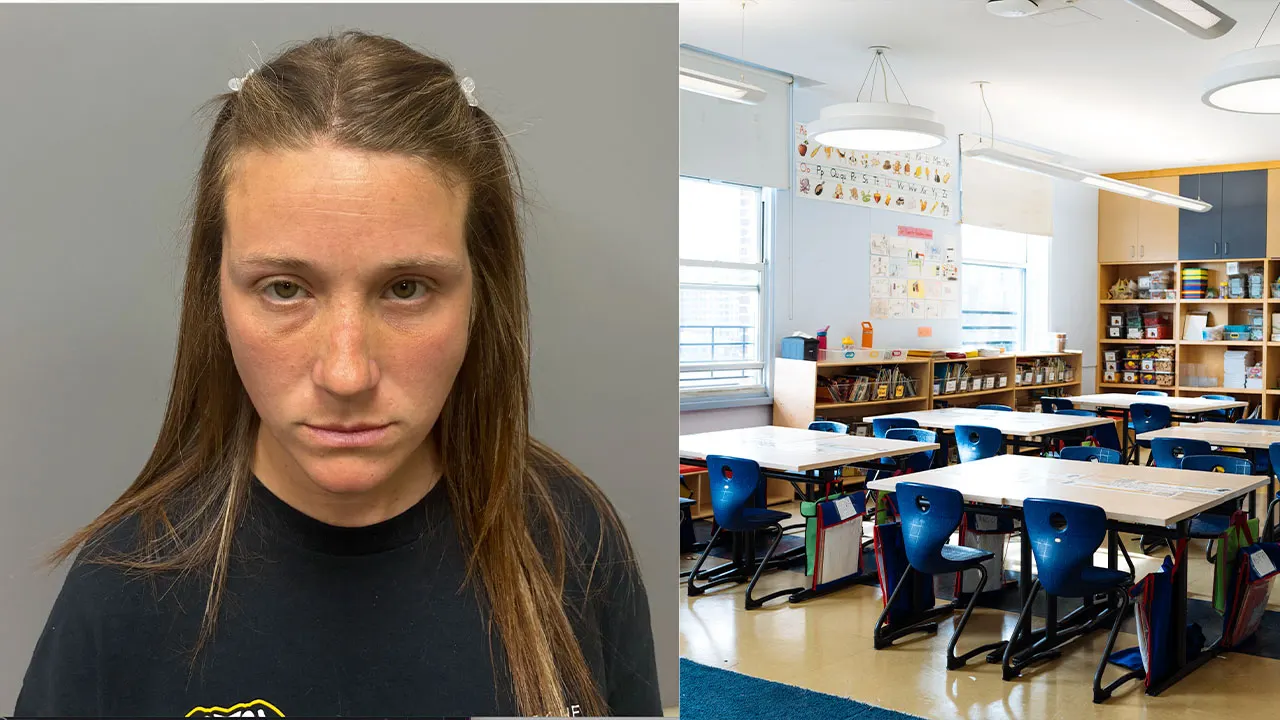
The shocking case of Marisa Noel, a once-respected fifth-grade teacher in Louisiana, hit the headlines like a thunderclap, shattering the trust that communities place in educators. Imagine waking up to the news that someone entrusted with the safety of young minds has been accused of the unthinkable—crossing boundaries in the most heartbreaking ways. At just 31 years old, Noel, who taught at Teche Elementary School in St. Martin Parish, now faces a harrowing array of charges that paint a picture of betrayal and abuse. It’s the kind of story that makes you question how such darkness can hide behind a teacher’s smile, and it reminds us all why we must protect our children fiercely. As details emerge from the St. Martin Parish Sheriff’s Office, it’s clear this isn’t just about one incident but a calculated exploitation of innocence that rocked an entire school community to its core. Parents, once confident in sending their kids to learn reading and math, are now grappling with fear and disbelief, wondering how many more secrets might still lurk in the shadows of hallways they thought were safe.
Delving deeper into Noel’s world, she seemed, on the surface, like any dedicated educator—passionate about shaping young lives, perhaps dreaming of inspiring the next generation of leaders. But beneath that facade, authorities allege a sinister reality unfolded, especially with her former students who placed their trust in her as a mentor. The arrest came on January 28, sparked by a brave complaint to Sheriff Becket Breaux about an “inappropriate relationship” between Noel and one ex-student. From there, the investigation snowballed, drawing in heavy hitters like the Louisiana Bureau of Investigation and Homeland Security Investigations. It’s heartbreaking to think of the young lives she’s allegedly touched in harmful ways; these kids, at such tender ages, should be focused on playground fun, not navigating adult horrors. Noel’s path from classroom authority to correctional center inmate highlights how authority can corrupt, turning a position of nurturing into one of profound harm. As she sits behind bars in the St. Martin Parish Correctional Center, held on a $750,000 bail, we can’t help but humanize this by reflecting on the ripple effects—friends and family reeling, perhaps unable to reconcile the person they knew with these accusations.
The charges against Noel are numerous and deeply disturbing, totaling 25, with a focus on protecting the most vulnerable. There are 10 counts of indecent behavior with juveniles, a crime that tears at the soul when imagining a teacher using her influence to engage in acts that no child should endure. Adding to the gravity, one count of first-degree rape alleges the ultimate violation, while two charges involve child sexual abuse material, pointing to a calculated pattern of exploiting young victims digitally. Even online, she allegedly pursued minors through unlawful communications and computer-aided solicitation, turning technology—a tool meant for education—into a weapon of manipulation. These allegations span multiple unnamed victims, whose ages remain undisclosed to spare further trauma, but the implication is clear: Noel allegedly leveraged her trusted role to abuse not one, but several, crossing lines that most people can’t even fathom. It’s a sobering reminder that predators often wear masks of normalcy, and in this case, the classroom became a hunting ground, leaving lasting scars on children who deserved nothing but kindness and respect.
Peeling back the layers of the investigation reveals a methodical approach by law enforcement to uncover the truth—starting with that initial tip and building a case brick by brick. Sheriff Breaux, visible on the sheriff’s office Facebook post, emphasized the collaborative efforts that led to Noel’s initial arrest on counts related to her conduct with just-formed victims. As evidence piled up, more charges followed, revealing a broader web of alleged misconduct that authorities are still piecing together. It’s not hard to empathize with the investigators, who must face the emotional toll of these cases—dealing with terrified children, distraught families, and the weight of protecting a community. Yet, the story extends beyond Louisiana, echoing similar tragedies elsewhere, like the West Virginia teacher fired recently for child sex abuse charges or the Florida educator charged for a sexual relationship with a student under her roof. These parallels humanize the issue, showing it’s a nationwide epidemic where power imbalances enable unspeakable acts, and responses like firings or arrests are just the beginning of justice. We’re all left wondering why this happens and how to prevent it, urging communities to foster open dialogues about grooming and consent.
In the midst of this heartbreak, it’s important to extend compassion to the victims, whose voices are often silenced by shame and fear. Even though the ages of Noel’s alleged victims aren’t public, we can picture impressionable kids, wide-eyed and trusting, who interacted with her daily in math lessons or recess games. The abuse, whether physical, emotional, or online, steals away their childhood innocence, potentially leaving lifelong psychological wounds. Parents across St. Martin Parish are likely embracing their children tighter, questioning every interaction their kids have with adults. Organizations like child advocacy groups offer resources for healing, reminding us that recovery is possible with support—therapy, hotlines, and community vigilance. Noel’s case underscores the urgency of education on red flags, such as overly affectionate teachers or secretive online behaviors, empowering parents and schools to act swiftly. By humanizing these stories, we honor the survivors, not as statistics, but as kids deserving of uninterrupted joy and safety.
As the investigation continues, uncertainties linger—like whether additional charges will emerge, spotlighting more victims or overlooked details. No bond has been set for the latest filings, ensuring Noel remains detained while the case builds. This ongoing nature keeps the community on edge, with school districts and law enforcement tight-lipped in comments to Fox News Digital, perhaps to preserve the integrity of the probe. Yet, it’s a chance for collective reflection: how can we better vet educators, encourage reporting without stigma, and create environments where kids feel empowered to speak up? Incorporating tools like listening to news articles via apps, as Fox News now offers, makes staying informed accessible, turning passive awareness into active advocacy. Ultimately, Marisa Noel’s alleged actions serve as a stark warning—that evil can disguise itself in the unlikeliest places—but also a beacon for change, inspiring stricter policies and supportive networks to safeguard our most precious resource: our children. If we unite with empathy and vigilance, we can transform tragedies like this into catalysts for a safer world, where no more innocent lives are robbed of their sparkle.