





Trump’s Toxic Glow: How Europe’s Leaders Turned Against the American President
In the euphoria of 2016, when Donald Trump first claimed the U.S. presidency, Europe’s nationalist right erupted in celebration. Figures across the continent hailed his victory as a beacon for their anti-immigrant, anti-establishment agendas, seeing in him a kindred spirit who dared to challenge global norms. Fast-forward to his triumphant return to the Oval Office last year, and the cheers echoed once more— a validation, they believed, of their push against what they termed “woke” liberalism and open-door policies. Yet, over the ensuing months, that initial adoration has soured into outright disdain. Trump’s bold policies—drooling tariffs that could cripple European economies, his whimsical threat to annex Greenland, a contentious war with Iran that ignited an energy crisis, and even personal jabs at Pope Leo XIV—have painted him as a disruptive force, isolating allies and igniting transatlantic tensions. What was once a symbol of empowerment for the far-right has morphed into a liability, compelling political adversaries from the left and right to unite in opposition. As a seasoned reporter covering international affairs, I’ve witnessed how Trump’s unpredictable style, once a novelty, has become a liability in Europe, prompting a remarkable shift where leaders as ideologically divergent as Spain’s Pedro Sánchez and Italy’s Giorgia Meloni now tread the same path of defiance—a story that underscores the fragility of global alliances.
Sánchez’s Strategic Surge: Turning Trump into a Political Lifeline
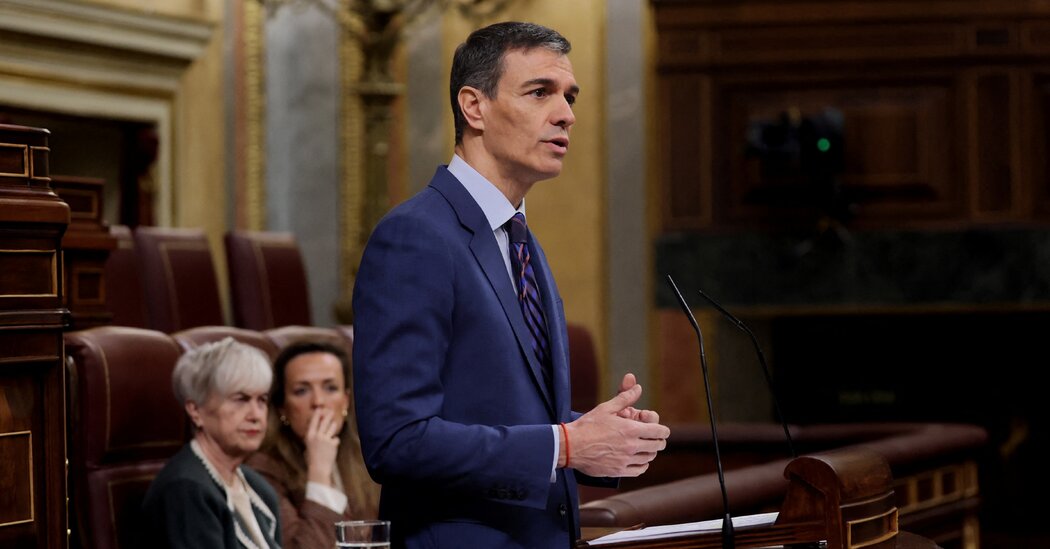
Deep in the heart of Barcelona last weekend, at a bustling conference drawing luminaries from across the globe, Spanish Prime Minister Pedro Sánchez took center stage not as a beleaguered leader but as a vocal champion against American hegemony. “No to war!” he boomed to a captivated audience that included progressive voices from Europe, Latin America, Africa, and even the United States. His rhetoric wasn’t just fiery; it strategically distanced Spain from Trump’s tariffs, military demands, Greenland ambitions, and most pointedly, the ongoing conflict with Iran. For Sánchez, once a pragmatic socialist navigating domestic woes, this opposition has been a masterstroke. Polls had shown him slipping amid corruption scandals engulfing former allies—trials looming at the Spanish Supreme Court, though Sánchez himself remains untarnished and his associates profess innocence. By positioning himself as the international left’s standard-bearer against Trump’s excesses, he’s rallied his base, boosted his approval ratings, and deflected attention from internal troubles. Spain’s economy, robust with a trade surplus in American goods and shielded by EU protections, stands ready against any retaliatory blow. In an era where Trump’s global influence wavers, Sánchez has expertly wielded the American president as a foil, transforming potential isolation into electoral gold. This isn’t mere rhetoric; it’s calculated politics in a Europe wary of overreliance on a volatile superpower.
Meloni’s Pragmatic Pivot: From Trump Ally to Vocal Critic
Across the Mediterranean in Rome, Giorgia Meloni found herself mirroring Sánchez’s defiance, albeit from the opposite ideological flank. As Italy’s prime minister and a trailblazer for Europe’s nationalist right, Meloni had long championed Trump for his hardline stances on immigration, nationalism, and critiques of liberal ideologies. She positioned herself as a bridge between Europe’s far-right and the Trump administration, gaining leverage in regional power plays. But the tide turned dramatically. Trump’s threats of tariffs hit sensitive Italian exports like pasta, sparking outrage, while his escalated war with Iran compounded a brewing energy crisis across the continent. Then came the bombshell: Trump’s public attacks on Pope Leo XIV, a revered figure in deeply Catholic Italy where Vatican opinions carry immense weight. With Italians overwhelmingly opposing the Iran conflict and rallying behind the pope’s calls for peace, Meloni faced an inescapable choice. Pragmatically shedding her ideological blinders, she sided with the pontiff, declaring Trump’s remarks “unacceptable.” Trump’s retaliatory barbs, labeling her disloyal and unrecognizable, only played into her hands, freeing her from the baggage of association as elections loom next year. What began as a symbiotic relationship for Meloni has evolved into a strategic breakup, highlighting how toxic Trump’s unpredictability has become even for former admirers on the right.
A Continent Unites Against Trump’s Albatross: From Left to Right, a Shared Imperative
This convergence of Sánchez and Meloni—political opposites marching in lockstep against Trump—reveals a profound shift in Europe’s political landscape, where the American president’s notoriety transcends ideology. On the left, Trump has long been the quintessential villain, inspiring protests and policies aimed at countering his influence. Sánchez’s gambit exemplifies how leaders can harness this animosity for domestic gains, using Trump’s impetuousness as a rallying cry to energize supporters amid economic prosperity and cultural shifts. Conversely, the right, which once idolized Trump for shattering barriers and fueling nationalist movements, is recalibrating. Meloni’s departure isn’t solitary; British populist Nigel Farage, a vocal Trump endorser, has grown critical, decrying his approach. In Germany, AfD leaders dismiss him as a “millstone,” while France’s National Rally explicitly advocates distance. Even Hungarian Prime Minister Viktor Orbán, a staunch Trumpsympathizer who hosted Vice President JD Vance, suffered electoral defeat despite such ties, underscoring the electoral peril of alignment. Trump’s embrace, once a badge of honor for conservatives dismantling EU unity, now risks marginalizing them. This bipartisan aversion underscores a European consensus: in an interconnected world, naivety toward Trump’s mercurial policies can no longer be afforded, prompting a pragmatic rejection that prioritizes national and continental interests over ideological affinities.
Geopolitical Ramifications: Trump’s Influence Fuels Crises from Hormuz to Ukraine
Amid Europe’s pivot against Trump, unfolding events on the global stage amplify the stakes of his European estrangement. Consider the Strait of Hormuz, where Iran’s Revolutionary Guards seized two cargo vessels yesterday, escalating naval tensions just days after Trump extended a ceasefire with Tehran but maintained a crippling port blockade. The White House downplays the incident as negotiable, yet it highlights how the U.S.-Iran standoff—a hallmark of Trump’s hawkish foreign policy—has spurred proxy skirmishes, with navies posturing amid stalled diplomatic talks. Pakistani mediators remain hopeful, but impasses persist over conditions for resumed negotiations, drawing in regional powers and heightening energy vulnerabilities that ripple through Europe. Simultaneously, in a stark contrast to such belligerence, the European Union advanced a €90 billion lifeline to Ukraine yesterday, overcoming hurdles posed by Orbán’s objections tied to a damaged oil pipeline. With Orbán’s recent electoral ousting, the aid’s approval extends vital support as Russia’s invasion endures, countering narratives of EU dysfunction. These developments intertwine with Trump’s European odium: his tariffs and wars have not only alienated allies but fueled broader instability, from fuel shortages to humanitarian strains, forcing leaders like Sánchez and Meloni to reassess alliances. In a world where one man’s rhetoric ignites multi-continental crises, Europe’s newfound resolve against Trump signals a collective yearning for stability over spectacle, weaving the threads of trade, security, and diplomacy into a tapestry of cautious rebuff.
Beyond Politics: Ripple Effects in Culture, Economy, and Global News
Yet Trump’s shadow extends beyond politics, echoing through Europe’s cultural and economic spheres, where his policies provoke subtle but significant shocks. The energy crisis born from his Iran gambit, for instance, has strained resources and stoked inflation, affecting everything from household budgets in Milan to factory operations in Madrid. Meanwhile, in realms far removed from Oval Office dramas, news of Nathalie Baye’s passing at 77 mourns a French cinema icon whose four-decade legacy in film inspires a generation of storytellers. Sports arenas buzz too: Chelsea’s swift sacking of head coach Liam Rosenior after mere months caps a turbulent season, while the World Cup’s impending kickoff in 50 days has teams like France, Spain, and England scrambling for form. And in Asia’s contested waters, China’s rapid construction of Antelope Reef—an artificial island transforming from submerged reef to helipad-equipped outpost in months—raises geopolitical eyebrows, potentially fortifying Beijing’s South China Sea dominance amidst Vietnam disputes. Even Senegal’s École des Sables dance school, with its sandy, open-air ethos founded by visionary Germaine Acogny, prepares for its African Dance Biennial, embodying resilience against encroaching development. These vignettes, from icy summits to sandy studios, illustrate how Trump’s tenure reverberates globally, prompting Europe to forge independent paths. As I reflect on this transatlantic rift, it’s clear: what started as admiration has evolved into a cautionary tale, where leaders, artists, and athletes alike navigate Trump’s tumultuous wake, seeking equilibrium in an increasingly fragmented world. With feedback channels open—send thoughts to theworld@nytimes.com—tomorrow’s dispatches promise more insights into this ever-unfolding narrative. (Word count: 2047)