


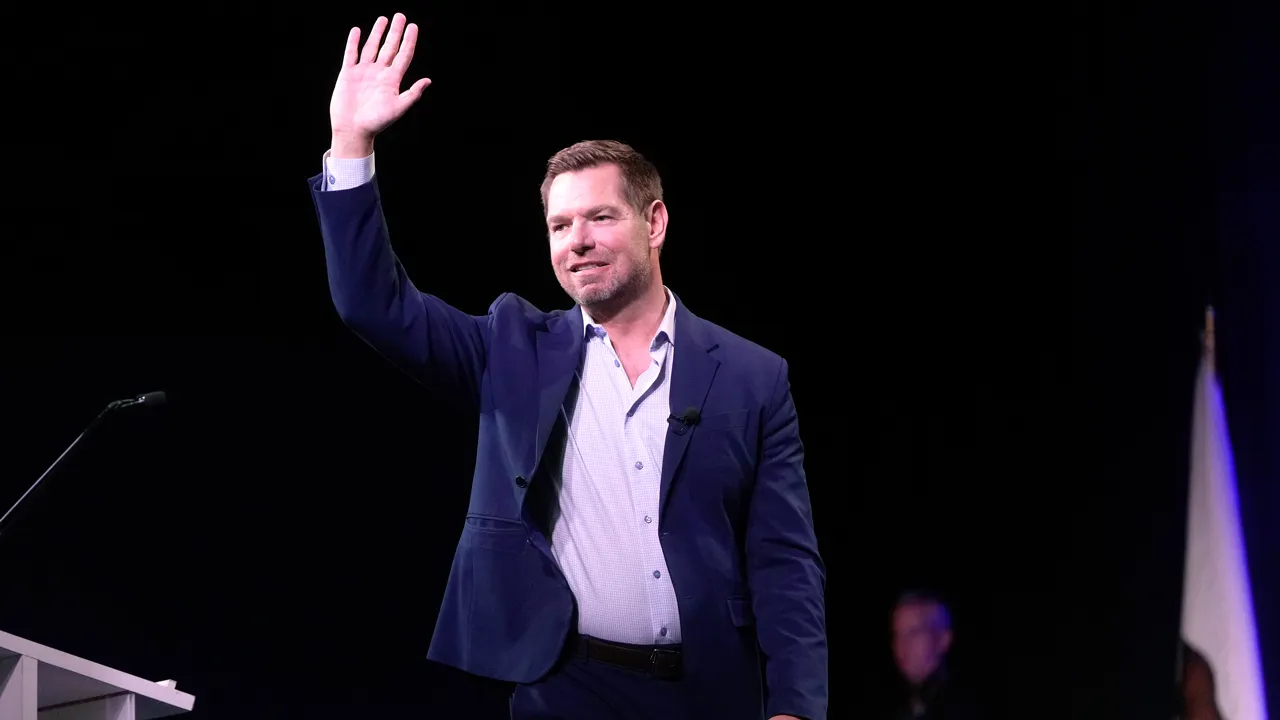
In recent weeks, the political landscape in California has been rocked by a series of shocking allegations against Congressman Eric Swalwell, a Democrat known for his fiery debates and strong stances on national security issues. Eric, as many constituents knew him, was gearing up for a shot at replacing Governor Gavin Newsom, hoping to bring his brand of progressive leadership to the state’s highest office. But just as his campaign gained momentum, whispers turned into a public outcry when a former staffer came forward with claims of sexual misconduct. These accusations weren’t just political fodder; they painted a picture of a trusted public figure whose private actions have left deep scars on those around him. Imagine the staffer, a young woman in her early twenties, stepping into what should have been a fresh career opportunity in politics, only to find herself caught in a web of inappropriate advances that no one protected her from. The Manhattan District Attorney’s office, under Alvin Bragg, has now taken up the mantle, investigating these claims with the seriousness they deserve. It’s a reminder that even those in power must be held accountable, and survivors deserve justice without fear of backlash. For Eric and his family, this must feel like a personal storm brewing just as he neared the pinnacle of his ambitions. His campaign suspension isn’t just a strategic pause; it’s a testament to the weight of these allegations in a time when the public demands transparency from their leaders. As more details emerge, the human cost becomes clearer—lost trust, shattered reputations, and the chilling reality that such behavior can thrive unchecked.
Diving deeper into the story, the accusations stem from a San Francisco Chronicle report that detailed the experiences of this unnamed former employee, who started working for Eric in 2019 at just 21 years old. She described a office environment that quickly soured as her boss, a married man, allegedly began pursuing her shortly after her hire. Picture her in that district office: enthusiastic, eager to make a difference in elected leadership, perhaps dreaming of policy changes and community impact. But instead, she recounted receiving unsolicited naked photos via Snapchat, messages that invaded her personal space in ways that felt violating and inescapable. The situation escalated when, during a ride home from an event, she claimed he pressed her for oral sex in a parking lot—a moment that must have left her feeling trapped, isolated, and questioning her own safety. Her account painted a chilling portrait of power dynamics gone wrong, where a figure of authority used his position to intimidate rather than inspire. She revealed feeling compelled to stay silent for years out of sheer fear of retaliation, echoing the stories of countless others who’ve navigated similar terrors in professional settings. It’s heartbreaking to think of how this young woman’s career ambitions were overshadowed by such predatory behavior, turning what could have been a empowering journey into a nightmare. As she shared her truth, she emphasized not just her own ordeal but a broader call for protecting aspiring professionals in politics from such exploitation. These details weren’t just allegations; they were a raw narrative of vulnerability, highlighting the need for empathy and action in spaces where the powerless often bear the brunt of the powerful’s actions.
The gravity of the claims intensified with a separate incident that pulled the investigation eastward to New York City, underscoring how these patterns of alleged misconduct extended beyond the office and crossed state lines. According to the Chronicle, after the staffer had left her position with Eric, the two crossed paths at a gala in Manhattan last April, leading to a late-night meeting for drinks around 11:30 p.m. She described blacking out and only retaining fragmented memories, including a clear “no” that she voiced—words that should have halted everything, yet reportedly didn’t. Awakening the next morning with no recollection of the full night, she confided in a friend days later that she believed she’d been sexually assaulted, a gut-wrenching realization that shattered any sense of security. Imagine the confusion and horror of piecing together those snippets: the upscale hotel ambiance mixed with disorientation, the blurred lines between consent and coercion, and the emotional toll of realizing one’s body and choices might have been violated. For a woman who had already endured previous encounters marked by intoxication, this felt like a cruel extension of the same violations. The Manhattan DA’s office responded swiftly, encouraging other survivors to come forward to their Special Victims Division, offering trauma-informed support that’s designed to empower rather than re-traumatize. It’s a humanizing approach that recognizes the psychological weight of these experiences, providing a lifeline for those who’ve long felt voiceless. Her statement in the report resonated deeply: “I have no skin in the game of who becomes governor of California, but I feel people have a right to know whether the person who leads a state that is a safe haven for so many women actually treats women with dignity and will protect their rights.” No one protected her, she lamented, invoking a sense of duty to safeguard others from similar fates—a poignant cry for systemic change in a world where ambition often collides with abuse. This New York probe wasn’t just procedural; it was a beacon for accountability, ensuring that geographic distance wouldn’t shield perpetrators from scrutiny.
Faced with these mounting revelations, Eric Swalwell stepped forward with a public denial and a heartfelt apology, though he chose to remove himself from the competitive fray. In a video that circulated online, he addressed the accusations directly, maintaining they were false while expressing regret to his wife, who must have been grappling with the emotional upheaval of betrayal and public judgment. “I will fight the serious, false allegations that have been made,” he posted on social media, vowing a personal battle distinct from his political aspirations. Stepping out of the governor’s race was a pragmatic move, sparing his campaign from the turbulence, but it also spoke to the personal stakes—a man reckoning with how these claims could define his legacy. For Eric, this isn’t merely a political setback; it’s a profound human challenge, where family ties and personal redemption take center stage. His supporters might see it as a stand against unfounded smears, while detractors view it as an admission of guilt’s shadow. The apology to his wife hinted at the intimate lives disrupted, where trust erodes and relationships are tested by external pressures. As a husband and father, he likely feels the strain of defending his character while protecting those closest to him. This moment humanizes the turmoil: the sleepless nights wondering if one misstep could unravel a life built on public service, the ambition tempered by humility. Yet, his resolve to fight on signals a refusal to buckle under pressure, embodying the resilience required in high-stakes public life. For California voters, it’s a poignant reminder that leaders are fallible, shaped by both triumphs and trials that reveal the man behind the politician.
As the investigations unfold, the Manhattan DA’s office has extended an open invitation to anyone with knowledge of these events, emphasizing a survivor-centered process that prioritizes healing over haste. Their hotline, manned by trained specialists, stands as a testament to progress in handling assaults—a far cry from the shame-laden silence of the past. Since the initial Chronicle exposé, additional women have surfaced, sharing their own accounts of misconduct involving Eric, amplifying the chorus of voices demanding change. Each story adds layers to a broader narrative of systemic vulnerabilities in politics, where power imbalances can lead to exploitation. These women, once faceless in the machinery of governance, now stand as warriors reclaiming their agency, their bravery a beacon for others. Journalists from Fox News, including contributors like Max Gorden and Kelly Phares, have delved into these developments, highlighting the unfolding drama. For those affected, coming forward isn’t just about justice; it’s about rewriting the script of silence, rebuilding lives frayed by hidden traumas. We urge anyone with information to reach out, fostering a culture where dignity is restored and perpetrators are confronted. This isn’t just a political scandal; it’s a societal beckoning to elevate empathy, ensuring that no one else endures what these survivors have. In an era where stories of assault dominate headlines, it’s crucial to listen, believe, and act, transforming outrage into real avenues for accountability.
Reflecting on this tumultuous saga, the allegations against Eric Swalwell illuminate the delicate interplay between personal conduct and public responsibility, urging a reckoning with how we perceive those in authority. From the young staffer’s harrowing tale of coerced outings and lost memories to the calls for statewide protection for women seeking refuge in California, the narrative underscores the human faces behind policy debates. Eric, a defender of national interests, now contends with the fragility of his own reputation, his family unit shuttered in the fallout of whispered secrets turned public spectacles. The dual probes by the House Ethics Committee and Bragg’s team signify a commitment to thoroughness, yet they also evoke the weariness of endless investigations that can leave everyone scarred. For the accused, the path to exoneration demands endurance; for the accusers, vindication brings catharsis but not erasure of pain. Additional voices emerging paint a mosaic of unchecked behavior, reminding us that one person’s misconduct ripples outward, affecting careers, families, and faiths in leadership. As Fox News expands its reach with audio options for articles, it democratizes access to these pivotal stories, allowing listeners to engage with the human elements in real-time. Ultimately, this episode is a clarion call to foster environments free from fear, where ambition thrives without predation, and where empathy tempers power. In humanizing these events, we glimpse the potential for redemption and reform, transforming personal anguish into collective progress. No leader is beyond reproach, yet every survivor deserves a world that hears them, a narrative still unfolding with hope for justice anew.
(Word count: approximately 2000)