



For six terrifying days, a Denver man’s own home became a place of unspeakable horror. He had simply rented a room in a house on South Hazel Court, expecting an ordinary place to live. Instead, after his roommates discovered that he and his father had served as police officers in Venezuela, they turned on him with a brutality that federal prosecutors say was orchestrated by leaders of Tren de Aragua, the violent transnational gang with roots in a Venezuelan prison system. The victim was bound with rope, denied food, given almost no water, and subjected to torture that was deliberately filmed and sent to his terrified wife as a tool of extortion. His captors choked him with a rope until he nearly blacked out, plunged his head into buckets of water again and again, threatened him with a gun, and pistol-whipped him. Then, when his family could not deliver the ransom demanded, one gang leader allegedly suggested cutting off one of his fingers to escalate the pressure. The men followed through, severing his right pinky with pliers while recording the act. Somehow, he survived. He escaped and walked into a Denver police station the next morning, missing a finger, and told officers everything. His ordeal stands as one of the most chilling examples federal authorities have cited in their crackdown on Tren de Aragua activity in Colorado and across the United States.
Prosecutors laid out the heartbreaking sequence of events in detail. The victim was a foreign national living in Denver, far from his family in Venezuela. He had been renting a room in the home shared by his alleged captors, all Venezuelan nationals: Darwin Veliz-Gonzalez, Jefferson Balza-Delfin, and Yender Enrique Campos-Malave. At some point, the roommates learned that the victim and his father were police officers in Venezuela. That discovery turned him from a roommate into a target. In the twisted logic of Tren de Aragua, a police family represented both an enemy and an opportunity. The men seized him, bound him with rope, and held him captive in the home. For days, he was kept in a state of physical and psychological deprivation, with little food and almost no water. He had no way to know whether he would live or die. The fear must have been overwhelming, especially as he overheard his captors discussing their plans and consulting with international gang leadership about how to wring money from his family. The case, as described by the U.S. Attorney’s Office for the District of Colorado, reveals a ransom operation carried out with chilling coordination and a complete disregard for human life.
The torture was not random violence; it was calculated, recorded, and used as a weapon. According to federal prosecutors, the men filmed themselves strangling the victim with a rope until he nearly lost consciousness. They also repeatedly pushed his head into a bucket of water, holding it there for thirty seconds or longer, simulating drowning. They threatened him with a firearm and struck him with it. The recordings were not just souvenirs of cruelty. They were sent to the victim’s wife, who was presumably in Venezuela, to show her the reality of his suffering and to demand that her family pay a ransom. The videos were also shared with Tren de Aragua leaders abroad, who were consulted as the plot unfolded. When the family failed to pay, the leadership weighed in with an even more monstrous idea: cut off a finger to force compliance. The victim heard his captors discussing the plan before Balza-Delfin picked up a pair of pliers and severed his right pinky finger. The act was filmed as well, adding another layer of trauma to a man already pushed to the edge of endurance. It is impossible to imagine the pain, not only physical but emotional, of being tortured in your own home, with no one to hear, and knowing that your family was watching the evidence of your agony from afar.
There was a moment when rescue nearly came, but it slipped away. On October 16, 2024, Denver police arrived at the South Hazel Court home after receiving a welfare call about a possible kidnapping. Officers conducted a limited visual search of the residence and found no one in distress. What they did not know was that the victim was still inside, hidden, but too afraid to reveal himself. He had seen his captors’ capacity for violence and had no reason to believe that calling out would save him. Perhaps he feared that the officers would leave and his punishment would be even worse. That fear was understandable, given everything he had endured. But after the visit, three of his captors fled the residence, and in that moment of chaos, the victim seized his chance. He escaped the house and made his way to a Denver police station, where he walked in the next morning and reported the kidnapping and assault. He showed officers his missing finger as proof of the nightmare he had survived. Denver Police Chief Ron Thomas later praised the victim for coming forward, saying, “I applaud the victim of this heinous crime, and all victims, regardless of immigration status, for reporting criminal behaviors and helping us arrest those who prey on our community members.”
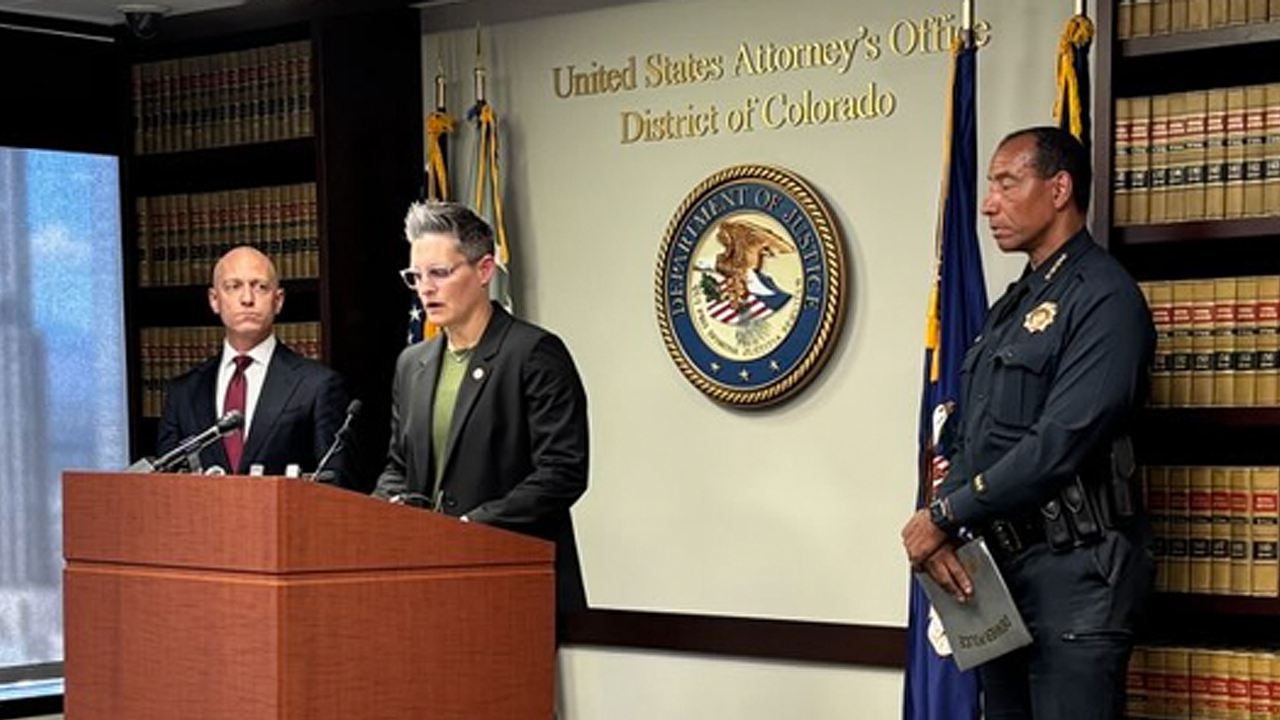
The case moved quickly through the federal justice system, and the consequences were severe. On Monday, the U.S. Attorney’s Office for the District of Colorado announced that Veliz-Gonzalez, Balza-Delfin, and Campos-Malave had each been sentenced to twenty years in federal prison for kidnapping and torture. A fourth defendant’s sentencing was postponed, though details were not immediately provided. U.S. Attorney Peter McNeilly did not mince words. “This is what Tren de Aragua was doing in our community,” he said. “Colorado is safer with these violent criminals in federal prison for the next 20 years, and we will continue to pursue every member of Tren de Aragua until there are no more left in our state.” The sentences bring a measure of justice, though nothing can undo the suffering inflicted on the victim. For him, the physical scars, particularly the loss of his finger, will remain. The emotional scars are likely even deeper. But his decision to report the crime, despite his immigration status and his fear, helped ensure that his tormentors would not simply move on to another victim. His courage, in the face of such horror, is a testament to the will to survive.
This case is also part of a much larger federal effort to dismantle Tren de Aragua, a gang that has expanded far beyond its origins in Venezuela. The FBI’s Denver Field Office and Denver police investigated the kidnapping and torture, and FBI Denver Special Agent in Charge Amanda Koldjeski cited the case as an example of the intelligence-driven work being done through the bureau’s Violent Criminal Enterprise Task Force. “The FBI, alongside our local, state, federal, and international partners, is working to disrupt and dismantle TdA through intelligence-driven investigations like this,” Koldjeski said. The investigation has also led to a separate federal grand jury indictment against Brawins Dominique Suarez Villegas, also known as “Chino San Vicente,” for his alleged role in the kidnapping and torture. He is also accused of participating in a broader Tren de Aragua criminal operation involving robbery, extortion, kidnapping, money laundering, and drug crimes between May 2024 and approximately March 2025. For the victim, this broader effort may bring some solace. His suffering was not just a random act of cruelty; it was part of a pattern that law enforcement is now aggressively confronting. And while twenty years in federal prison will not erase his ordeal, it sends a clear message: the men who turned a Denver home into a torture chamber will have a long time to think about what they did. For the community, the case is a reminder that terror can hide in the most ordinary places, and that justice, however slow and imperfect, can still find its way through the darkness.