


Global Wave of Solidarity Builds as Iran Protests Face Intensifying Crackdown
International Demonstrations Demand Action as Iranian People Rise Against Government Repression
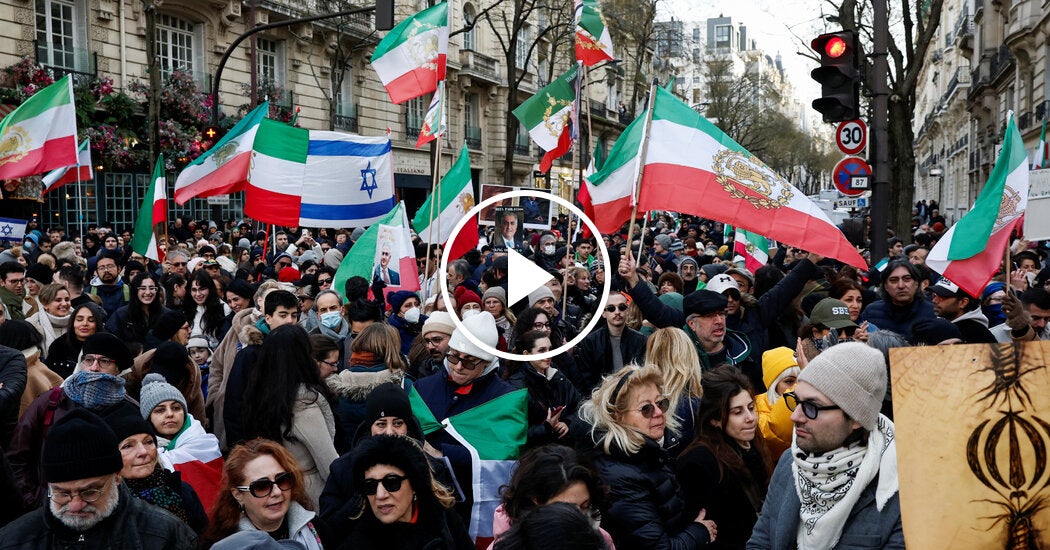
In a powerful display of global solidarity, demonstrators across multiple continents have taken to the streets this weekend to support the ongoing antigovernment protests in Iran, where citizens continue to face an increasingly severe government crackdown. From Paris to New York, London to Sydney, crowds gathered to amplify Iranian voices and pressure world leaders to take a more decisive stance against the Iranian regime’s response to the unrest. As footage of the protests circulates on social media despite internet restrictions within Iran, the international community’s response has become a crucial element in what many observers describe as a watershed moment for Iran’s struggle for human rights and political freedom.
“Support Iran’s uprising. Now, now, now,” chanted protesters in central London, where thousands gathered despite chilly weather to show solidarity with Iranians risking their lives to demand fundamental change. The demonstrations abroad come as Iran experiences several consecutive nights of intense protests across multiple cities, with reports of violent confrontations between security forces and demonstrators. Human rights organizations have documented a troubling pattern of escalating tactics by Iranian authorities, including the deployment of riot police, the use of tear gas and, in some cases, live ammunition against protesters. The international solidarity movement has gained momentum as these reports emerge, with organizers emphasizing that global attention may provide some measure of protection for protesters within Iran.
“The Iranian people have risen up once again. The Western governments need to voice their support for the Iranian people,” said Maryam Rashidi, an Iranian-American activist addressing a crowd of several hundred people in Washington, D.C. Similar sentiments were echoed across demonstrations in Toronto, Berlin, and Stockholm, where protesters demanded concrete action beyond mere expressions of concern from Western governments. Many demonstrators criticized what they perceive as hesitancy from European nations and the United States to take stronger measures against the Iranian government, arguing that economic interests and geopolitical considerations should not outweigh human rights concerns. “There are many things to demand, but I’m not very optimistic because so far Europe seems, like, not taking a clear position against the government,” one protester in Paris told reporters, reflecting a common frustration among the diaspora community.
Rising International Pressure as Iranian Government Intensifies Crackdown Measures
The solidarity demonstrations coincide with reports that the Iranian government has intensified its efforts to suppress dissent internally. Internet access has been severely restricted across much of the country, with social media platforms and messaging apps frequently disrupted or completely blocked. Despite these obstacles, videos continue to emerge showing large crowds in Tehran, Isfahan, Shiraz, and other major Iranian cities challenging security forces and calling for systemic change. Analysts suggest that the current wave of protests represents one of the most significant challenges to the Iranian government in recent years, with participants spanning diverse socioeconomic backgrounds and age groups. Unlike previous movements that centered primarily on economic grievances or electoral disputes, observers note that the current protests reflect broader dissatisfaction with the political system itself.
International human rights organizations have documented numerous cases of arbitrary detention, with estimates suggesting thousands of protesters have been arrested since the demonstrations began. Reports of detainees being held without access to legal representation have prompted particular concern among rights advocates. “What we’re seeing is a comprehensive attempt to silence dissent through fear,” explained Dr. Hamed Esfahani, an expert on Iranian politics at Georgetown University. “The solidarity demonstrations worldwide serve multiple purposes – they show Iranians they’re not alone, they keep international attention focused on the situation, and they create diplomatic pressure on governments to respond.” This pressure appears to be having some effect, with several countries issuing statements condemning the violence against protesters and calling for respect for human rights, though critics argue these diplomatic responses lack sufficient force to influence Iranian government behavior.
Technological countermeasures have become a crucial element in both the protests and the solidarity movement. Demonstrators inside Iran have increasingly relied on virtual private networks (VPNs) and other tools to circumvent internet restrictions, while expatriate communities use social media to amplify verified information coming from within the country. At solidarity rallies in major cities worldwide, organizers have established livestreams and real-time updates to create what one activist described as “a bridge between the streets of Iran and the international community.” Technology companies have faced growing pressure to facilitate secure communication channels for Iranians while preventing government surveillance of protesters. Meanwhile, cybersecurity experts report increased attempts by Iranian authorities to compromise dissident communications and identify protest organizers through digital surveillance.
Cultural Expressions of Solidarity Amplify Iranian Voices on Global Stage
The global solidarity movement has extended beyond traditional protest actions to encompass cultural expressions of support. Musicians, filmmakers, and artists worldwide have created works dedicated to the Iranian protesters, while cultural institutions have organized exhibitions highlighting Iranian struggles for freedom and human rights. In Los Angeles, home to one of the world’s largest Iranian diaspora communities, concert venues have hosted solidarity events featuring prominent Iranian artists. “Art has always been a powerful vehicle for resistance in Iranian culture,” noted filmmaker Shirin Neshat at a New York gallery exhibition dedicated to the protests. “When people cannot speak freely, they communicate through symbols, music, and visual expression – these are languages that transcend borders and censorship.”
This cultural dimension of solidarity has proven particularly effective in engaging broader audiences who might otherwise remain unaware of the situation in Iran. Social media campaigns have transformed specific symbols from the protests into internationally recognized emblems of the movement. Universities across North America and Europe have hosted teach-ins and panel discussions to provide historical and political context for the current unrest. “What’s happening now didn’t emerge from nowhere – it’s connected to decades of struggle for basic freedoms in Iran,” explained Professor Azadeh Moaveni during a well-attended public lecture at Columbia University. “The international community needs to understand this is not simply about isolated incidents of unrest, but about fundamental questions of human dignity and political representation that Iranians have been fighting for across generations.”
As night fell on demonstrations in European capitals and morning dawned on solidarity rallies in Australia and New Zealand, organizers emphasized that this weekend’s global actions represent just the beginning of a sustained international campaign. Plans for ongoing demonstrations, legislative advocacy, and diplomatic pressure campaigns were announced at multiple events. “This is not a moment; it’s a movement,” declared Reza Pahlavi, addressing supporters via video link at a Toronto rally. “The people of Iran need consistent, unwavering international support.” As Iran enters another night of protests and the world watches with growing concern, the message from global demonstrators remains clear: the struggle for freedom in Iran has become a cause that transcends national boundaries – a test of the international community’s commitment to universal human rights principles in an increasingly interconnected world where repression in one country can no longer be ignored as merely a domestic matter.