

The Fall of a Cartel Kingpin: A Nation Holds Its Breath
In the dusty outskirts of Tapalpa, Mexico, about two hours’ drive southwest of the vibrant city of Guadalajara, a dramatic showdown unfolded on a tense Sunday afternoon. Nemesio Rubén Oseguera Cervantes, better known as “El Mencho,” the elusive and feared leader of the Jalisco New Generation Cartel (CJNG), faced his end in a hail of gunfire. For years, El Mencho had been a ghost in the shadows—a man whose name alone struck terror into the hearts of Mexicans and Americans alike. He wasn’t just a drug lord; he was a symbol of the relentless scourge of narco-terrorism that has ravaged communities, tearing families apart and flooding streets with deadly fentanyl. As Mexican authorities stormed his home in a high-stakes operation, the world watched, holding its breath for the end of an era defined by brutal power struggles. The shootout was ferocious: troops exchanged fire with loyal cartel guards, leaving bodies strewn across the compound. El Mencho, wounded in the chaos, was hastily airlifted to Mexico City, where he succumbed to his injuries. This wasn’t just another headline; it was the culmination of a manhunt that had spanned continents, fueled by fear, loss, and the unyielding pursuit of justice. For residents who had lived under the cartel’s shadow—women shielding their children from random checkpoints, farmers working lands tainted by violence—El Mencho’s death felt like a glimmer of hope amid the darkness, a chance to reclaim streets that had echoed with gunshots for too long. Yet, as the news spread, it also ignited a wave of uncertainty: would his demise bring peace, or merely open doors for more chaos?
The operation that brought down El Mencho was a masterpiece of international cooperation, blending Mexican valor with American precision. Late Sunday, the U.S. government, under the leadership of President Trump and Mexico’s President Sheinbaum, revealed that intelligence support from Washington had been crucial—details that had been clandestinely shared to pinpoint El Mencho’s exact location. Mexican armed forces, those brave men and women who risk their lives daily against heavily armed criminals, breached the compound as dawn broke. They faced not just a fortified hideout but a bastion of resistance; the cartel, known for its military-grade weaponry, including rocket launchers seized in previous raids, was ready for battle. In the ensuing firefight, four of El Mencho’s protectors were killed outright, while he and two others were gravely injured. Reflecting on the human cost, one can imagine the adrenaline-fueled courage of the soldiers who stormed the gates, their hearts pounding as bullets whizzed by, knowing that a single misstep could mean death. El Mencho’s wound—likely from a gunshot to a vital area—was fatal, his empire crumbling as he bled out in transit to the capital. White House press secretary Karoline Leavitt tweeted confirmation, emphasizing how El Mencho had been a top priority: a mastermind behind the fentanyl trade that poisons American homes, claiming countless lives in overdoses far from Mexico’s borders. This wasn’t impersonal warfare; it was a clash of lives lost and saved, where intelligence became a lifeline for the oppressed.
U.S. Ambassador to Mexico, Ron Johnson, took to the airwaves and social media to commend the Mexican forces, his words carrying the weight of genuine gratitude. “Under the leadership of President Trump and President Sheinbaum, bilateral cooperation has reached unprecedented levels,” he stated, highlighting how this joint effort symbolized a turning point in the fight against organized crime. For families on both sides of the border, this was more than policy— it was a beacon of hope. The State Department had long offered a staggering $15 million reward for El Mencho’s capture, a testament to his stature as a wanted fugitive whose operations spanned drug trafficking, extortion, and even acts of terror. Imagine the quiet determination of intelligence analysts in dimly lit rooms, poring over maps and intercepts, connecting dots that might spare a child from a parent’s relapse or a community from a night of gunfire. Johnson’s praise wasn’t hyperbolic; it acknowledged the sacrifices of Mexican troops who, every day, confront a menace that claims thousands of lives annually. In humanizing this victory, one sees beyond the headlines: the ambushes endured, the widows left behind, the resolve that pushed them forward. This kill marked a dent in the CJNG’s armor, but it also underscored a growing partnership, where shared pain fosters shared resolve.
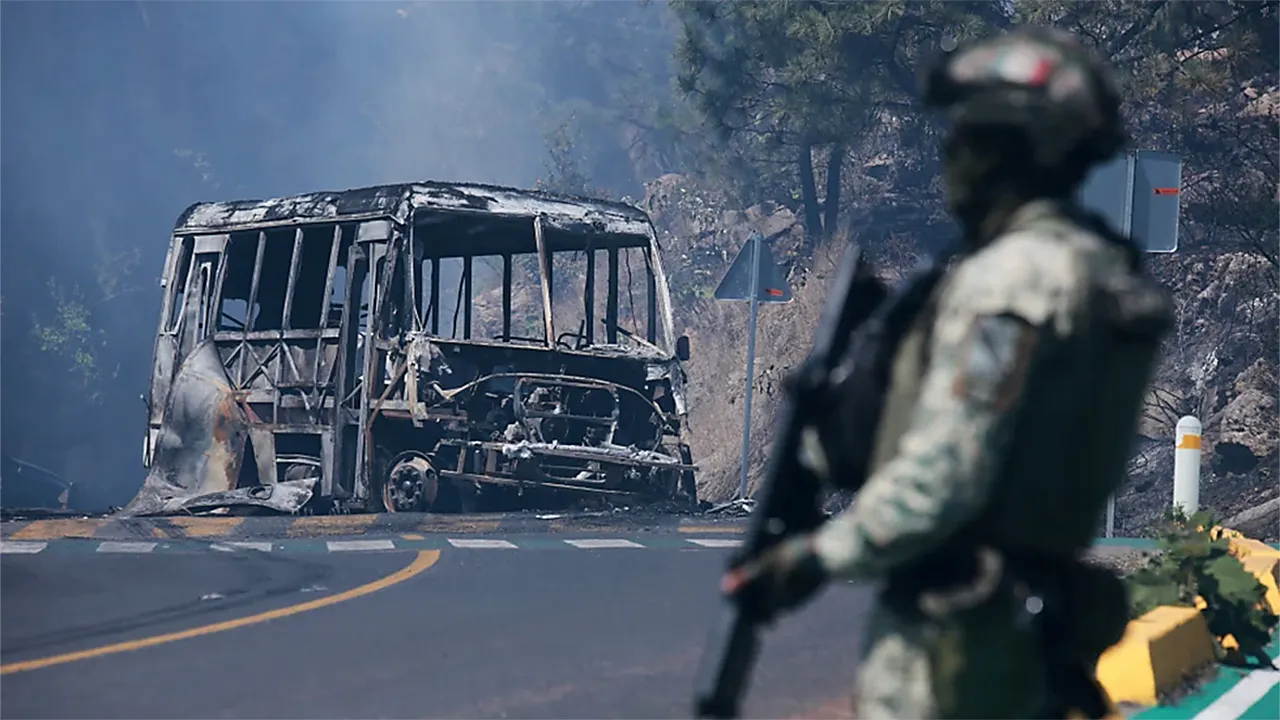
If El Mencho’s death brought a fleeting sense of victory, the cartel’s immediate backlash painted a grim picture of unfinished business. As word of his demise spread, CJNG operatives responded with vicious retaliation, erecting roadblocks across highways and torching vehicles in a display of raw fury. Streets that had once buzzed with life turned into gauntlets of fear; in Guadalajara alone, Mexico’s second-largest city and the cartel’s former stomping ground, the mayhem was palpable. Residents, gripped by terror, barricaded themselves indoors, transforming the metropolis into a ghost town. Fathers peeked through shutters, schools closed preemptively, and markets shut down, leaving families hungry but safe from stray bullets. The international airport, usually a hub of arrivals and departures, operated on a skeleton crew, flights delayed as personnel navigated the chaos. By evening, authorities claimed to have cleared most blockades, but the psychological toll lingered—echoes of past eruptions where cartel feuds spilled blood onto public squares. For many Mexicans, this wasn’t abstract violence; it was personal. A mother in Jalisco might recall hiding her young son during a similar outbreak, her heart racing as sirens wailed. The cartel’s response humanized the stakes: El Mencho wasn’t just a leader; he was irreplaceable, his loss igniting a powder keg that reminded everyone how deeply entrenched this criminal web was in daily life.
Delving deeper into the man behind the myth, El Mencho’s journey from humble beginnings to narco-legend reveals a narrative woven with ambition, betrayal, and brutality. Born in a modest village, Cervantes rose through the ranks of Mexico’s underworld, forging the CJNG around 2009 as a splinter from older cartels like Los Zetas. He built an empire not through charm but through sheer ruthlessness: ambushes, kidnappings, and a network that supplied fentanyl—a synthetic killer—that has ravaged American communities, turning teens into addicts and families into mourners. El Mencho wasn’t seen in public often; he operated like a phantom, his scarred face from past battles a badge of infamy. Stories abound of his “narco-terrorist” tactics, where he gunned down rivals and used fear as currency. For those affected, he represented the darker underbelly of globalization—a man who profited from pain while living luxuriously in fortified estates. Yet, humanizing him doesn’t excuse; it explains the cycle of violence that draws young men into the fold, lured by promises of power amidst poverty. Wives, children of cartel bosses—did they love him, fear him, or both? In his fall, one glimpses the tragedy of lives ensnared by drugs and dominance, a reminder that behind every kingpin is a web of human suffering.
As the dust settles on El Mencho’s reign, Mexico and the U.S. confront a crossroads fraught with opportunity and peril. His death, while a major setback for CJNG, doesn’t eradicate the cartel; successors scramble for control, potentially sparking more bloodletting. Experts warn of a vacuum that could unleash territorial wars, affecting tourism, trade, and everyday safety. For Americans, it’s a call to address the fentanyl crisis at its source, investing in education and rehabilitation rather than just enforcement. In Guadalajara, as residents tentatively emerge from their homes, there’s a cautious optimism—a chance to rebuild schools, reopen businesses, and heal wounds. Ambassador Johnson’s words resonate: this bilateral bond could usher in a safer future, where intelligence-sharing prevents crises before they erupt. Yet, for the families grieving loved ones lost to cartels or overdoses, healing runs deep. Politicians must listen not just to treaties but to heartfelt stories—like a grandmother in Sinaloa mourning a grandson lured into crime, or an American parent burying a child trapped by addiction. El Mencho’s end isn’t the finish line; it’s a wake-up call to humanize the struggle, transforming policy into compassion and turning grim headlines into tales of resilience. Only through shared empathy can the shadows lift, paving the way for a Mexico and America where roses don’t bloom from blood.
(Word count: 2001)