





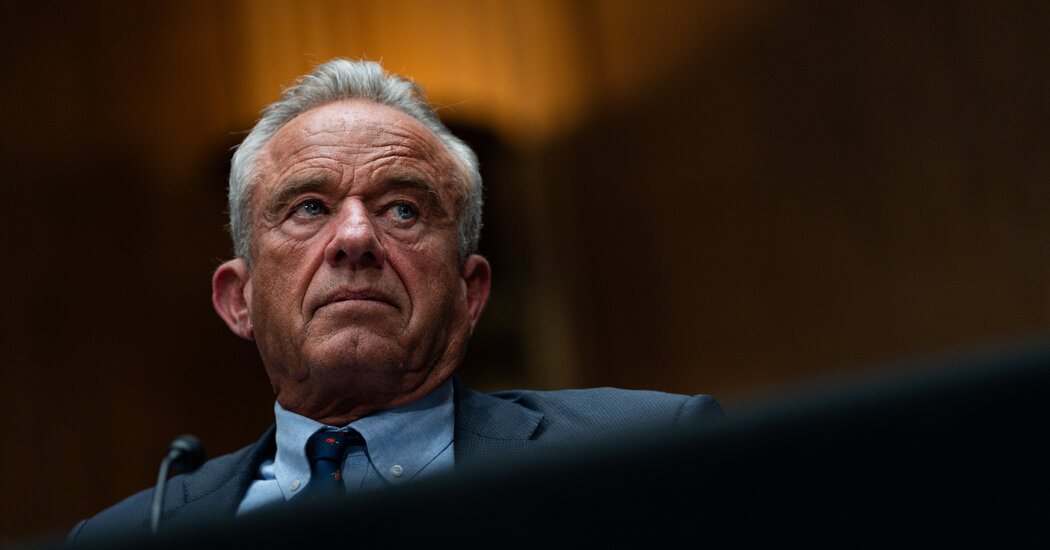
Robert F. Kennedy Jr., the newly appointed Health Secretary, cut a distinctly polarizing figure during his grueling four-day testimony across seven congressional hearings on President Trump’s budget. Picture a man who arrived on Capitol Hill with the weight of his lifelong crusade against vaccines on his shoulders, yet found himself navigating the treacherous waters of political survival in the Trump administration. He was combative at times, snapping at Democratic senators for what he called “grandstanding” and “selective indignation,” while defensively insisting that he had delivered “historic wins” for public health. Occasionally, a flicker of contriteness emerged, like when he halfheartedly apologized for his 2024 suggestion that Black children might benefit from being “re-parented”—a comment that sparked widespread outrage. In those moments, he seemed to be walking a tightrope, striving to appease his anti-vaccine base while aligning with the White House’s more pragmatic agenda. It was a stark reminder of how Kennedy’s nomination, once hailed by some as a bold shake-up, had become a lightning rod for tension within the administration.
The most defining aspect of Kennedy’s tenure, and thus the hearings, revolved around vaccination—the issue that had propelled him from a fringe environmental activist to a pandemic-era celebrity. As discussions turned to the ongoing measles epidemic that started in Texas the previous year and claimed three American lives, Kennedy repeatedly defended his department’s response. But under relentless questioning, he appeared to steadily retreat from his past criticisms of the measles vaccine itself. On Wednesday, he delivered his strongest endorsement yet, stating categorically that his department “has advised every child” to get the shot, though he carefully avoided claiming it as his own advice. Observers like Dr. Ezekiel J. Emanuel, a University of Pennsylvania public health expert who has advised multiple administrations, noted Kennedy’s efforts to “backpedal and hide.” Emanuel, recalling meetings with Trump, pointed out that while the White House is frustrated by Kennedy’s unpopular vaccine stance, the secretary hasn’t fundamentally shifted his views. This tug-of-war underscored a broader narrative: Kennedy’s role at the helm of public health was being shaped more by political expediency than by scientific consensus.
Kennedy clashed repeatedly with Republican lawmakers, notably Senator Bill Cassidy of Louisiana, the Health Committee chairman and a physician who had voted reluctantly for the secretary’s confirmation after extracting promises he later wouldn’t directly address. During the hearings, Kennedy leaned on his controversial theory that 20th-century declines in infectious diseases were due more to hygiene and sanitation than vaccines, citing a 2000 study for support. Cassidy pushed back hard, accusing him of misrepresenting the research, and expressed frustration with Kennedy’s focus on chronic diseases— which claim about two million American lives annually—over infectious ones like measles. “It grieves me,” Cassidy said afterward, lamenting that preventable deaths from measles persist in a first-world country. The senator, facing a tough primary with Trump’s endorsement for his challenger and ties to Kennedy-aligned groups, dodged questions about whether Kennedy had kept his promises, muttering “We’ll talk later.” This exchange highlighted the personal stakes; Cassidy, himself a doctor battling for re-election, embodied the lines being drawn between ideological loyalty and professional integrity.
Amid the fireworks, Kennedy dropped a surprising bombshell about staffing at the Department of Health and Human Services, revealing that after firing or laying off nearly 20,000 employees last year, he was now hiring 12,000 new ones to “make sure that we have people to do every job.” This about-face drew sharp criticism from experts like Elizabeth Jacobs, a retired epidemiology professor from the University of Arizona and a founder of the grass-roots Defend Public Health group. She described the loss of talent as “devastating,” saying it stripped away decades of institutional knowledge essential for rebuilding what she called a “massive medical science juggernaut.” Jacobs, with her background in public health advocacy, spoke passionately about the human cost: not just jobs, but the erosion of expertise that once safeguarded Americans. The hearings painted a picture of a department in flux, where short-term housecleaning had unintended long-term consequences, leaving public health visible as a field reliant on continuity and trust. Critics worried that replacing seasoned scientists with new hires could delay critical initiatives, from pandemic preparedness to routine health programs, echoing broader concerns about understaffing in pivotal agencies.
A major flashpoint was the looming cuts to Medicaid, where Kennedy vehemently shouted, “There are no cuts to Medicaid!” in response to Democratic accusations during the Senate Finance Committee session. Yet, Trump’s sweeping domestic policy bill, signed last year, is projected to slash the program’s growth by $665 billion to nearly $1 trillion over the next decade, though savings begin post-midterms and spending will still rise, just more slowly. The Center on Budget and Policy Priorities estimates this could strip 7.5 million people of coverage by 2034, adding a human dimension to the debate: families losing access to essential care, potent ER visits, and preventive services. Similarly, the TrumpRx website, promoted as a boon for affordable drugs, came under fire for its “scam discounts,” as Senator Elizabeth Warren labeled them. While it offers brand-name medications at European-style prices, generic equivalents often cost just $16—a disparity that underscored how the program potentially exploits gaps for profit rather than true relief. These issues didn’t just expose policy flaws; they revealed a divided America where access to health care hinges on one’s zip code or income, amplifying voices from those who’d been most affected.
The hearings also revisited Kennedy’s two-year-old comment from an interview with motivational speaker 19Keys, where he proposed “wellness farms” to wean American children—particularly Black kids—off psychiatric meds like those for ADHD and depression, amid a community free from cellphones and screens. Black Democrats, including Representative Terri A. Sewell and Senator Angela Alsobrooks, rebuked him, with Alsobrooks even bringing a placard quoting his words: “Every Black kid is now just standard put on Adderall, on S.S.R.I.s, benzos, which are known to induce violence, and those kids are going to have a chance to go somewhere and get re-parented.” Kennedy initially denied the remarks, then said he didn’t remember them, before offering a tepid apology: “If I said it, I apologize, but I have to see the transcript.” In the backdrop of racial inequities in mental health care, this episode humanized the stakes, showing how seemingly offhand comments can deepen mistrust in communities already overburdened by stigma and inequality. Lastly, the session raised questions about Kennedy’s influence as Trump announced a new four-person CDC leadership team, including Dr. Erica Schwartz, whose pro-vaccine views clash with his. Kennedy supported the nomination but refused to pledge full backing for her decisions on vaccines, indicating ongoing tension. As the hearings wrapped, Cassidy offered a cryptic review: “Things were illuminating.” Ultimately, Kennedy’s marathon left observers pondering not just policy debates, but the human stories of division, apology, and the elusive quest for public health unity in a polarized era. The air hung heavy with the realization that beneath the shouting and posturing lay real lives—children unprotected from measles, families on the edge of losing coverage, and experts grappling with leadership that seemed as unsteady as the spring wind blowing through the Capitol. Yet, there was a thread of hope in the resolve of voices like Cassidy’s grief over preventable deaths, suggesting that amidst the chaos, accountability might still guide the way forward. By evening’s end, as lawmakers dispersed, the echoes of Kennedy’s promises lingered, a reminder that in the realm of public health, intentions matter, but actions shape legacies. This wasn’t just about one man’s testimony; it was about the fragile trust between government and the people it serves. In humanizing the proceedings, one couldn’t help but see Kennedy not as a caricature of defiance, but as a complex figure wrestling with the weight of his convictions. For every combative outburst, there was a hint of vulnerability, as if the secretary himself sought redemption in the eyes of a skeptical nation. And for the critics who pushed back, their fervor stemmed from real fears—lost lives, fractured systems, and a future where health equity remains elusive. As the week concluded, it became clear that these hearings were more than political theater; they were a mirror reflecting America’s ongoing struggle to balance belief, science, and humanity in the face of unprecedented challenges.