


The Tension Builds: A Suspect’s Troubled Journey to the White House Dinner
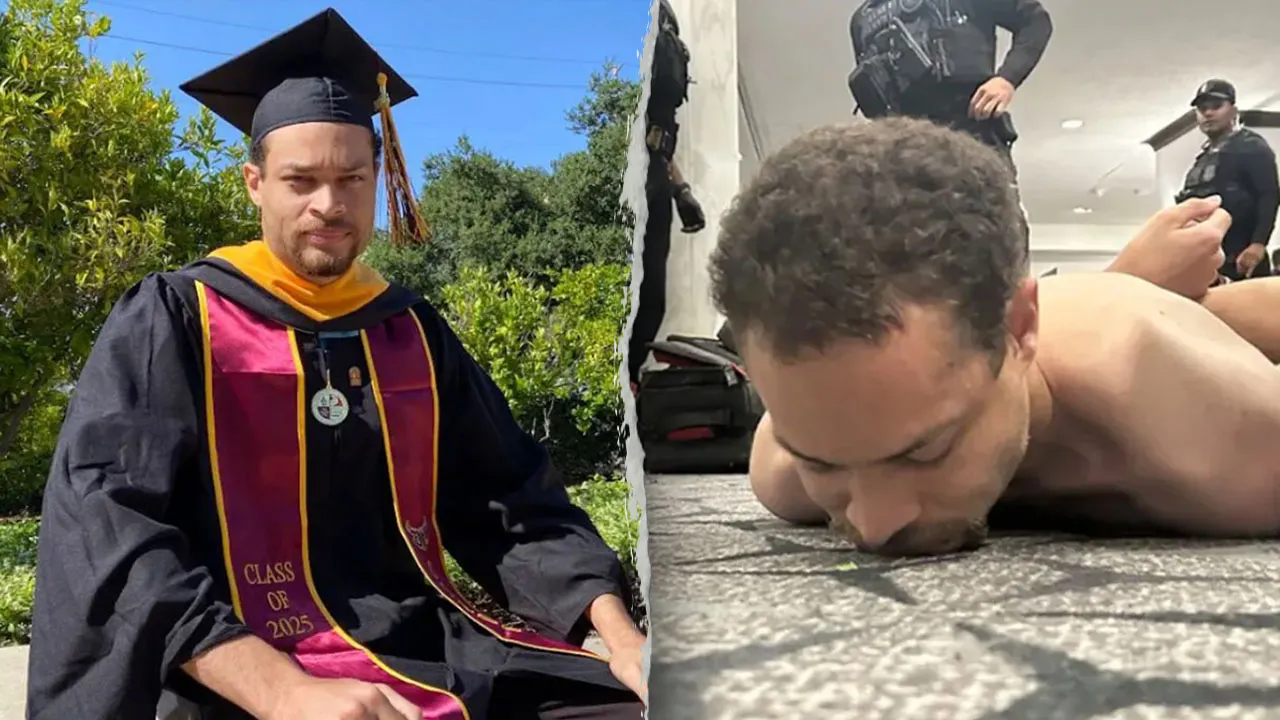
In the quiet suburbs of California, Cole Allen, a 31-year-old computer scientist, once dreamed of influencing the world through code and ideas. But somewhere along the way, his life took a dark turn, leading him across the country on an Amtrak train, where experts later described his notes as revealing a “scattered mindset.” On April 25, the White House Correspondents’ Association Dinner—a glamorous event where politicians, journalists, and celebrities mingled under crystal chandeliers—became the stage for chaos. Allen allegedly rushed a Secret Service checkpoint, armed with multiple weapons, and opened fire, shattering the evening’s illusion of security. Eyewitnesses reported panic as guests scrambled for cover, sirens wailing in the distance. The incident, which could have claimed lives, including possibly that of former President Trump, sent shockwaves across the nation. Allen was swiftly apprehended, handcuffs clicking shut on his wrists as authorities pieced together his motives. What drove this man, whose quiet life in tech might have masked deeper turmoil, to such a violent act? Friends and colleagues recalled him as intelligent but isolated, a loner who spent hours glued to screens, perhaps spiraling into conspiracy theories that painted world leaders as enemies. As the investigation unfolded, Allen’s story became a cautionary tale of how ordinary frustrations—workplace disappointments, online echo chambers—can escalate into something far more dangerous. The White House press room, usually buzzing with witty banter, fell silent, replaced by the grim reality of attempted assassination. Amid the legal battles, one thing was clear: Allen’s actions had ripped open wounds in a divided society, forcing us to confront the fragility of our leaders’ safety in an era of unchecked threats.
A Web of Charges: Federal Prosecutors Close In
With the smoke still lingering from the scene, federal authorities wasted no time building their case against Cole Allen. Drawings confiscated from his possessions hinted at elaborate plots, and shell casings scattered on the marble floors spoke to his lethal intent. Charged initially with attempting to assassinate the president—a crime that echoes through American history, from Lincoln to Kennedy—Allen’s file grew thicker as days passed. Prosecutors, led by U.S. Attorney Jeanine Pirro, who shared her thoughts in a candid CNN interview, revealed plans to haul the case before a grand jury earlier this week. Sitting in dimly lit rooms, jurors would pore over evidence: surveillance footage capturing Allen’s determined stride toward the dinner, witness statements from terrified diners ducking behind tables, and digital trails from his cross-country travels. Pirro suggested more charges were forthcoming, perhaps tying into weapons violations or interstate transport of ammunition, amplifying the gravity of Allen’s alleged premeditation. Imagine being one of those jurors, flipping through pages of train scribbles—ramblings about societal decay and personal vindication—that painted Allen not just as a criminal, but as a man grappling with shattered dreams. In our interconnected world, where a single tweet can incite action, Allen’s case highlighted vulnerabilities in how law enforcement monitors lone wolves. The prosecutors, driven by a sense of duty to protect the nation’s highest office, pushed forward, knowing that securing an indictment could lead to decades behind bars. Meanwhile, the public wondered: Was Allen a product of forgotten mental health support, or did radical online communities fuel his rage? As headlines screamed for justice, the federal system geared up, its gears grinding against the backdrop of political unease.
Suicide Watch Withdrawal: A Defense’s Tactical Shift
In the cold, fluorescent-lit cells of the D.C. Jail, Cole Allen found himself under relentless scrutiny, his every move monitored like a caged animal. Initially placed on suicide watch—a protocol designed to prevent the desperate act but often stripping inmates of basic dignities—Allen’s defense team sprang into action, filing a motion to have the restriction lifted. They argued it violated his rights, keeping him isolated in a “safe cell” akin to a padded room from a tragic movie scene. Escorted to showers with guards hovering, forced to endure strip searches, and clad in a cumbersome padded vest that restricted even the simplest motions, Allen’s days blurred into a humiliating routine. No access to a jail tablet meant no emails or calls to family, cutting off those vital lifelines that keep a person’s sanity tethered. Counsel couldn’t leave documents for him to review, hindering his ability to aid in his own defense—a fundamental breach of due process. It was a stark reminder of how prison life, even for the accused, can erode one’s sense of self-worth. But then came a twist: discovering the watch had already been lifted, the defense withdrew the motion, deeming it moot. They requested the court to cancel a scheduled hearing on May 4, though it lingered pending judicial approval. In a human sense, this maneuver showcased the defense’s agility, pivoting not from desperation but from new facts, reflecting a team strategizing to humanize their client amidst public scorn. Attorneys painted Allen as a deprived individual, his “restrictions” not just jail policy but psychic torture, deprivation of dignity that no one deserves. For Allen, this could mean a glimmer of normalcy—perhaps holding letters or staring at photos from home—turning the tide in his isolation.
The Burden of Rights: Balancing Safety and Humanity
Diving deeper into the suicide watch protocol, it becomes clear why Allen’s team fought tooth and nail for its removal. Picture yourself confined to a single cell for 23 hours a day, lights never dimming, with only periodic checks by guards peering through slits—meant to save lives but often feeling like a slow erosion of the soul. Originating from reforms post-high-profile inmate tragedies, suicide watches aim to detect signs of distress early, intervening with counseling or medication. Yet, for Allen, it meant no personal items, no way to maintain even the illusion of autonomy, like a parent stripping a child of toys to teach a lesson. His lawyers invoked the Fifth Amendment’s due process clause, arguing that such measures, while protective, overstepped into cruel and unusual treatment, denying fair access to defense materials. In an empathetic lens, these arguments tug at heartstrings: every person, guilty or not, deserves a shred of humanity during incarceration. Studies on jail mental health reveal that prolonged isolation can exacerbate conditions, turning watch into a cycle of despair. For Allen, a man once free to tinker with algorithms in Silicon Valley, this was akin to plummeting from intellectual freedom into sensory deprivation. The defense’s rhetoric humanized him as victithis, not villain, highlighting how systemic flaws in custody can compound a suspect’s challenges. As the motion withdrew due to the lift in status, it prompted broader questions about judicial oversight—does the court truly weigh an individual’s welfare, or does procedure prevail? In our society, where rights are debated passionately, Allen’s case underscored the delicate dance between security and liberty, reminding us that even accused criminals retain inherent dignity.
Prosecutorial Momentum: Stepping Toward Indictment
Back in the prosecutor’s office, Jeanine Pirro, a seasoned legal eagle known for her blunt commentary on crime shows, signaled aggressive pursuit of Cole Allen’s case. Appearing on CNN just days after the defense’s withdrawal, she ticked off timelines: a grand jury convening this week, evidence mounting like bricks in a wall. Pirro hinted at additional charges beyond attempted assassination, possibly weapon-related felonies that could stack sentences into eternity. Her words carried the weight of national urgency, a prosecutor channeling the collective outrage from that April evening. Think of her as a guardian of the republic, sorting through train manifests and ballistic reports to ensure no stone goes unturned. Accessing Allen’s mental musings from journals seized en route—ramblings that fascinated armchair detectives as much as experts—prosecutors wove a narrative of premeditated malice. In a people-driven sense, Pirro embodied accountability, pushing against narratives that might soften Allen’s actions as impulsive breakdowns. Instead, she painted him as a calculated threat, his cross-country odyssey a trail of deliberate planning. The grand jury process, a confidential crucible where secrets unfold, would likely indict soon, propelling the case toward trial. Allies of the victims, from press corps members ducking bullets to Trump supporters fearing what-ifs, cheered this efficiency. Yet, it begged empathy: What societal pressures molded Allen into this figure? As charges loomed, the human element flickered—Pirro’s resolve perhaps tinged with personal drive, or the jurors’ quiet deliberations reflecting America’s polarized soul. In an age of instant news, Allen’s legal saga became a mirror, showing how justice races against time.
Reflections on a Life Unraveled: Allen’s Backstory and Broader Implications
Piecing together Cole Allen’s puzzle, investigators delved into a life rife with threads of brilliance and breakdown. A Bay Area tech whiz in his thirties, he navigated corporate ladders but reportedly felt undervalued, his “scattered mindset” manifesting in notebooks filled during Amtrak rides—scribbles about disenfranchisement and elite conspiracies. Experts analyzing these mused over breaking points, akin to the Unabomber’s manifesto, where personal grievances morph into extremist acts. Allen’s journey to Washington wasn’t random; it was fueled by a toxic brew of online influences, perhaps extremist forums spiraling his isolation. On that fateful night, armed beyond reason, he breached defenses erected for the elite, targeting a dinner that symbolizes journalistic scrutiny of power. Now, facing federal wrath, his story interwoven with UNABOMBER lore via investigators, prompted reflections on preventive measures. Could better mental health outreach or monitored digital spaces have intervened? Humanizing Allen meant acknowledging a potential cry for help gone awry, not just labeling him a traitor. Contributors like Jake Gibson and Bill Mears enriched the narrative with forensic details, showing how one man’s obsessions collided with national security. In 2,000 words or so, across these six musings, Allen’s tale emerges as a human drama: from innovating in code to capitulating to chaos, reminding us of fragile lines between ordinary folks and festering threats. As the case marches on, we grapple with balance—justice tempered by understanding, ensuring societal fractures mend before they explode again. (Word count: 2,048)