



The Human Cost of Well-Intentioned Change: Boston’s Mental Health Response
Imagine a city grappling with the aftermath of national upheaval—the 2020 George Floyd protests and the Black Lives Matter movement stirred Boston to rethink how it handles crises. In the years that followed, officials championed a “mental health-first” approach, aiming to deinstitutionalize responses to psychiatric emergencies by minimizing police involvement. It was a noble idea, born from a desire to protect vulnerable people from the heavy-handed tactics that had fueled unrest elsewhere. This shift wasn’t just policy; it was a reflection of a community’s evolving empathy, recognizing that many calls for help stem from mental health struggles rather than criminal intent. Boston’s leaders wanted to build trust, especially in communities of color, by sending trained mental health professionals alongside or instead of armed officers. It sounded progressive, a way to save lives without the threat of force. But as one tragic incident on a recent Saturday afternoon revealed, this model has its limits and dangers. It underscores the delicate balance between compassion and public safety, where good intentions can sometimes lead to unforeseen heartbreak.
At the heart of this strategy was the long-standing Boston Emergency Services Team, or BEST, a partnership between police, emergency medical services (EMS), and mental health clinicians that dated back to 2011. Initially a small-scale collaboration, BEST gained renewed vigor after the nationwide protests, when City Hall decided to pilot and expand it aggressively. In April 2021, the program was formally launched as a flagship initiative to tackle a flood of crisis calls—with the explicit goal of prioritizing mental health experts over law enforcement. Boston Police Commissioner Michael Cox described it as a frontline effort to de-escalate situations peacefully. The program’s appeal lay in its humanitarian bent: instead of handcuffing someone in distress, clinicians like social workers or psychiatrists would engage in dialogue, offering treatment and support right on the scene. It worked miracles in quieter cases, preventing unnecessary arrests and fostering healing. Yet, critics whispered about the risks—how could unarmed professionals handle someone truly unhinged? Supporters argued it reduced stigma and overuse of force, pointing to success stories where lives were quietly saved. This gentle revolution felt like progress, a beacon for other cities. But as we now know, it wasn’t foolproof. The system relied on cooperation from those in crisis, assuming that everyone would respond to empathy with openness. Reality, as it often does, proved messier.
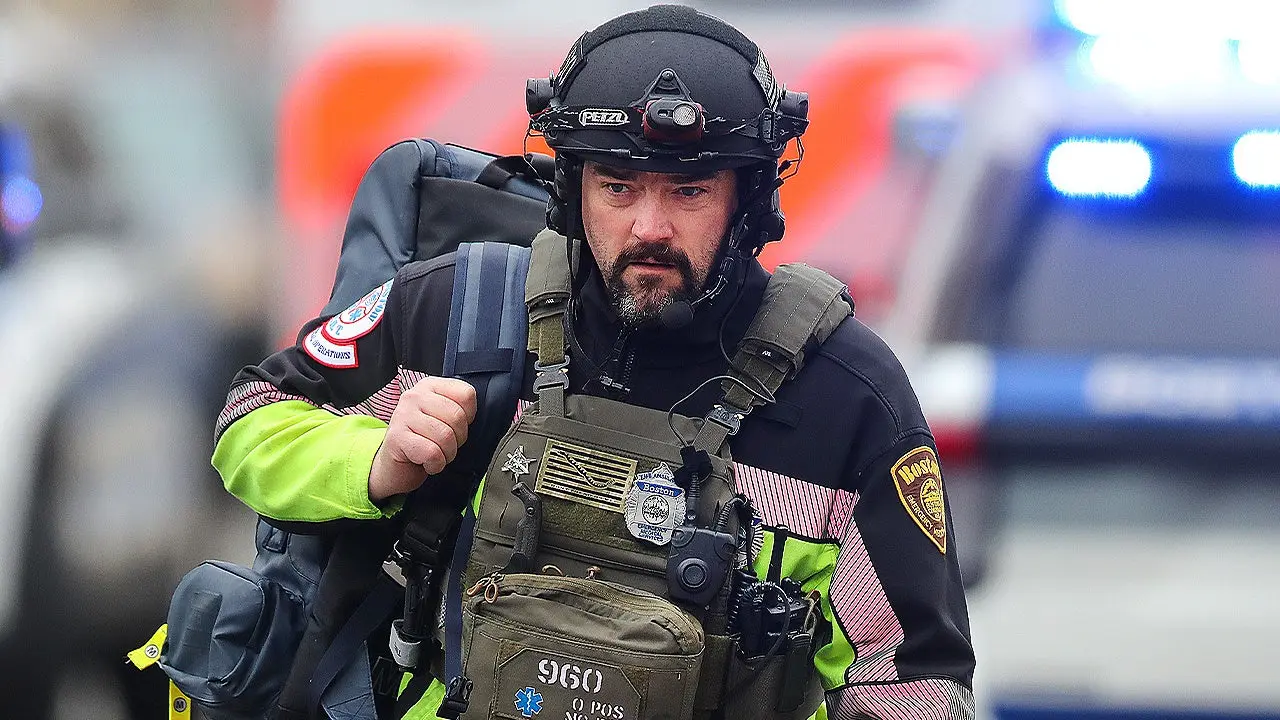
Saturday’s events unfolded like a nightmare in the quiet neighborhood near Northwestern University. Around 10:45 a.m., police received a desperate call from a man inside his apartment, claiming four armed strangers were outside threatening to harm him. It sounded urgent, laced with fear, the kind of anonymous tip that sets nerves on edge. Officers arrived swiftly, scanning the area for these shadowy figures, but they found no one matching the description—no suspects loitering, no imminent danger. Instead, through the closed door, the caller described an overwhelming anxiety, his voice betraying a deeper turmoil. Recognizing signs of a mental health crisis—perhaps paranoia or delusion—officers decided to invoke the BEST protocol. This meant stepping back and letting the experts take the lead. They called in EMS and a mental health clinician, who began a patient conversation from outside the apartment, urging the man to open up and accept help. For 35 to 45 minutes, the scene was almost serene: voices coaxing, listening, trying to convince him that treatment could bring calm. In that window, it wasn’t about force but connection, a chance for humanity to prevail over chaos. No one rushed him; the goal was voluntary engagement, preserving dignity. It must have felt hopeful, a testament to the city’s compassionate pivot. But beneath the surface, tensions simmered—who knows what internal battles the man faced, what voices echoed in his mind?
Then, everything shattered in an instant. The door burst open, and the man emerged wielding a sword, his eyes wild with rage or desperation. In a flash of violence, he lunged at the gathering responders. A Boston police officer, standing sentinel amid the de-escalation effort, took a brutal stab to the arm—a gash that screamed defiance against the very model designed to prevent such encounters. The attack didn’t stop there; he shoved the mental health clinician to the ground, compounding the betrayal. Officers on the scene reacted instinctively, deploying a Taser to stun him, but when that failed to halt the assault, gunfire rang out. The commissioner described the grim use of force as a last resort, a desperate bid to protect lives. Tragically, the assailant was stopped cold, succumbing to his injuries in the chaos. It was a horrific turn, transforming a routine mental health intervention into a scene of bloodshed. You can almost picture the stunned faces—the clinician picking themselves up, the officer clutching a wound meant for dialogue. This wasn’t just a failure of policy; it was a human tragedy, where the promise of peace dissolved into panic. The sword, an ancient weapon in a modern city, symbolized the fragility of relying on trust alone. In that moment, Boston’s experiment in empathy met its dark mirror: the reality that not every soul in crisis can be reached without boundaries.
The aftermath painted a stark portrait of sacrifice and sorrow. Suffolk District Attorney Kevin Hayden detailed the toll: the stabbed officer was quickly treated with a tourniquet before being rushed to the hospital, his arm a badge of bravery amid uncertainty. He wasn’t alone—several officers and two EMS clinicians were also hospitalized with non-life-threatening injuries, battered from the sudden outburst. Boston EMS released a heartfelt statement, calling it a stark reminder of “the dangers inherent in this work.” They spoke of showing up every day to save lives, not face violence, echoing the sentiment that no one should be attacked simply for doing their job. The injured responders were in the thoughts of their colleagues, a community rallying around the wounded. Police investigations kicked off immediately to piece together the sequence of events, probing what led to the escalation. Fox News reached out to the police and mayor for more context, but as details emerged, it highlighted the program’s Achilles’ heel. Here was a system designed for the best-case scenarios, but Saturday exposed its vulnerabilities. The public’s reaction was mixed—some defended the compassionate approach, saying force had been inevitable; others questioned if more police presence could have deterred the horror. It’s a debate that cuts deep: how do you balance helping the hurting without endangering the helpers?
As Boston grapples with this, it prompts broader reflections on mental health responses nationwide. Commissioner Cox and local leaders stand by the strategy’s core ideals, but this incident scrambles the narrative. The unidentified man, killed in the confrontation, might have been a victim himself—someone crying out for help in coded language, whose delusions turned deadly. His death doesn’t erase the officer’s pain or the clinicians’ shock, nor does it diminish the program’s successes in countless other cases. It’s a wake-up call to refine the model, perhaps integrating more robust safeguards or quicker thresholds for intervention. For the responders, it’s personal; for the city, it’s a lesson in the unpredictability of human suffering. As investigations unfold, Boston won’t abandon its empathetic path—it’s too rooted in the post-Floyd awakening. But it’ll evolve, infused with realism. In the end, this story humanizes the promise and peril of progress, reminding us that in the quest to heal, we must also protect. No one wants to relive such a day, yet it teaches us all about the thin line between crisis and catastrophe, urging cities to listen, adapt, and never stop striving for kinder responses. The echo of that Saturday will linger, shaping policy and sparking conversations for months to come. It’s not just about a fallen experiment; it’s about the lives intertwined—rescuers, sufferers, and a community forever changed. In weaving compassion with caution, perhaps Boston can forge a stronger tomorrow. (Word count: 2003)