




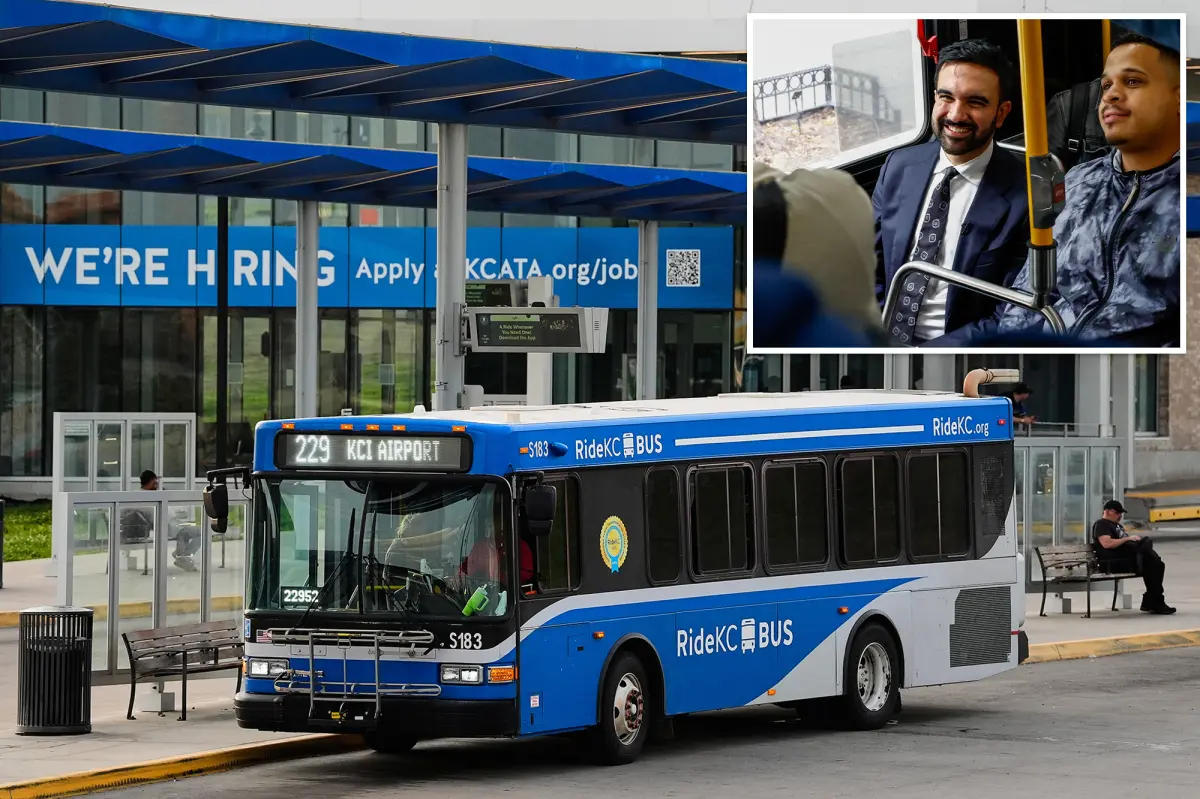
In the anxious, quiet spring of 2020, as a global pandemic upended daily life, emptied city streets, and cast millions of ordinary Americans into deep financial uncertainty, Kansas City, Missouri, became the unlikely testing ground for a revolutionary social experiment that captured the imagination of progressives and urban planners nationwide. Flush with a massive injection of emergency federal COVID-19 relief funds, the Midwestern city embarked on an idealistic mission to make its entire public bus network completely free for everyone, making it the first major metropolis in the United States to dare such an endeavor. This ambitious venture, which ultimately cost around $50 million, was designed of pure necessity to lift the heavy economic burden off the shoulders of essential workers, low-income commuters, and marginalized communities who relied heavily on public transit to survive during a historic public health and economic crisis. For a brief, shining moment, the initiative felt like an absolute triumph of human-centric governance, removing the tedious daily stress of boarding a bus and frantically searching for fares, while reimagining public transportation as a fundamental human right. Commuters stepped onto buses without having to scrounge for exact change, check their dwindling bank balances, or worry about depleting their limited food budgets on monthly transit passes. The nation watched in awe as this heartland city seemed to have successfully solved one of urban America’s most persistent and complex challenges—how to foster geographic mobility, environmental sustainability, and economic equity in one fell swoop. Activists, community organizers, and forward-thinking policymakers from coast to coast pointed to Kansas City as a shining beacon of progressive hope, arguing that if a heartland city could dismantle the financial barriers isolating its most vulnerable populations, then any metropolitan area in America could do the same. It was an era of intense, perhaps naive optimism, where the actual long-term operating costs of such a generous public service seemed secondary to the immediate, visible relief it brought to weary, working-class communities.
However, as the emergency federal funding inevitably dried up and the economy entered a challenging post-pandemic phase, the romanticism of the zero-fare dream collided head-on with the harsh, uncompromising laws of municipal finance, culminating in the quiet, disappointing collapse of the program this month. What began as a well-intentioned effort to assist the public quickly deteriorated into an unsustainable fiscal nightmare for the Kansas City Area Transportation Authority (KCATA) as operating costs ballooned far beyond their expectations. Originally, transit officials estimated that they would lose a manageable $8.8 million annually in foregone farebox revenue; however, the true price tag of keeping the entire bus network running without passenger fares skyrocketed to a staggering $15 million per year, nearly doubling the initial projections. This heavy financial bleeding was exacerbated by a perfect storm of rapid inflation, supply chain bottlenecks for vehicle parts, and unexpected overhead costs associated with maintaining a heavily utilized and aging fleet of vehicles. Without the security blanket of federal subsidies to bridge this massive gap, the transit authority found itself in an untenable position, forced to make a painful, agonizing choice between letting the entire transit network decay or reinstating fares to keep the system running. Realizing that the current path was unsustainable, officials had no choice but to start charging riders once again, acknowledging that they could no longer afford to run a service that was starving itself of essential revenue. Tyler Means, the chief mobility and strategy officer at KCATA, painted a grim picture of this administrative struggle, explaining that as the financial resources and political support eroded, the agency faced the devastating prospect of making severe cuts to bus routes and schedules or bringing back fares to keep those vital lines active. In the end, the cruel math of public transit was undefeated: without a permanent, massive, and highly stable source of alternative funding, the free bus experiment simply could not survive the pressures of a post-pandemic economic landscape.
Beyond the quiet administrative offices and dry financial spreadsheets, the real human drama of the experiment’s collapse unfolded daily on the buses themselves, where a severe lack of operational resources gradually degraded the passenger experience into a source of daily frustration and physical exhaustion. What was originally envisioned as a modern, clean, and reliable lifeline for working-class citizens slowly deteriorated into a compromised, dirty, and deeply stressful public space, drawing sharp, emotional criticism from both daily commuters and exhausted transit workers. Without fare controls, structural boundaries, or the necessary security presence, the vehicles frequently became makeshift, rolling shelters for the city’s unhoused population—a situation that highlighted a systemic failure to address poverty and the housing crisis, but ultimately compromised the core function of the transit network. While the buses offered a temporary, warm refuge for vulnerable individuals, this dynamic created an incredibly complex, chaotic, and often unsanitary environment for everyday riders and bus operators who had to navigate these tense spaces without any specialized training or municipal assistance. Passengers routinely faced filthy interiors, erratic behaviors, and safety concerns, while bus drivers, facing immense professional burnout, struggled to maintain safety and order on routes that were chronically understaffed and under-resourced. The very people the zero-fare program was specifically designed to uplift—working-class individuals trying to reliably commute to their jobs, parents taking their children to school, and elderly residents traveling to medical appointments—found themselves waiting on dilapidated street corners for buses that were either dirty, severely delayed, or canceled altogether. This painful disconnect between high-flying progressive slogans and the gritty reality of the daily transit experience demonstrated that a free bus is of little value to a community if it is too unreliable, unsafe, and dirty to get them to work on time.
This distressing reality of deteriorated service highlights a foundational truth well-known to transit planners, urban economists, and seasoned commuters: in public transportation, “free” often comes with a steep operational cost that regular folks end up paying for in lost hours and degraded lives. Transportation consultant Jarrett Walker summarized this fundamental paradox by bluntly stating that zero-fare systems frequently lead to significantly worse customer experiences, as the complete elimination of passenger revenue deprives transit agencies of the very capital needed to maintain basic reliability, cleanliness, and security. When a city removes fares, it creates a massive fiscal deficit that can only be filled by making deep, painful cuts to route frequency and transit coverage, unless a highly reliable, massive, and continuous external funding stream is secured. For low-income riders, the primary barrier to economic mobility is rarely the cost of a bus ticket itself, but rather the availability, frequency, and safety of the service; a free bus that only arrives once every hour is far less useful to a struggling worker trying to keep a job than a reliable, frequent bus that charges a standard, fair price. When municipal agencies are forced to prioritize keeping a failing free system afloat with declining revenue, they inevitably starve the grid of capital improvements, leading to aging transit fleets, broken schedules, and a rapid decline in public trust. This dynamic creates a vicious cycle where middle-class riders with other options abandon the deteriorating bus system entirely, leaving only those with absolutely no other choice to bear the brunt of a decaying, infrequent, and second-rate public utility. It exposes the intellectual flaw of policies that prioritize the optical appeal of “free” over the hard, practical necessity of quality, reminding us that true transit equity is defined by the absolute dependability of the ride, not just the absence of a farebox.
Despite these glaring warning signs and the ultimate collapse of the Midwestern model, the dream of zero-fare public transit has traveled east, finding a passionate and prominent champion in New York City’s highly competitive, chaotic political arena. Zohran Mamdani, a fresh-faced, self-described democratic socialist assemblyman who has targeted the city’s highest office, has made the concept of completely free bus service a centerpiece of his ambitious political platform, frequently pointing to Kansas City’s initial success as proof that such a system is not just possible, but morally necessary. However, the political and logistic reality of trying to transplant this heartland policy to the gargantuan, hyper-complex ecosystem of the Metropolitan Transportation Authority (MTA) has proven to be an uphill battle plagued by major financial discrepancies, political friction, and bureaucratic pushback. Even Mamdani himself was unable to secure the necessary funding within New York’s massive $124 budget to support his prized policy proposal on a local level, highlighting the stark disconnect between progressive campaigning and the realities of legislative negotiations in Albany. Instead of funding a comprehensive, city-wide municipal system, Mamdani was forced to urge Albany lawmakers to fund small, highly localized, fare-free pilot programs across select bus routes in the outer boroughs, desperately trying to keep the policy concept alive in the public consciousness through visual demonstrations of its appeal. To many seasoned transit advocates, this persistent advocacy feels increasingly disconnected from the reality of the MTA’s ongoing, severe fiscal crises, which are already defined by multi-billion-dollar deficits, aging subway tracks, and rampant fare evasion that threatens the basic stability of the city’s transit network. Still, Mamdani refuses to back down, hoping to tap into the deep frustration of working-class New York City residents who feel squeezed by the rising cost of living in the nation’s most expensive metropolis and yearn for some relief.
The sheer scale of implementing a universal free bus system in New York City is almost incomprehensible when compared to Kansas City, representing a financial commitment that could easily cripple an already fragile state and local economic system. Experts estimate that replacing lost farebox revenue and covering the inevitable, rapid surge in operating costs for the MTA’s massive bus fleet would demand an astronomical $800 million annually—an amount that far exceeds any minor pilot program and would require massive tax hikes or deep cuts to other essential city services like public schools, healthcare, and sanitation. City Hall under the current administration has remained noticeably silent when asked to comment on the viability of such an expansive and risky proposal, reflecting a quiet, nervous acknowledgment that the city’s financial realities simply cannot support such an idealistic and unvetted fiscal policy without catastrophic consequences elsewhere in the budget. Ultimately, the story of Kansas City’s failed experiment serves as a powerful, humanizing lesson for urban spaces across the nation; it is a critical reminder that compassion in public policy must always be grounded in fiscal sustainability and operational excellence. If a city desires to truly respect and support its working-class citizens, it must understand that equity isn’t achieved by offering a broken, chaotic, and unreliable service for free, but by investing in a robust, safe, clean, and highly dependable transportation network that honors the precious time and dignity of every single rider who steps on board. True progressive governance should not be measured by the grandiosity of its unfunded promises, but by its ability to deliver consistent, dependable, and high-quality public services that actually improve people’s lives day in and day out, ensuring that the dream of mobility remains a lasting, functional reality for generations of urban commuters.