





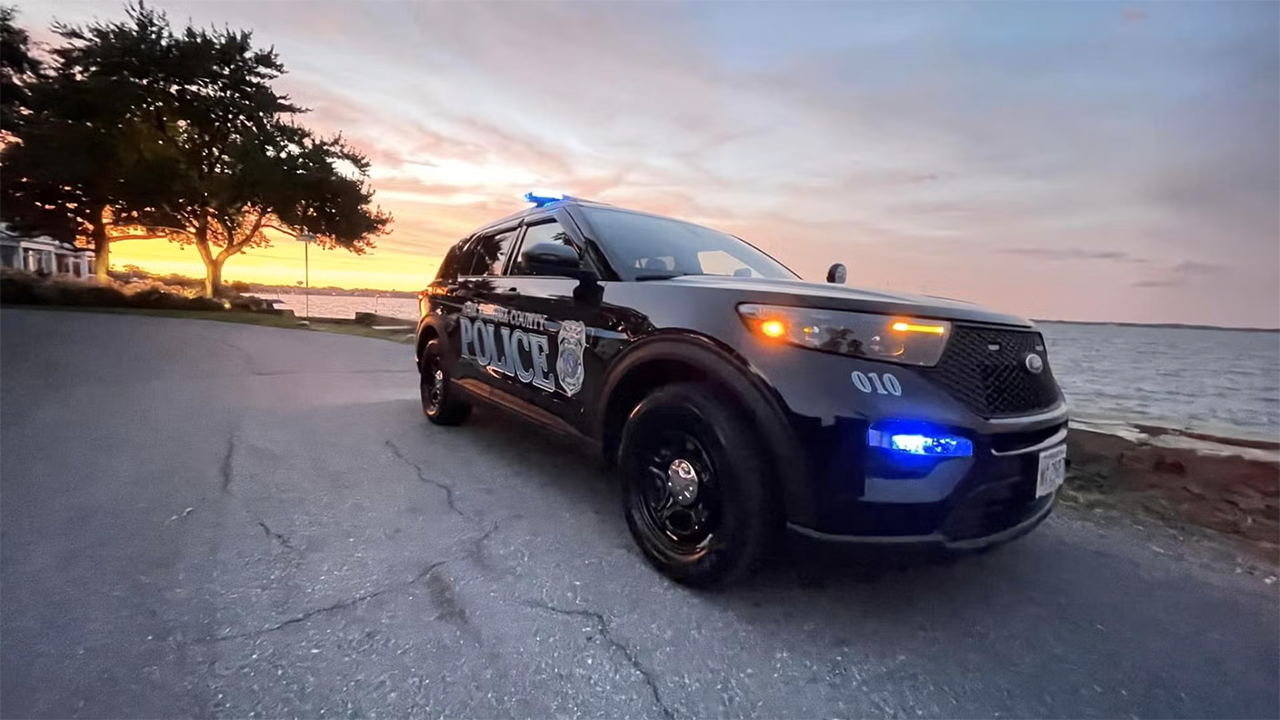
In the quiet, transitional hours before dawn, when the suburbs of Hanover, Maryland, are typically blanketed in a serene and peaceful wellness, the tranquility of a weekend morning was violently shattered by unexpected chaos. Nestled comfortably between the historic, bustling urban landscape of Baltimore, roughly fifteen miles to the north, and the politically active, dense epicenter of Washington, D.C., thirty miles to the southwest, Hanover is a community where residents actively seek a quiet reprieve from the fast-paced, high-stress rhythms of major metropolitan life. It is a place characterized by calm, family-oriented neighborhoods, manicured lawns, and a suburban rhythm that promises safety, assurance, and predictability to those who choose to raise their families here. However, at approximately 4:40 a.m. on an otherwise ordinary Saturday, this cherished promise of security was broken by the echoing, terrifying sound of gunfire. The Anne Arundel County Police Department was thrust into immediate operational response, answering calls about an “unknown disturbance” that would quickly reveal itself to be a scene of sheer terror. When patrol officers arrived at the scene, they did not discover a sleeping neighborhood; instead, they encountered a massive, panicked crowd frantically dispersing into the dark night. Terrified people were running for cover, screaming in confusion, as the heavy smell of spent gunpowder hung in the cool morning air. Amid this chaotic retreat, officers found a man lying on the ground, suffering from a critical gunshot wound to his torso. First responders immediately administered aid and summoned Emergency Medical Services, who rushed him to a nearby hospital. Although this victim’s injuries were later declared non-life-threatening, his suffering was only the opening chapter of a much larger, unfolding suburban nightmare that would soon grasp the attention of the entire state, leaving families in deep distress and searching for immediate answers.
The physical and emotional shockwaves of this violent outbreak did not remain confined to the single geographic coordinate of the initial shooting; they quickly rippled outward, destabilizing the entire Hanover community and exposing the fragile nature of modern suburban security. As the morning light slowly began to dawn, illuminating discarded personal belongings and bright yellow police tape marking the boundaries of the disturbance, the true scope of the tragedy was revealed to be far vaster than initially suspected. In the frantic, terrifying moments that followed the gunfire, as the massive crowd scattered into dark, winding residential streets and vehicles sped away in a desperate bid to escape, injured victims were scattered in multiple directions, seeking safety in sheer panic. For those caught in the crossfire of this senseless event, the primal instinct for survival took precedence over all else, leading to a fragmented aftermath that soon played out across several different municipal lines. The sheer terror of that early morning is incredibly difficult to comprehend for those who have never experienced such a sudden, violent disruption to their sense of peace. It is a moment where time itself seems to slow down, where the reassuring sounds of social gathering are instantly replaced by the terrifying, deafening roar of firearms, and where a person’s absolute focus is reduced to finding immediate shelter. For Hanover residents, the realization that such a destructive event could unfold within their peaceful enclave brings a profound and lasting sense of vulnerability. The very streets where local children normally play and neighbors exchange cheerful morning greetings were suddenly transformed into a crime scene, forcing everyone to confront the reality that no modern suburb is entirely insulated from the systemic issues of violence that continue to plague our broader society today, leaving a painful path of trauma that will take years to fully heal.
As the morning developed, the true scale of this emergency became painfully clear to detectives, not through updates from the cordoned-off crime scene, but through a series of urgent notifications from medical facilities throughout the region. Investigators were contacted by three separate hospitals, each reporting the sudden arrival of walk-in patients seeking immediate medical treatment for gunshot wounds sustained during the Hanover disturbance. This highly decentralized arrival of victims painted an incredibly vivid, chaotic picture of the aftermath, where injured individuals, gripped by intense adrenaline and fear, sought help through alternative means rather than waiting for ambulance dispatch at the scene. Among these patients was a woman who had suffered a gunshot wound to an extremity, her life altered in a fraction of a second by stray metal. Additionally, a man and another woman walked into a separate emergency room, both suffering from lower extremity injuries that bore silent witness to the completely indiscriminate nature of the gunfire. The atmosphere inside these local hospitals during those early Saturday morning hours was undoubtedly one of high tension and urgent focus, as medical teams worked rapidly to stabilize the wounded. The incredible professionalism of the doctors, nurses, and trauma staff who stepped up to care for these hurting people stands as a critical reminder of the dedication found within our healthcare system. They serve as a final line of defense against the shocking physical consequences of societal violence, working tirelessly to preserve human life and begin the lengthy, painful process of physical recovery. Each of these victims carries a different story of survival from that night, bound together by the shared trauma of a singular, terrifying moment that will linger in their minds long after their physical wounds have healed, reminding us of the fragility of human life in the face of unexpected crisis.
Undoubtedly, the most heartbreaking aspect of this entire tragedy was the official revelation that the victims of this sudden violence included two young boys, both of whom sustained lower extremity injuries in the chaos. To think of innocent children being caught in the violent crossfire of adult disputes is a deeply distressing reality that strikes at the core of our collective humanity. Childhood is meant to be a sacred time of growth, learning, and absolute safety, shielded from the harsh and destructive elements of the world, yet these two young boys were forced to experience the raw terror of a mass shooting. Although police officials have thankfully confirmed that all six victims, including these children, are being treated for non-life-threatening injuries, that medical classification does not begin to measure the true weight of the trauma inflicted. Physical wounds can be stitched, bones will mend, and skin will heal, but the psychological impact of being shot is a burden these children may carry for the rest of their lives. The memories of loud gunfire, screaming crowds, and the sudden, burning pain of their injuries are experiences that can radically alter a child’s worldview, replacing safe play with fear. The local community, schools, and families must now build a protective circle of care around these young boys, recognizing that genuine healing is not accomplished merely by discharging someone from a hospital bed. It requires a long-term commitment to restoring their emotional security, ensuring they know they are safe, and helping them reclaim the peaceful childhood that was so violently interrupted on that dark Saturday morning, a task that demands our utmost compassion, dedication, and unwavering support as they begin the difficult journey toward recovery.
With the immediate medical crises stabilized, the Anne Arundel County Police Department faces the tedious, complex task of investigating the incident, with dedicated detectives actively interviewing survivors to piece together the events of that morning. Reconstructing the sequence of a mass shooting is an incredibly challenging endeavor, requiring investigators to sift through conflicting testimonies, chaotic memories, and the overwhelming fear that often paralyzes witnesses. The difficulty of this investigation is further heightened by the reluctance of some individuals to speak, whether due to a fear of potential retaliation, a general mistrust of systemic authority, or simply a desperate desire to block out the memory of a highly traumatic event. Nevertheless, law enforcement officers are working around the clock to analyze ballistics, search for surveillance video, and follow every lead to identify those responsible for the violence. As of Saturday afternoon, no suspects had been publicly identified and no arrests had been announced, leaving a quiet tension hanging over the suburban streets of Hanover. The community remains on edge, knowing that whoever brought this terror to their neighborhood is still out there. This search for justice is about much more than solving a case; it is about reassuring a shaken public that their lives matter and that those who commit acts of violence will be held accountable. Law enforcement’s commitment to finding the truth is a vital step toward restoring order, proving that even when peace is temporarily disrupted, the community’s resolve to uphold safety and seek justice remains entirely unshaken by the criminal acts of a few, who seek to disrupt our way of life and replace community harmony with fear, uncertainty, and lawlessness.
Ultimately, the tragic shooting in Hanover acts as a sobering mirror reflecting the ongoing epidemic of gun violence that continues to challenge communities across the modern American landscape. Hanover’s geographic placement, operating as a quiet bridge between the bustling metropolitan centers of Washington, D.C. and Baltimore, emphasizes the reality that no neighborhood is truly isolated from the complex societal challenges of surrounding urban areas. Yet, even in the shadow of such a frightening event, the overriding narrative of this community is not defined by the violence that occurred, but by the remarkable strength of its response. The true measure of any neighborhood lies in its capacity for empathy, solidarity, and recovery when faced with unexpected tragedy. As the six wounded individuals begin their long paths to recovery and police officers continue their diligent hunt for answers, the people of Hanover have an opportunity to bind together, offering comfort to the victimized and standing firm against fear. By supporting the affected families, advocating for safer neighborhoods, and refusing to let fear dictate their daily lives, residents can demonstrate the indomitable spirit of their community. This painful incident can serve as a catalyst for deeper connections between neighbors, fostering a renewed commitment to looking out for one another and protecting the collective peace. In doing so, Hanover will not only heal from the physical and emotional wounds of this dark Saturday morning but will emerge as a beacon of hope, proving that unity and love are always far more powerful than any act of senseless destruction, showing the world that a community united in compassion can overcome even the darkest of times and build a much brighter, much safer future for all of its children.