



Terror in Yaracuy: Twin Seisms Shatter Venezuela’s Fragile Urban Landscape
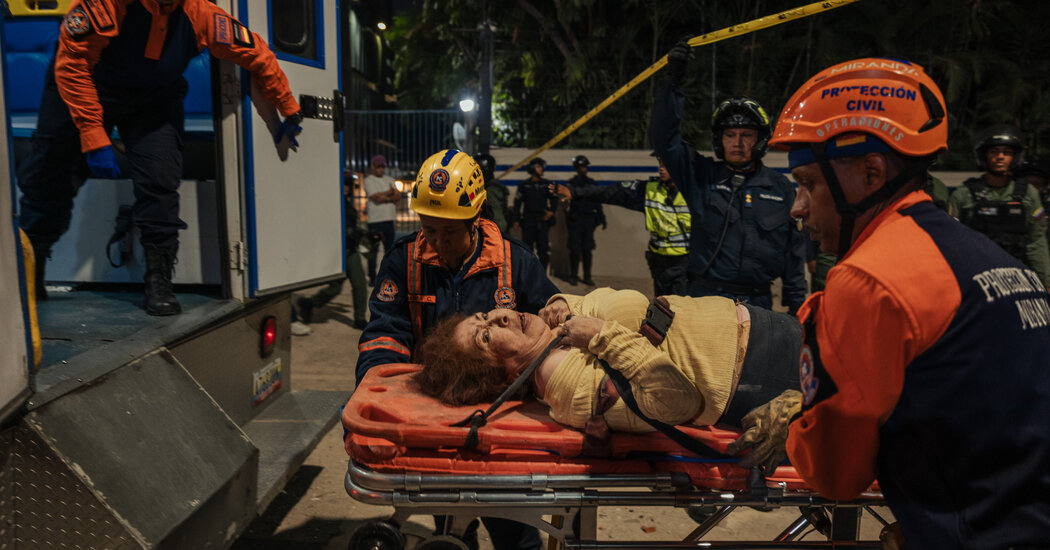
The ground beneath Venezuela did not merely shake on Wednesday evening; it ruptured with a violent, closely timed double impact that has left the nation’s infrastructure shattered and its population in a state of profound shock. Just after 6:00 p.m. Eastern time, a massive magnitude 7.2 earthquake struck near the city of San Felipe in Yaracuy state, sending violent shockwaves through the country’s central and coastal regions. Less than sixty seconds later, before the initial panic could even subside, a second and even more powerful magnitude 7.5 earthquake ripped through the same fault line, compounding the destruction and instantly qualifying as the most powerful seismic event recorded in Venezuela since the dawn of the twentieth century in 1900. In Caracas, the nation’s densely populated capital, high-rises swayed precariously as thousands of terrified residents poured into the streets, fleeing the dust and falling debris of a city built on fragile geological foundations. The physical toll of this unprecedented double blow became tragically clear when President Delcy Rodríguez addressed a anxious nation on state television, announcing a preliminary toll of at least 32 dead and over 700 injured. However, this count remains highly tentative, as communications remain severed in many of the hardest-hit zones, and officials have openly acknowledged that the data does not yet cover the coastal city of La Guaira, where dozens of apartment buildings and commercial structures are reported to have collapsed entirely under the weight of the twin tremors.
A Century of Seismic Silence Broken: The Science and Structural Failures Behind the Quakes
To understand the sheer magnitude of this natural disaster, seismologists have pointed to the intricate, highly active tectonic boundary where the Caribbean and South American plates grind past one another. According to Paul Earle, a senior seismologist with the United States Geological Survey (USGS), the rapid succession of these two highly destructive earthquakes was particularly devastating because the first event compromised the structural integrity of buildings, leaving them completely defenseless against the larger 7.5 magnitude shockwave that followed less than a minute later. The epicenter of the disaster was situated near San Felipe, a major regional hub of approximately 220,000 residents in Yaracuy state, located west of the capital, though the tremors were felt as far away as neighboring Colombia and across several Caribbean island nations. Civil engineers and geophysicists have long warned that a significant portion of Venezuela’s urban population resides in dangerously substandard housing, specifically unreinforced brick masonry, concrete-frame structures lacking seismic retrofitting, and historic adobe block construction common in older municipal districts. As rescue teams begin to access the outlying suburbs and mountainous barios that cling to the hillsides of Caracas, the structural vulnerability of these informal settlements has transformed a natural geological phenomenon into an unprecedented humanitarian crisis, with hundreds of homes reduced to piles of loose brick and dust.
Voices from the Rubble: Panic, Collapse, and the Frantic Search for Survivors
As night fell over the disrupted cities, the dark streets of Caracas and Yaracuy became scenes of desperate searching and raw human tragedy, captured in raw social media footage verified by international news outlets, including The New York Times. At Simón Bolívar International Airport, which serves as the primary gateway to Caracas, travelers screamed in terror and scrambled under heavy security counters as structural panels peeled away from the ceilings and the concrete concourse vibrated violently under their feet. Just north of the capital, a prominent multi-story hotel was reduced to a jagged mountain of fractured concrete and twisted rebar, prompting immediate, ad-hoc rescue operations by neighbors and surviving staff. Emergency responders, working under the dim beam of flashlights and car headlights due to widespread blackouts, have had to adopt a methodology of absolute, tense silence at collapse sites—periodically demanding that onlookers quiet their cries so that rescuers can listen for the faint, muffled sounds of survivors trapped beneath the heavy masonry. The sensory landscape of the affected cities is currently one of profound sorrow and immediate emergency: the air is thick with the smell of pulverized plaster and leaking gas, punctured by the endless wailing of sirens and the desperate calls of families searching the ruins for missing loved ones who have been silenced by the sudden collapse of their homes.
Echoes of 1967: How Decades of Infrastructure Decay Amplified a Natural Disaster
For older generations of Venezuelans, the terror of Wednesday’s double earthquake instantly resurrected painful memories of the July 1967 Caracas earthquake, a magnitude 6.6 event that claimed more than 240 lives and caused widespread destruction across the capital’s affluent Altamira and Los Palos Grandes neighborhoods. However, while the 1967 disaster struck an economically booming nation with modernized infrastructure and a highly functioning public health system, the 2026 catastrophe has made landfall in a country whose civic foundations have been systematically hollowed out by years of severe economic collapse and political turmoil. Decades of deferred maintenance on critical utility grids, coupled with severe chronic shortages of basic medical supplies, clean running water, and operational emergency vehicles, have severely compromised the municipal capacity to respond to an emergency of this scale. The local mayor of a key municipality within Caracas confirmed that at least three deaths occurred within minutes of the initial tremors when two multi-story structures folded in on themselves, highlighting the reality that even minor delay in deploying specialized heavy lifting equipment and canine search teams will inevitably result in a rapidly escalating death toll. The historical parallel serves as a grim warning: while the 1967 disaster prompted a temporary revolution in national building codes, the actual implementation of those safety regulations has been virtually non-existent in the sprawling, unregulated urban expansions of the last thirty years.
Catastrophe in a Vassal State: The Geopolitical Chaos Surrounding the Disaster
Crucially, this natural disaster has unfolded against an incredibly volatile political backdrop, adding a layer of deep geopolitical complexity to the ongoing rescue and recovery efforts. Just months ago, in January, a dramatic international intervention saw United States military forces depose and capture Nicolás Maduro, the authoritarian leader who had presided over Venezuela’s protracted economic collapse, triggering a radical restructuring of the nation’s political landscape. In the wake of this intervention, the Trump administration has asserted aggressive control over the country’s lucrative oil reserves, effectively transforming the once-sovereign South American nation into an administrative protectorate or vassal state. While American venture capitalists, commercial developers, and oil executives have been actively flocking to Caracas in recent months to negotiate lucrative resource extraction deals, the administrative apparatus of the Venezuelan state remains fractured, polarized, and highly dependent on foreign directives. Consequently, the newly established governing executive led by Delcy Rodríguez must navigate this heavy foreign presence while trying to maintain local authority, a dynamic that has created significant bureaucratic bottlenecks as local emergency management agencies struggle to coordinate with the foreign corporations that now control much of the nation’s vital infrastructure and heavy machinery.
A Global Lifeline: Navigating Sovereign Politics to Deliver Humanitarian Aid
In response to the sheer scale of the devastation, President Rodríguez has declared a national state of emergency, issuing an urgent directive for all medical professionals, nurses, and emergency personnel to report to their designated clinics and hospitals, many of which are operating on backup generators and suffering from severe structural damage themselves. Recognizing that local resources are entirely inadequate to address a disaster of this magnitude, the Venezuelan government has taken the unusual step of welcoming immediate international humanitarian assistance from a diverse array of global powers. Specialized rescue units, canine search teams, and medical delegations are expected to arrive at the partially damaged Caracas airport from nations including the United States, the Dominican Republic, El Salvador, Mexico, and Qatar, while traditional regional partners like Brazil, China, and various Caribbean states have also pledged substantial logistical support. This incoming wave of international aid presents a complex diplomatic challenge for a nation currently functioning under a transitional, U.S.-backed administration, as foreign teams must quickly integrate into a fractured domestic emergency response framework. As the dust slowly settles over the ruins of Caracas, San Felipe, and the devastated coastal corridor of La Guaira, the immediate survival of thousands of trapped and injured Venezuelans will depend entirely on whether these international rescue teams can bypass the deep geopolitical divisions of the era to deliver life-saving aid to a population pushed to the absolute brink of endurance.