




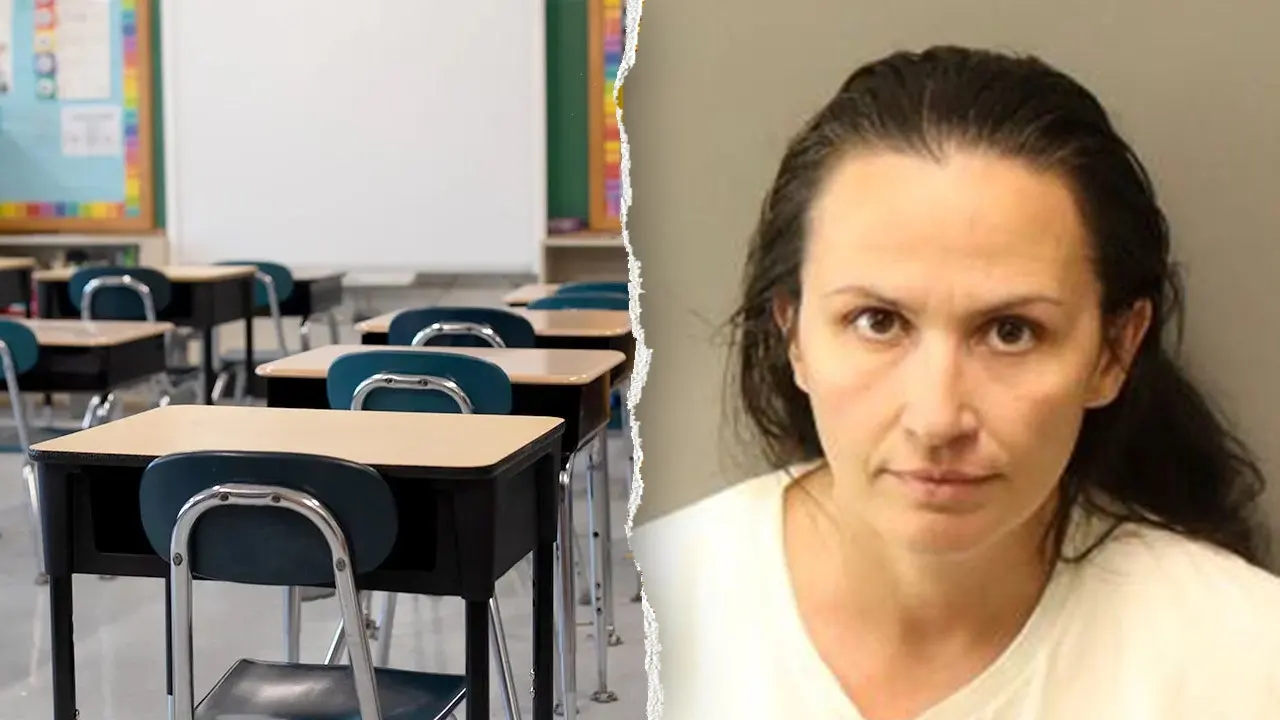
The bedrock of any thriving community is the unspoken, sacred trust established between educators, parents, and children. In the quiet, suburban sanctuaries of Riverside County, California—places like Eastvale and Moreno Valley where families flock to raise their children in safe, nurturing environments—this trust is presumed to be absolute and unwavering. When that delicate covenant is shattered, the psychological and emotional fallout ripples far beyond the walls of a single classroom, leaving an entire community grappling with a profound, lingering sense of vulnerability and betrayal. This deep-seated collective anxiety was pushed to the absolute forefront of public consciousness following the shocking announcement by the Riverside County Sheriff’s Office regarding the arrest of Samantha J. Watson. At forty-one years old, Watson, a resident of the meticulously manicured streets of Eastvale, found herself stripped of her professional standing and thrust into the harsh, unforgiving light of the criminal justice system. The severe charges leveled against her—including oral copulation, digital penetration, and sending harmful material to a juvenile—speak to a profound, systemic abuse of authority that threatens to dismantle the very perception of schools as safe havens for developing minds. To hear that an educator, hired to cultivate the promise of the future, is instead accused of exploiting a student, hits at the most visceral fears of physical safety and innocence lost. As the details of her arrest emerged, they brought with them a sobering reminder of the dark currents that can flow beneath the surface of seemingly normal suburban lives. The arrest did not merely signify a necessary legal action; it signaled the collapse of a sanctuary where children are meant to grow without fear of exploitation from those sworn to protect them, leaving neighbors and parents to wonder how such acts could transpire behind closed schoolhouse doors, and what must be done to ensure it never happens again.
The timeline of the alleged misconduct adds another layer of heartbreak and complexity to an already devastating situation, raising difficult questions about temporal distance and the lingering ghost of unaddressed trauma. According to investigative details released by the Riverside County Sheriff’s Office Special Victims Unit, the inappropriate contact between Watson and the student took place years ago, specifically spanning the timeframe between 2017 and 2018. The geographic epicenter of this betrayal was a charter school operating in the bustling 23000 block of Sunnymead Boulevard in Moreno Valley, a commercial and residential hub known for its lively local commerce and family-centric neighborhoods. Charter schools often pride themselves on fostering tight-knit, alternative learning environments that feel more like extended families than institutional bureaucracies, making the allegations of abuse at such a location feel remarkably intimate and deeply personal to the student body and staff alike. Over a two-year period, as seasons changed and academic semesters crossed the calendar, a child was allegedly subjected to severe boundary violations that included direct physical abuse and the insidious exchange of inappropriate digital media. The specific charges of oral copulation and digital penetration suggest a level of physical exploitation that carries lifelong psychological consequences, while the charge of transmitting harmful material to a juvenile highlights how modern technology can be weaponized by abusers to groom, isolate, and psychologically manipulate vulnerable young minds. That these alleged acts occurred several years ago serves as a haunting reminder that the scars of childhood exploitation do not fade with the passage of time; rather, they often remain buried, dictating the course of a young person’s development until courage, intervention, or circumstance finally brings the truth to light, decades or years later, forcing a painful but necessary reckoning with the past.
Transforming anonymous whispers and historical pain into a legally binding case requires rigorous, painstaking investigative work, a duty that fell squarely upon the shoulders of the Riverside County Sheriff’s Office Special Victims Unit. This specialized division, composed of detectives trained to navigate the highly sensitive, emotional, and complex landscape of child abuse, began pulling at the threads of this case in January of this year. For months, these investigators worked quietly behind the scenes, conducting interviews, analyzing digital forensic footprints, and building a comprehensive evidentiary foundation without alerting the suspect or compromising the integrity of the young victims involved. The culmination of this silent, dedicated labor materialized on the morning of May 22, when law enforcement officers arrived at a quiet, residential neighborhood in Eastvale. There, in the 14000 block of Silent Stream Court—a street whose very name evokes a sense of tranquil domestic safety—investigators executed a federal search warrant on Watson’s home. The sudden disruption of this residential peace serves as a stark visual metaphor for how private deviance can disrupt the harmonious facade of suburban neighborhoods. Watson was taken into custody without incident, a peaceful apprehension that stood in stark contrast to the violent, disruptive nature of the allegations she faces. Yet, the quiet nature of her arrest does not diminish the gravity of the legal machinery that has now been set into motion against her, as the Special Victims Unit continues to sift through physical evidence and digital devices seized during the search, looking for further confirmation of the alleged pattern of behavior and ensuring that no stone is left unturned in their pursuit of comprehensive justice.
To truly comprehend the weight of this case, one must look past the dry language of police blotters and legal charges and focus on the human reality of the victim’s experience. The power dynamic inherent in the teacher-student relationship is one of the most lopsided in modern society, where educators hold the keys to academic success, social acceptance, and emotional validation. When a teacher crosses the line from mentor to predator, they utilize this power asymmetry to construct a psychological prison around their victim, often convincing the child that the relationship is consensual, special, or a deeply guarded secret that must be kept at all costs to avoid ruining lives. This dynamic explains why many victims of educator sexual misconduct remain silent for years, carrying a heavy burden of undeserved shame and confusion through their critical developmental years before finding the strength to speak out. The transition from 2018 to the present day represents a long, agonizing journey for the survivor, who likely had to navigate high school, transition into adulthood, and carry the silent trauma of what occurred on Sunnymead Boulevard before the official investigation was launched in January. By humanizing this ordeal, we acknowledge that the true damage of these crimes goes far beyond physical violation; it fractures a young person’s ability to trust authority figures, peer relationships, and even their own judgment. It is a slow-burning trauma that manifests in anxiety, depression, and a persistent sense of betrayal, reminding us that justice is not merely about punishing the offender, but about validating the immense pain of the survivor and providing a compassionate path forward for them to reclaim their agency, dignity, and voice.
The institutional response to abuse allegations is often marked by a tense, protective silence, as schools and districts struggle to manage their liability and protect their public image, a reality reflected in the modern landscape of education. In this case, authorities did not publicly name the specific charter school on Sunnymead Boulevard, leaving many families in Moreno Valley to navigate a stressful fog of uncertainty and anxiety. This lack of transparency, while legally necessary to protect the identity of the victim and ensure the integrity of the ongoing prosecution, can inadvertently foster a climate of suspicion and fear among parents who wonder if their own children were exposed to a similar threat. This anxiety is further compounded by a chilling revelation from the Riverside County Sheriff’s Office: investigators openly suspect that there may be additional victims who have not yet come forward. This public appeal acts as a somber invitation to other young people who may have experienced Watson’s alleged behavior, acknowledging that predatory conduct rarely exists in a vacuum and often follows a calculated, recurring pattern of targeting vulnerable youths. The prospect of multiple victims turns this from a single, tragic failure of professional conduct into a potentially wider crisis of safety and oversight within the regional education network, forcing administrators and community leaders to critically examine their screening processes, training protocols, and reporting mechanisms to ensure that warning signs are never ignored or swept under the rug.
As the legal proceedings against Samantha J. Watson begin to unfold in the Riverside County court system, the community is left to look toward a future defined by vigilance, healing, and an unyielding commitment to child safety. The arrest represents only the preliminary chapter of a long, arduous process of seeking truth, a path where the legal defense will present its arguments, the prosecution will lay out its evidence, and a jury will ultimately weigh the facts of a devastating case. Beyond the courtroom, however, lies the much larger task of cultural and structural reformation, reminding us that protecting children requires more than just reactive law enforcement; it demands an active, daily dedication from parents, educators, and neighbors alike. This tragic incident serves as an urgent wake-up call for schools to reinforce boundary training, encourage open communication with students about digital safety, and create environments where children feel entirely safe to report inappropriate behavior without fear of disbelief or retaliation. True healing for the Moreno Valley and Eastvale communities will not come merely from a guilty verdict or a prison sentence, but from a collective resolve to build a safer, more transparent world for the next generation. As the Riverside County Sheriff’s Office Special Victims Unit continues its meticulous search for truth, the hope remains that this painful exposure of systemic betrayal will eventually pave the way for a stronger, more protective community, ensuring that the sacred trust between those who teach and those who learn is never again broken with such devastating and long-lasting consequences.