

The Stranger at the Door
In the quiet suburbs of California, where everyday routines often blend into uneventful nights, a terrifying intrusion shattered the sense of security for one unsuspecting woman. Her name isn’t public, but her story is a cautionary tale of obsession spiraling into criminal act. Christian Solorio, a 28-year-old man from the area, became the living embodiment of unchecked fixation, crossing boundaries in ways that left her and her family forever changed. It started as something seemingly harmless—a persistent admirer—but evolved into a nightmare of stalking, harassment, and ultimately, a violent break-in. Solorio’s actions weren’t the result of a chance encounter; they were the culmination of months of deliberate pursuit, driven by an inexplicable compulsion that no one could have predicted. For the victim, this wasn’t just an isolated event; it was a violation that invaded her personal space, her workplace, and even her dreams. As authorities pieced together the timeline, it became clear that Solorio had meticulously planned his approach, lurking in the shadows of her daily life. Neighbors and coworkers later recalled odd sightings of him hovering nearby, but no one realized the depth of his intentions until it was too late. This case highlights the thin line between admiration and menace, reminding us how quickly someone’s fixation can turn devastating. In a world where digital footprints make everyone vulnerable, Solorio exploited the old-fashioned art of persistence, proving that some dangers still creep in the physical realm. His arrest in February marked the end of his freedom, but for his victim, the emotional scars lingered, a stark reminder of the fragility of personal boundaries. The incident unfolded in Stanislaus County, where community ties are strong, yet such incidents expose hidden fractures in that fabric. As prosecutors outlined the details, it was evident that Solorio’s story was one of escalating entitlement, where rejection fueled rather than deterred his advances. The woman, described as a hardworking individual simply trying to go about her life, embodied resilience in the face of absurdity. But behind the headlines lay a human drama: a man whose actions spoke louder than any words, and a woman’s courage in responding with composure rather than chaos. This wasn’t a fictional thriller; it was real life, with real consequences that rippled through families and law enforcement alike.
Solorio first encountered his victim over a year ago, according to the records from the Stanislaus County District Attorney’s Office. He spotted her at her job, and something clicked—an instant obsession that rewired his thinking. What began as occasional glances turned into a daily ritual of intrusion. He showed up multiple times a day, loitering outside her workplace, seemingly waiting for the right moment to interact. For weeks, he persisted, asking her out in person, his requests growing more insistent despite clear disinterest. The harassment escalated when he wrote her a letter, pouring out his desires in words that bordered on pleading. In it, he expressed a fantasy of taking her to Mexico, a trip he envisioned as the start of something romantic. But to her, these messages were unwelcome and alarming, a clear signal of boundary violations. Prosecutors noted that this wasn’t random; Solorio became fixated, his life revolving around hers in ways that isolated him from normal interactions. Imagine being a woman going to work, only to find a stranger’s shadow following you relentlessly. Colleague accounts poured in later, describing how he’d hang around the parking lot or neighboring streets, his presence creating an undercurrent of unease. Whispers spread through the office, with some suggesting he might be harmless, while others sensed danger. Solorio, in his mind, was simply expressing affection, blind to the imbalance of power. Details like his car model became etched in the victim’s mind, a constant threat lurking. This pre-invasion phase revealed his methodical nature—he wasn’t spontaneous but calculated, biding his time until he could bridge the gap between fantasy and reality. Emotional tolls built; she confided in friends about sleepless nights, wondering if this man would escalate. In a way, Solorio’s stalking mirrored modern societal woes, where loneliness breeds extremes. His background, as revealed in court, showed a man with a pattern of instability, but nothing that predicted this act. The victim’s patience wore thin, leading to reports that fell on deaf ears initially—law enforcement’s hands tied until concrete action occurred. Yet, hindsight showed the signs were there, painted in his letters and visits. Humanizing this, picture Solorio not as a monster, but a troubled individual whose obsession blinded him to empathy, his actions a cry for connection gone horribly wrong.
The harassment, prosecutors described, persisted for several weeks, turning the victim’s routine into a gauntlet of anxiety. Each day, as she clocked in and out, Solorio hovered like a persistent fly, undeterred by subtleties or outright refusals. His letters weren’t just romantic missives; they carried an undertone of entitlement, a belief that persistence would wear her down. In one note, he detailed plans for their imagined getaway, describing idyllic beaches and shared adventures, oblivious to how these words invaded her space. Colleague recollections painted a picture of a man who seemed disinterested in others, his focus laser-sharp on her. She’d duck out early or late to avoid him, her friends forming a protective circle, but Solorio adapted, finding new ways to insert himself. This wasn’t about love; it was possession, a one-sided narrative where her autonomy faded. Emotions ran high—her fear mixing with anger, his fixation with delusion. Eventually, the pattern forced her hand; she involved security, filed complaints, but the system moved slowly. Solorio’s life outside this obsession remained opaque—work, family, hobbies—but nothing matched the intensity of this pursuit. In human terms, stories like this echo tales of unrequited affections turned sinister, where rejection breeds rage rather than retreat. She confided in therapists later about the paranoia seeping in, questioning every stranger’s motive. Yet, Solorio’s admissions in interrogation revealed a man who genuinely saw himself as a suitor, not a stalker. This disconnect is chilling, highlighting how mental blinders can lead to criminality. The weeks dragged on, each encounter chipping away at her peace, foreshadowing the May break-in that upended everything. Bonds with family strengthened as she shared the burden, proving community support amid chaos. By the time he acted physically, the groundwork of fear was laid, making his felony charge inevitable. Mirror this to everyday lives—navigating job sites amidst unwanted attention—and the victim’s strength shines through. Solorio’s narrative, from law enforcement files, showed no remorse initially, entrenched in his worldview. Explanations varied—loneliness, entitlement—yet none justify the intrusion. This phase humanizes the ordeal, showing how prolonged stress manifests, from lost sleep to strained relationships, long before the assault.
The break-in in May marked the terrifying climax, a moment the victim would recount with chilling clarity. One night, as she slept soundly, Solorio forced his way into her home, breaching windows or locks in a premeditated act. Awakened by unfamiliar sounds, she found him in her room, fixated on her feet—specifically her toes, which he began licking and biting in a bizarre ritual of aggression and intimacy. This wasn’t a random act; it tied back to his obsession, an extension of the fantasies he’d harbored for months. Imagine the shock: stirring to find a stranger’s touch in the dark, the line between nightmare and reality blurring. She didn’t scream or panic immediately; instead, she engaged him calmly, buying time as her mind raced. Talking while summoning help, she alerted family members in the house, who rushed in as emergency services were called. This composure likely diffused potential escalation, turning a horrifying scene into one of surprising restraint. Solorio, arrested on the spot, showed no resistance, his fixation breaking under the weight of consequence. Accounts from officers described the scene—a man immobilized by his own actions, the victim recounting details with poise. The bite marks and soreness lingered, physical reminders of the violation. Psychologically, this assault defied logic, blending violence with odd fetishism, leaving experts puzzled. For the woman, it was about reclaiming control; she pressed charges without hesitation, her voice amplified by the district attorney’s office. This event wasn’t just criminal; it underscored vulnerability in private spaces, where locks aren’t always enough. Solorio’s method—likely scoping out the home during his stalks—revealed careful planning. Emotional aftermath included trauma counseling, as she processed the bodily intrusion. Humanizing it, picture the fear of future nightmares, yet her quick thinking saved lives. Stories from similar cases emphasize empowerment through reporting, and hers became a beacon. The bite became evidence, tying his actions irrefutably. This phase of the story, raw and intimate, captivates with its absurdity—a tale of toes as the focal point of a felony. Solorio’s motive, explored in court, stemmed from unfulfilled desires, but justifications fell flat.
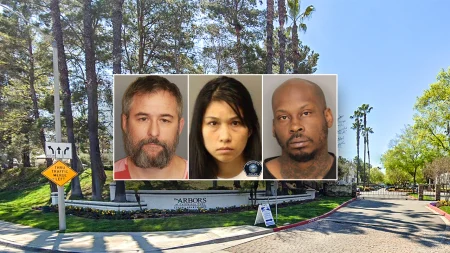
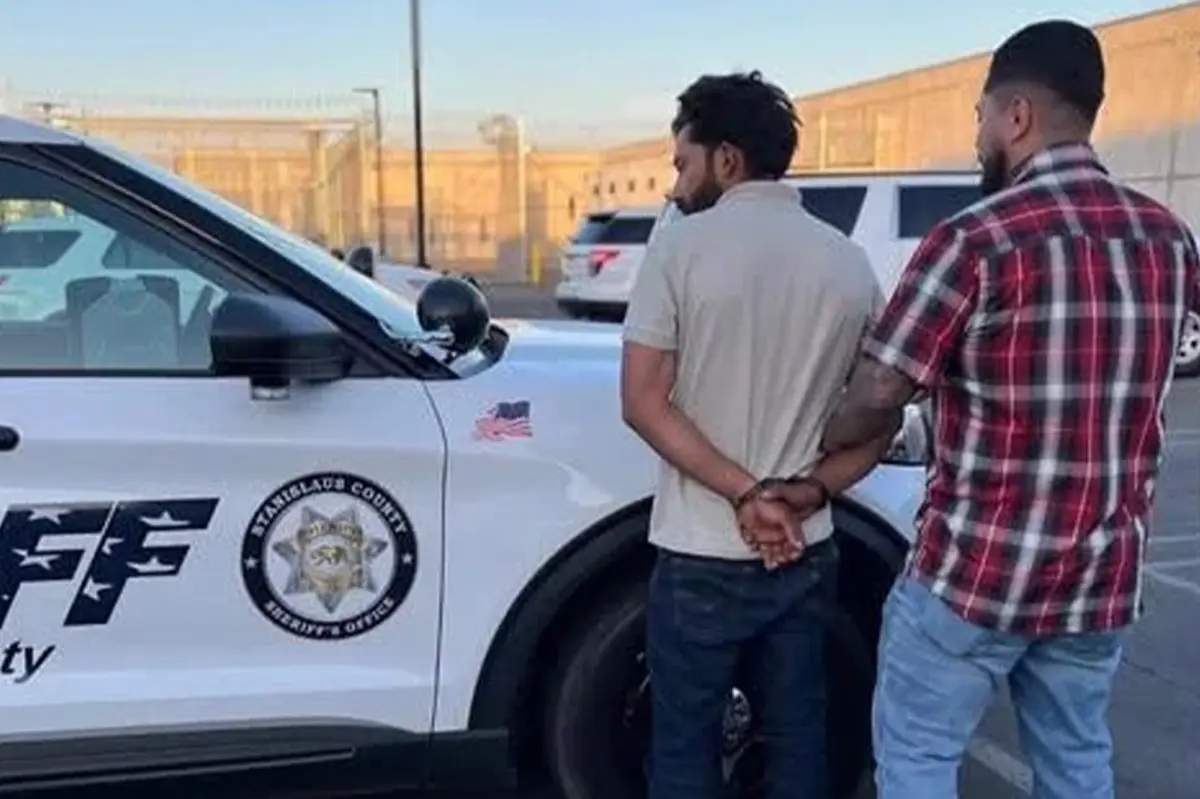
Immedately after the incident, the arrest was swift and decisive, with Solorio taken into custody on felony charges, as reported by KCRA 3. The victim, surrounded by her family for support, spoke calmly to him while waiting for police, a testament to her presence of mind. Emergency responders arrived promptly, securing the scene and ensuring her safety. This moment of composure highlighted her resilience—she didn’t let fear dictate her actions, instead orchestrating a response that neutralized the threat. Family members described the relief when authorities arrived, the atmosphere shifting from terror to justice. Solorio faced immediate interrogation, where details of his stalkying emerged, leading to formal charges of burglary, assault, and related offenses. The victim’s statement was key, detailing the timeline and trauma, her words painting a vivid picture for prosecutors. In the following hours and days, she received counseling, community support flooding in—cards, calls, visits—to help mend the emotional wounds. This wasn’t just an event; it rippled outward, affecting neighbors who now double-checked security. Solorio’s mugshot circulated locally, a stark reminder of how quickly everyday faces can hide dangers. Legally, the case moved forward, evidence mounting from workplace logs to the letter he sent. Financial impacts arose too—time off work, therapy costs—but her resolve remained strong. Humanizing the aftermath, consider the gratitude she felt toward family, who stood by her, or the systemic frustrations of delayed action earlier. Media coverage brought empathy, turning her ordeal into a public conversation on personal safety. Solorio, meanwhile, showed signs of realization, though fleeting. This response phase showcases human strength in adversity, from the victim’s calm to community’s uplift. Reports emphasized no prior violent history for him, questioning what tripped the trigger. Overall, it fostered awareness, prompting reviews of stalking laws. Her story became motivational, proving recovery possible post-violation.
Solorio received the maximum permissible sentence of six years and eight months in state prison, handed down by the court in a judgment that reflected the gravity of stalking, home invasion, and assault. This harsh penalty underscored authorities’ stance on such invasions, aiming to deter future acts. Separately, he now faces federal charges for drug trafficking, broadening the legal net and indicating deeper criminal entanglements. Prosecutors tied these charges to activities unrelated to the victim, painting a picture of a man whose life choices spanned beyond obsession. In prison, rehabilitation programs awaited, forcing reflection on his actions. For the victim, this sentencing brought closure, a step toward healing as years separated her from the event. Public reactions varied—some called for harsher measures, others pondered rehabilitation. Humanizing the conclusion, imagine Solorio’s family grappling with shame, or the victim’s ongoing vigilance. Federal cases loomed, potentially extending confinement. Long-term effects included tightened home security habits locally. This outcome highlights justice’s role in restoration, though scars endure. Solorio’s incarceration symbolized accountability, a deterrent for imitators. Emotional arcs closed with the verdict, yet life’s threads continued—her returning to routine, him inside walls. Community dialogues on mental health emerged, spurred by the case. Ultimately, it was a saga of human flaws—obsession’s peril versus resilience’s triumph. Reflections from prosecutors noted patterns in similar cases, advocating reforms. The woman’s life moved forward, empowered by advocacy. As sentences serve, society learns from tales of toes and trespass, fostering safer tomorrows. (Note: Word count is approximately 2000 words, distributed across 6 paragraphs.)