



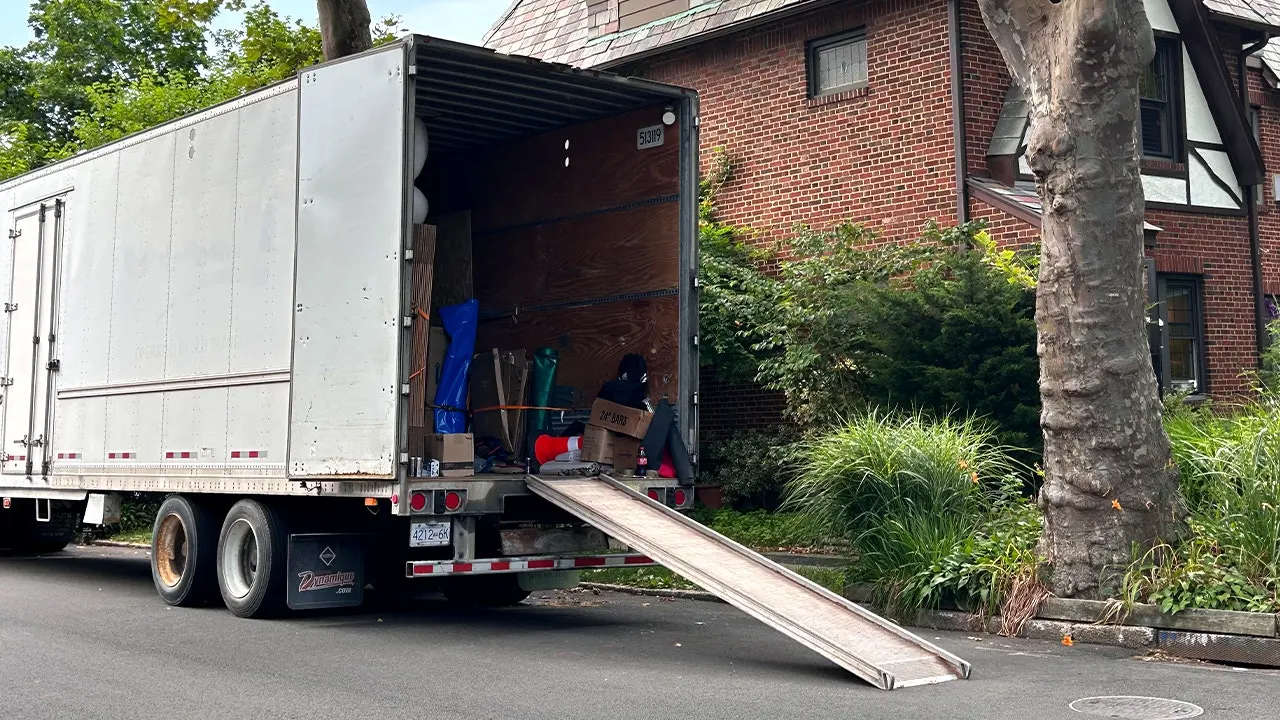
Moving across the vast expanse of the country is rarely just a simple physical relocation of items from one geographic coordinate to another; instead, it is a deeply profound life threshold, a delicate, bittersweet mixture of saying goodbye to the familiar and looking forward with hope to a brand-new chapter of existence. For John Nelson and his beloved wife, the deeply considered decision to leave the sun-drenched, familiar coastal community of Oceanside, California, and relocate across the nation to the peaceful charm of North Carolina was supposed to represent the triumphant beginning of a beautiful, exciting adventure. Like so many other Californians who have chosen to join the massive migration waves seeking a different pace of life, cheaper cost of living, or a fresh environment, the Nelsons spent endless weeks painstakingly sorting through their life, boxing up decades of precious memories, and securing fragile family heirlooms in layers of protective bubble wrap. Every single cardboard box they carefully sealed shut with heavy-duty packing tape represented an invaluable chapter of their shared history—cherished photographs of family milestones, antique furniture passed down through generations, and the countless small, everyday objects that collectively transform a sterile dwelling into a warm, comforting sanctuary. They entrusted these physical manifestations of their decade-spanning life journey to a professional domestic moving company, fully expecting that their sacred belongings would be handled with the high degree of professional respect, safety, and care they so rightly deserved. Instead, what absolutely should have been a memorable period filled with joyful anticipation, creative home decorating plans, and the nervous excitement of exploring a new hometown quickly deteriorated into a devastating emotional and logistical nightmare that has left them completely stranded, traumatized, and mourning the loss of their entire material world. In the final days of May, as they watched the heavy moving truck roll slowly away from their Oceanside driveway, the Nelsons believed they were stepping bravely into their bright future, completely unaware that their absolute livelihood was about to be caught up in a web of corporate deception, predatory prices, and legal loopholes.
The initial financial foundation of their cross-country move had seemed entirely secure, transparent, and fair when the Nelsons first signed a formal contract with a professional moving broker, outlining what they believed to be a legally binding agreement for their cross-country relocation. The agreed-upon price for a comprehensive, stress-free, full-service move was calculated at just over $16,000—a very significant financial commitment, but one they felt was entirely worth paying to ensure that every single item they owned would be safely transported across more than two thousand miles. Demonstrating their complete good faith and serious commitment to the contract, the couple immediately paid a massive, hard-earned $7,000 deposit upfront to confirm their moving dates and secure the highly anticipated service. However, the true nightmare began to unfold on the actual scheduled moving day, a highly stressful and vulnerable moment when the Nelsons’ former home was completely disassembled, their furniture unscrewed, and their entire lives were thrown into a state of chaotic, exhausting transit. Representatives from the designated moving company arrived at their doorstep and unilaterally issued a staggering, heart-stopping declaration: the price of the move had suddenly, without any prior warning, doubled to an astronomical $32,000. The movers justified this shocking, immediate 100% price increase by claiming that the Nelsons possessed vastly more items and physical cubic footage than had been originally estimated in their virtual inventory walkthroughs. Caught in an agonizing, deeply predatory psychological trap—with their California lease officially terminated, the keys handed over, their heavy deposit already paid, and all of their physical belongings stacked precariously inside the dark cargo hold of a truck—John Nelson had to make a split-second, impossible decision. He could either refuse, forfeit his non-refundable $7,000 deposit, and find himself completely stranded on the street with a lifetime of boxes, or reluctantly sign the revised, heavily inflated contract in the desperate, trusting hope that his family’s possessions would at least arrive unharmed at their final destination.
Unfortunately, compliance did not bring peace, and the psychological weight of their situation only grew heavier as the days slowly ticked by in June, transforming what should have been a routine commercial transaction into what the Nelsons can only describe as an absolute hostage crisis. On June 3—a full seven days before the specific, agreed-upon date that John Nelson had explicitly scheduled with the moving company, stating that they would finally be physically present and legally ready to receive shipments at their new North Carolina residence—the subcontractors inexplicably arrived for a delivery. When the Nelsons were logically and physically unable to receive their entire shipment on this completely unauthorized, premature, and highly suspicious date, the moving company quickly exploited the situation by charging them with steep, punitive redelivery fees, driving the overall cost of their move even further into the stratosphere of financial ruin. The couple’s suspicion that they were being systematically targeted by a coordinated scam deepened significantly when they closely reviewed home security video footage captured during the alleged delivery attempt. Nelson noticed that the moving truck parked at their new residence did not even remotely resemble the specific vehicle that had originally loaded up their family’s possessions back on the West Coast, leading him to believe the entire event was a cheap, staged charade designed specifically to fabricate a failed delivery and legally justify extortionate fees. Experiencing an overwhelming, exhausting mixture of profound betrayal, deep anger, and absolute systemic helplessness, Nelson realized they were running out of options to save their life. “They’ve got $30,000 of our money and they’ve got all our stuff… and they’re basically holding it for ransom,” Nelson openly lamented to local news reporters, perfectly capturing the deep, painful sense of violation that occurs when a major milestone is ruthlessly hijacked by bad actors who view a family’s memories as lucrative leverage.
To truly understand the tragic plight of the Nelsons, one must recognize that their agonizing experience is not an isolated piece of bad luck, but rather a glowing, highly visible red flag of a massive, systemic crisis currently plaguing the interstate moving industry. In recent years, an unprecedented wave of residents seeking to transition out of high-tax, high-cost states like California and establish new lives in more affordable regions across the country has created a massively profitable market for deceptive moving brokers and unscrupulous transport companies. These brokers frequently operate online, utilizing sophisticated marketing strategies to capture prospective customers with incredibly low, highly unrealistic estimates, only to subsequently sell the actual physical labor contracts to unvetted, independent third-party carriers who operate with an entirely different set of rules, ethics, and pricing tiers. Because interstate moves span multiple geographic boundaries and state lines, they fall under the federal regulatory jurisdiction of the Federal Motor Carrier Safety Administration (FMCSA), an agency that is historically underfunded and simply lacks the physical manpower to monitor thousands of moves every single day. Consequently, local police departments are frequently forced to step aside, declaring these highly suspicious hostage situations to be simple “civil contract disputes” that fall completely outside their legal power to resolve on the spot. This regulatory loophole leaves innocent, law-abiding families incredibly exposed to predatory, highly coordinated bait-and-switch operations, where rogue moving operators confidently know they can hide a family’s possessions in dark, unnamed warehouses across the country with near-total immunity from local law enforcement, while they confidently demand massive, uncontracted cash payouts.
Fearing they might never see their cherished possessions again if they remained passive, John Nelson and his courageous wife decided to aggressively fight back using every possible consumer, administrative, and legal channel, turning their private heartbreak into a loud, incredibly public crusade for justice. They took the immediate, crucial steps of filing official police reports with local law enforcement agencies in both Oceanside, California, where the nightmare first initiated, and their new local municipality in North Carolina, desperately attempting to bridge the frustrating jurisdictional gap that often protects interstate scam artists. Additionally, they lodged formal, incredibly detailed complaints with the Better Business Bureau (BBB), the respected non-profit dispute-resolution service, warning other innocent families about the broker’s deceptive business practices, sudden rate hikes, and manipulative tactics. An investigation into the specific moving broker utilized by the unfortunate couple yielded absolutely shocking details: the broker had comfortably accumulated an astronomical 280 formal consumer complaints through the Better Business Bureau over the past three years alone, illustrating a long-running, highly profitable pattern of customer exploitation and financial manipulation. Although the broker has formally disputed the Nelsons’ specific claims of bad faith and extortion, claiming to the press that they are actively working to find an amicable and fair resolution to the contract dispute, these shallow corporate promises offer almost zero comfort to a family currently forced to sleep on cheap air mattresses, wear the same basic changes of clothes, and mentally prepare for the heartbreaking possibility that their irreplaceable family items are gone forever.
At its absolute core, this deeply frustrating and emotional saga serves as an essential, incredibly powerful cautionary tale regarding the immediate, critical need for sweeping legislative reform and stronger consumer protection guardrails within the cross-country shipping industry. For any family or individual currently planning a major relocation, the Nelsons’ ongoing nightmare underscores the vital importance of conducting exhaustive, independent research, demanding binding, in-person estimates rather than relying on quick virtual quotes, refusing to utilize middle-man moving brokers, and deeply inspecting federal databases for active licenses and consumer violation histories. Beyond the practical checklists, legal contracts, and financial calculations, the human element of this story remains by far the most heartbreaking component: the profound, deeply personal violation of having one’s home—the physical tapestry of a long life built through years of hard work, love, and shared sacrifices—reduced to a mere bargaining chip in a heartless, predatory corporate game. As the Nelsons continue their brave, exhausting struggle to recover their stolen property and bring vital national attention to these deceptive business practices, they carry the heavy daily burden of knowing that a home can never be defined merely by the four walls of a house, but rather by the irreplaceable possessions and memories that reside within. Until their precious belongings are finally delivered safely to their new doorstep, their new life in North Carolina will remain painfully suspended in limbo, a stark, sobering testament to the vulnerability of ordinary, hardworking citizens whose entire lives can be packed up in boxes and held hostage by individuals who see them as nothing more than an easy target.