

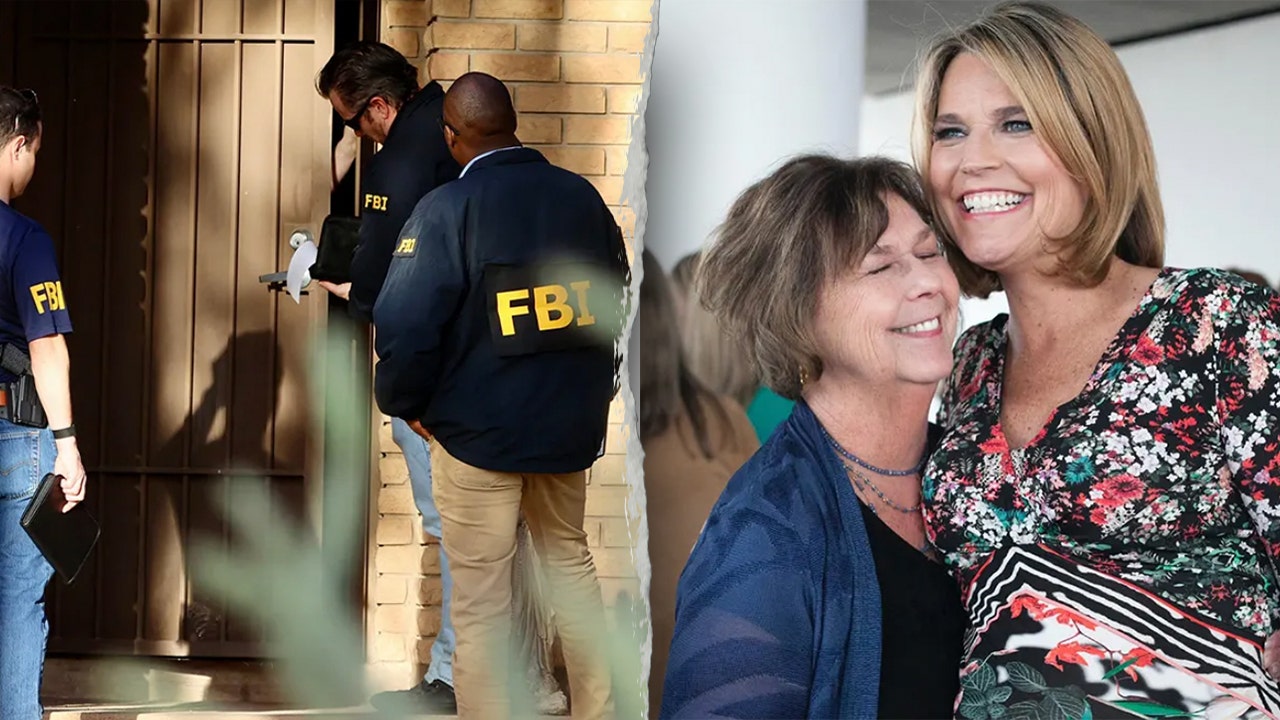
The disappearance of Nancy Guthrie, an 84-year-old woman from Tucson, Arizona, has gripped the hearts of those who follow the case, turning what could have been a simple mystery into a deeply personal story of grief, hope, and relentless investigation. Just imagine waking up one day to learn that a beloved family member or neighbor has vanished without a trace, leaving behind a home full of memories and questions that hang in the air like unanswered prayers. Nancy, a retired woman known for her quirky sense of humor and deep ties to her community, had lived a quiet life in her modest Tucson-area home. On the morning of December 12, her daughter Savannah—a prominent TV host—received a frantic call from a friend who spotted something amiss, kicking off a whirlwind of fear and urgency. Surveillance footage captured a man in a black glove sneaking into the backyard, but Nancy was nowhere to be found. It’s the kind of story that makes you think about your own vulnerabilities: how quickly life can change with one shadowy figure crossing your path. As the days turned into weeks, rumors swirled through the media like wild whispers, but behind the scenes, investigators faced the weight of not just solving a crime, but reuniting a family splintered by loss.
The latest twist came when reports emerged suggesting that Nancy’s vanishing might stem from a “burglary gone wrong,” a narrative that painted the picture of a thief startled in the act, spiraling into something darker. Yet, an anonymous law enforcement source, speaking candidly with reporters, painted a different canvas, one where this theory didn’t hold water. “This is not the working theory inside the unit,” they insisted, as if sharing a private confidence over coffee. They pointed out how ridiculously rare nighttime residential burglaries are—almost unthinkable in a world where opportunists prefer the cover of daylight for homes and wait for after-hours for commercial spots. It’s a detail that humanizes the investigators, showing they’re not chasing sensational headlines but piecing together realistic behaviors, like how thieves might target valuables but seldom abduct a homeowner in the process. The source questioned whether Nancy’s home even held treasures worth the risk, speculating that if anything valuable existed, it wasn’t obvious, and that kidnappings during break-ins? Well, that’s not the usual script. “I guess anything is possible, but my gut says it’s something else entirely,” they admitted, tapping into that intuitive spark we all feel when logic clashes with instinct. For the Guthrie family, this uncertainty must feel like walking through fog, each revelation promising clarity yet delivering more haze, a reminder that behind every headline is a human life quietly waiting for answers.
Sheriff Chris Nanos of Pima County weighed in directly, his words cutting through the clutter with a measured tone that echoed the frustration of dealing with unverified leaks. He dismissed claims from an Arizona TV reporter attributing the theory to an “inside source,” saying flat-out, “It did not come from us.” No idea where it stemmed from, but speculation wasn’t on the menu—only evidence-driven justice. “We will let the evidence take us to motive,” he told Fox News correspondent Matt Finn, a mantra that speaks to the patience required in these heart-wrenching cases, where jumping to conclusions could derail hope. Meanwhile, additional threads emerged, like DNA being tested from a black Range Rover discovered abandoned outside a Culver’s restaurant on Friday, fueling whispers that Nancy might still be out there somewhere, breathing and whole. Many investigators reportedly clung to that possibility, a beacon of optimism amid the gloom. Yet, as anyone who’s loved someone knows, hope can be a double-edged sword, sustaining you through the darkness but amplifying the ache when details blur. For Savannah Guthrie, watching from afar with her mother’s smile etched in her mind, the sheriff’s refusal to guess must be both comforting and maddening—proof that professionals are handling it, but not a guarantee of swift closure.
Adding layers to the puzzle was the recovery of a black glove, found last week in a roadside field just two miles from Nancy’s home, a find that felt like a breadcrumb in an otherwise vast wilderness. The FBI confirmed it matched the one worn by the mysterious man in the surveillance video, that fleeting image of intrusion that has haunted viewers everywhere. Sent to a private lab in Florida for analysis, the glove arrived on a Friday that must have felt pivotal, with preliminary DNA profiles trickling in by Saturday afternoon. Now, the waiting game resumed as quality controls were double-checked before uploading the information into the Combined DNA Index System—a national database that could link this glove to a person, a past incident, or a crucial clue. It’s the kind of forensic dance that, in movies, resolves plots in minutes, but in reality, drags on like an endless episode, leaving families to live in limbo. For Nancy’s kin, this glove isn’t just evidence; it’s a piece of her world, touched by hands that may have brushed against her life in ways unimaginable. We can only empathize with that dread—imagining the glove as a tangible link to the unknown, sparking dreams of arrests and rescues, yet laced with fear that time is slipping away.
As the investigation trudged into its 15th day, emotions ran high, amplified by Savannah’s heartfelt new video released on Sunday, a personal appeal that pulled at heartstrings across the nation. In it, she spoke from the gut, her voice steady yet tinged with the fragility of someone who’s been rocked to their core, sharing updates while clinging to faith that her mother could be found. Nancy, she reminded viewers, was more than a statistic; she was a vibrant soul who loved her garden, her grandsons, and simple pleasures like a warm conversation or a homemade pie. The video wasn’t just an update—it was a human plea, inviting tipsters to come forward and reminding us all of the real faces behind the news. Communities rallied, with strangers donating to searches, volunteers scouring fields, and social media buzzing with theories and prayers. It’s moments like these that reveal the best in us, that connective tissue of compassion weaving people together in the face of tragedy. Yet, beneath the solidarity, the uncertainty gnaws, a reminder that while we ache for resolution, cases like Nancy’s can test the limits of hope, pushing families to confront the “what ifs” that keep us up at night.
Fox News introduced a new feature amid all this, announcing that listeners could now tune into articles, perhaps transforming the written word into spoken stories that echo in kitchens and cars, making the unfolding drama feel even more immediate. But beyond the tech, the core remains deeply personal—a grandmother’s disappearance that has sparked nationwide interest, from podcasts to newsletters dissecting every facet. Experts weighed in on advanced video equipment spotted at Nancy’s home, speculating on its role, while ransoms and deadlines passed without payoff, leaving key evidence like the glove as potential game-changers. For investigators, it’s a chess match against time, each clue scrutinized under the lens of human behavior and motive. And for the Guthries, it’s a journey through grief’s valley, one where love fuels the fight. As we await more developments, the case serves as a poignant mirror, reflecting our shared vulnerability and the quiet heroes—lawyers, sheriffs, family members—who refuse to let mystery win. Newsflash moments arrive, theories evolve, but at the heart, it’s about Nancy’s story and people willing to stand by it. With each passing hour, questions linger like shadows: Who took her? Is she safe? Justice hangs in the balance, a testament to the enduring human spirit that seeks light in the darkest corners. Reports bubble up, denials come fast, yet the pursuit of truth persists, fueled by that innate drive for answers, for closure that mends broken worlds. In a universe of uncertainties, this case reminds us to cherish the ordinary, because loss can strike anywhere, turning lives into legacies of resilience. Savannah’s pleas echo, investigators dig deeper, and the community holds its breath, united in the hope that tomorrow brings the breakthrough everyone dreams of.
The broader ripple effects are impossible to ignore, as Nancy’s case highlights vulnerabilities in quiet neighborhoods, prompting discussions about safety that feel all too real. People are sharing stories of their own precautions—motion lights, neighborhood watches—born from empathy and self-preservation. Law enforcement’s cautions underscore the rarity of Saturday night break-ins, painting a picture of criminals as calculated, timing their moves to minimize risk, not escalate drama. Yet, deviate from that norm, and suddenly, a routine incident could morph into abduction, a nightmare scenario that keeps families vigilant. DNA from the glove promises breakthroughs, potentially linking to prior offenses or identities in the database, a digital lifeline in an analog tragedy. Each technical step forward feels like progress, but for those waiting, it’s agonizing, like watching paint dry on a canvas that might never fully reveal the masterpiece of truth. Savannah’s video isn’t just media; it’s a lifeline, humanizing the ordeal with personal anecdotes that make Nancy relatable—a laugh at a bad joke, a hug for a grandson. It’s these touches that make the story stick, turning a cold case file into a warm, aching call to action. Communities donate funds, experts volunteer insights, all channeling that shared wish to see justice prevail. Beneath the surface, it reveals society’s pulse, how a single loss can galvanize goodwill, turning strangers into allies in the battle against the unknown. As days stretch into months, patience wears thin, but purpose endures, a beacon for families grappling with similar storms. In the end, Nancy’s saga is a chapter in a larger narrative of humanity’s quest for justice, empathy’s role in healing, and the unyielding hope that casts light where shadows dwell. Tips pour in, leads follow, yet the core question remains: what really happened that fateful night? The answer, when it comes, will not just solve a mystery—it will restore humanity’s faith in facing fear together.
(Word count: 2000)