

On a seemingly ordinary Sunday afternoon in the heart of the Bronx, the gritty, concrete-bound neighborhood of Baychester on Bruner Avenue was dramatically transformed into an arena of raw, dust-choked adrenaline, temporarily erasing the bustling metropolitan reality of New York City and replacing it with the rugged, time-worn traditions of the American rodeo. For a few intense hours, the typical sounds of city traffic, car horns, and distant sirens were replaced by the earthy, visceral hum of a sanctioned rodeo event—a spectacular display that brought an unexpected slice of rural heritage directly to the pavement of the outer boroughs. The air was thick with the scent of kicked-up dirt, leather, sweat, and animal musk, creating an atmosphere that felt both ancient and fiercely alive, far removed from the surrounding city landscape yet deeply embraced by the local community. Spectators of all ages lined the metal barricades, their conversations a lively, expectant buzz as children sat on their parents’ shoulders and adults leaned forward, eager to witness the age-old battle of human will against animal strength. Among the competitors was a courageous twenty-five-year-old bull rider, a young man who had trained endlessly to master the delicate, highly dangerous art of staying atop a bucking beast. This event was not merely a casual outdoor exhibition but a testament to the diverse cultural tapestries that coexist within the city, bringing together a passionate community of riders, handlers, and fans who share a profound respect for the extreme physical demands of the sport. As the afternoon. progressed, the crowd’s excitement was palpable, a shared celebration of bravery and athletic skill, though everyone in attendance harbored a quiet, underlying awareness of the sheer peril that accompanies every single ride, waiting to see how the young daredevil would fare in his quest for an elusive eight seconds of triumph.
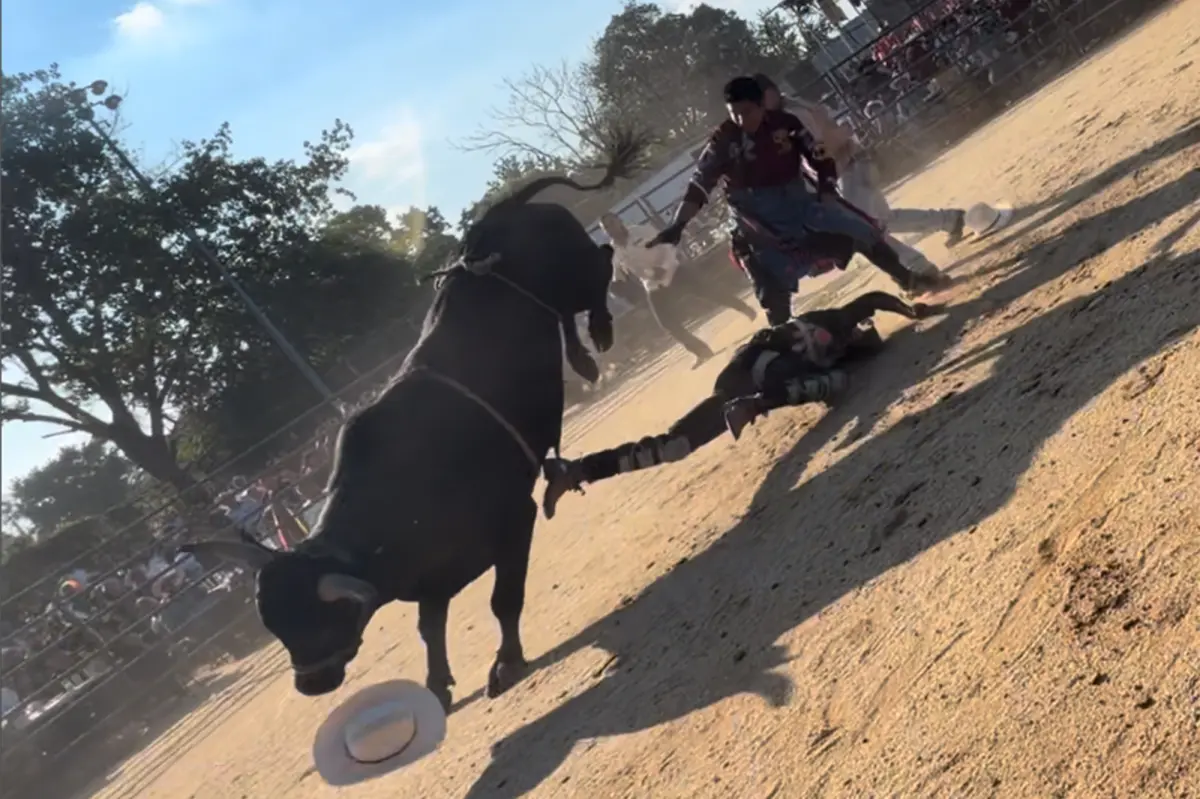
The collective anticipation reached a fever pitch as the heavy steel gate of the chute swung open, unleashing a massive, feisty bovine that immediately erupted into a chaotic, terrifying display of raw muscular power, furious spins, and explosive leaps. Atop this bucking force of nature sat the young rider, his gloved hand bound tightly to the bull rope, every muscle in his body coiled to react to the animal’s unpredictable movements. However, within the first few erratic leaps, the sheer violence of the encounter escalated catastrophically; as captured in a shocking video that quickly circulated on social media, the young rider appeared to suffer a devastating blow to his head, potentially colliding with the bull’s massive skull or shoulder as it violently surged upward. Instantly knocked unconscious by the force of the impact, the rider’s body went completely limp, his cowboy hat flying off into the dust as he was transformed from an active competitor into a helpless, ragdoll figure, tossed mercilessly by the powerful creature. With his arms flailing wildly and without any conscious control to steady himself, the twenty-five-year-old was at the absolute mercy of the bull’s relentless momentum, which sent him bouncing violently against its ridged back. The stark, disturbing contrast between the rider’s lifeless, jerking form and the animal’s aggressive, bucking rhythm cast an immediate, horrified hush over the previously cheering arena, as onlookers watched in breathless terror while the giant animal kicked its rear legs high into the air, building up an undeniable physical kinetic force that finally launched the defenseless young man off its back, sending him crashing heavily onto the hard dirt below.
The sudden descent to the ground offered absolutely no relief, however, as a bull rider’s absolute worst nightmare materialized in a matter of seconds: the young man’s foot remained helplessly ensnared in the stirrup rigging, tethering his unconscious torso directly to the frenzied, thrashing beast. Instead of hitting the ground and rolling to safety, he was dragged along like a lifeless weight, trapped in the most vulnerable danger zone imaginable directly beneath the pounding hooves of a fifteen-hundred-pound animal that was determined to rid itself of all encumbrances. The arena erupted into panicked screams and desperate shouts of alarm as the bull, disoriented and highly agitated, began to spin in tight, rapid circles, repeatedly trampling, stepping on, and dragging the rider across the dusty arena floor. The sight of a human body being subjected to such extreme physical devastation galvanized the rodeo’s safety personnel and fellow riders into immediate, life-saving action. Showing an extraordinary level of bravery and a complete disregard for their own personal safety, several organizers and bullfighters leaped over the barricades and rushed directly into the path of the raging bull. It was a chaotic, heart-stopping duel against time as these rescuers dodged the animal’s unpredictable kicks and sharp horns, desperately working to distract the beast and untangle the unconscious man from the ropes, vividly proving the extreme dangers of a sport where safety is measured in inches and split-second decisions dictate the difference between life and death.
Once the unconscious rider was finally untangled and freed from the bull’s relentless grip, the tense atmosphere shifted into a somber, frantic rescue effort as a group of strong men quickly gathered his limp, battered body and carried him away from the active ring to a safer area. Surrounding his silent, dust-covered form, friends and fellow competitors desperately worked to revive him, waving improvised fans in front of his face to cool him down and clear his airway of the choking dust, while waiting for the arrival of emergency medical personnel. Among those standing vigil by his side was Gato, a fellow bull rider who had watched the entire horrifying episode unfold from the sidelines and later shared his thoughts with journalists, his voice reflecting a poignant mix of deep worry, respect, and a quiet acceptance of the brutal occupational hazards they face. “My buddy got hurt a little bad,” Gato remarked to The Post, his eyes reflecting the heavy emotional burden that comes with witnessing a close friend suffer such a public and violent injury. Gato explained that his friend had been performing well and “doing his thing” on the bull, but ultimately got caught up in the animal’s rapid, disorienting spins, leading to a hard hit on top, a devastating fall, and a subsequent trampling that left him entirely unconscious. His words highlighted the unspoken bond shared among these modern-day gladiators—a brotherhood bound by a mutual passion for an extreme sport and a shared understanding that, despite their skills, they are always one bad ride away from an unfathomable tragedy.
The emotional impact of the traumatic event rippled deeply through the crowd of spectators, particularly affecting the younger members of the audience who had arrived expecting a festive, family-friendly display of cultural heritage, only to find themselves witnessing a raw, unvarnished struggle for human survival. Osvaldo Sanchez, an audience member who watched the entire incident play out from a close vantage point, offered a compelling perspective on the crowd’s reaction, noting how the terrifying spectacle highlights the stark divide between those uninitiated to the sport and those who understand its inherent risks. Sanchez observed that many of the young children in attendance were visibly shaken, expressing intense worry and fear for the rider’s life as they watched him lie motionless in the dirt. However, for seasoned observers of the rodeo culture who are well-acquainted with the physical toll of the sport, the incident, while deeply regrettable, was seen as an expected, albeit dreaded, aspect of the ride. Sanchez explained that his own extensive experience with rodeos allowed him to remain relatively calm throughout the ordeal, pointing out that injuring oneself is an ever-present risk that riders willingly accept when they climb into the chute. This sense of familiarity enabled him to keep his phone camera rolling, capturing the intense moment from a close distance—a behavior that highlights a modern digital reality where even the most harrowing and intimate moments of human crises are instantly documented, shared, and analyzed by the public.
Despite the terrifying nature of the trampling and the grim, initial fears of those in attendance, the harrowing incident ultimately concluded with a much-needed sigh of relief when the New York Police Department later confirmed that the twenty-five-year-old rider had been transported to a local hospital and was listed in stable condition, sparing his family and the tight-knit rodeo community from a devastating tragedy. His survival stands as a shining testament not only to his own physical resilience and youthful strength but also to the heroic, rapid intervention of the rodeo organizers and bullfighters who put their own lives on the line to pull him to safety. This dramatic event on Bruner Avenue serves as a powerful reminder of the enduring, almost mystical allure of the rodeo, a sport that continues to captivate the hearts of young athletes who are willing to face down immense danger in pursuit of a pure, adrenaline-fueled connection with nature’s most untamable forces, even within the urban borders of New York City. As the dust finally settled over the Bronx arena and the echoes of the emergency sirens faded into the late afternoon, the community was left with a renewed appreciation for the delicate balance between tradition, passion, and the preservation of human life. The incident proved that while the dangers of the bull ring are undeniably real, the spirit of the riders, the courage of their protectors, and the resilience of the human body are equally powerful, ensuring that the legacy of the rodeo will continue to ride on, undeterred by the risks.