


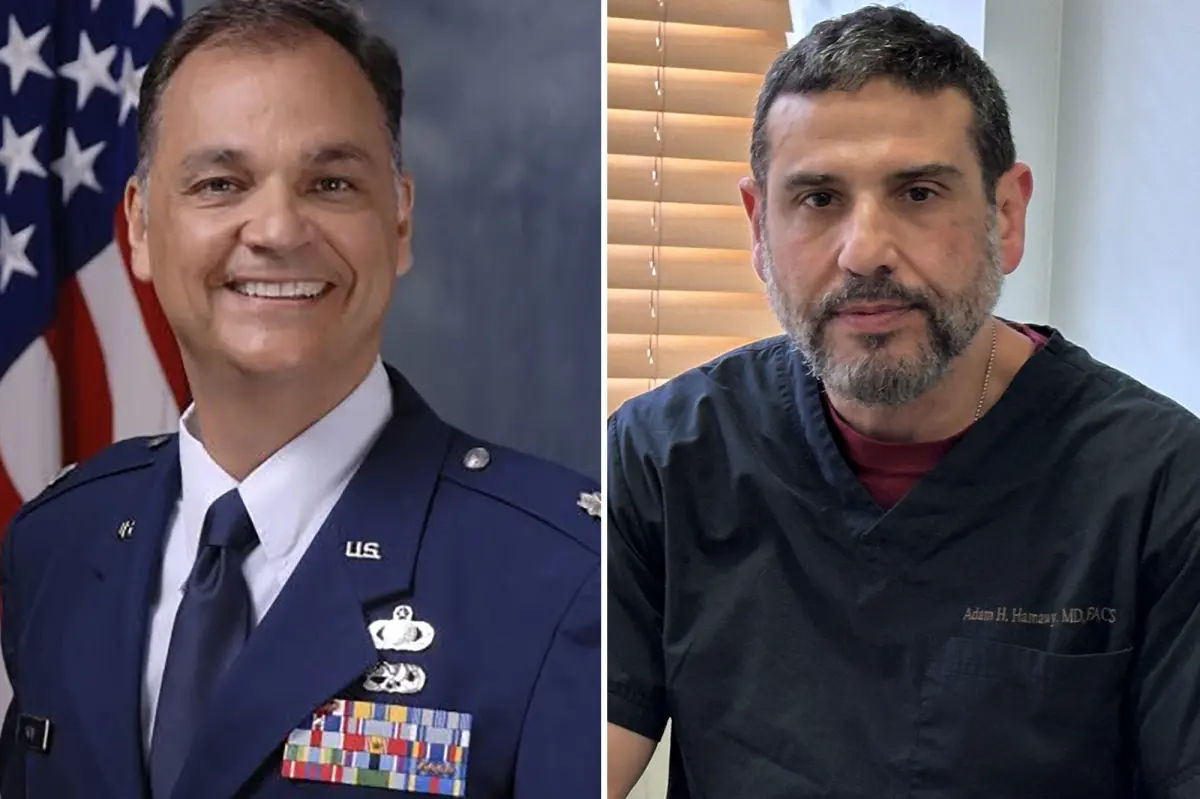
For Don Arias, the scars of radical Islamic terrorism are not abstract geopolitical concepts found in textbooks; they are carved deeply into the fabric of his everyday life. An Air Force veteran and former New York City firefighter, Arias survived the chilling destruction of the 1993 World Trade Center bombing, only to face an even more devastating tragedy eight years later. On the morning of September 11, 2001, Arias stood helplessly as the world fractured, listening to the frantic voice of his brother, Adam, calling from the 84th floor of the South Tower. Adam described the unimaginable horror unfolding outside his window, detail by agonizing detail, as desperate souls plunged from the burning North Tower. That final, agonizing conversation became a lifetime anchor for Arias, fueling a decades-long mission to advocate for the families of 9/11 victims and to ensure that the realities of radical terrorism are never forgotten or minimized. Today, however, Arias watches the political landscape with growing alarm and indignation, convinced that a dangerous collective amnesia is sweeping through the democratic process as candidates with controversial pasts win major party primaries.
Arias’s current outrage is centered on New Jersey’s 12th Congressional District, where Dr. Adam Hamawy recently secured the Democratic nomination. On paper, Hamawy presents an impressive and honorable profile: he is a decorated veteran, a skilled combat plastic surgeon, and a respected private practitioner. Yet, behind his professional achievements lies a history that Arias finds impossible to forgive or ignore. During his youth in the early 1990s, Hamawy developed a close association with Omar Abdel-Rahman, the notorious “Blind Sheikh” who orchestrated the 1993 World Trade Center bombing. Hamawy served as the Sheikh’s translator, accompanied him to various mosques, and even embarked on a thirteen-hour road trip with him to an Islamic economic conference in Detroit. When the Sheikh was eventually put on trial for his role in the terror attack, Hamawy took the witness stand to testify in his defense, asserting that he had never heard Abdel-Rahman advocate for violent jihad—a defense that Arias rejects as utterly implausible.
The skepticism of survivors like Arias is further compounded by other chapters in Hamawy’s past, specifically his 1994 humanitarian mission to Bosnia. During this trip, Hamawy worked alongside the Benevolence International Foundation, an organization that the United States government would later officially designate as a financial conduit for al-Qaeda during the post-9/11 crackdown on global terror networks. While Hamawy’s supporters might point to his military service and humanitarian efforts as proof of his character, Arias warns that voters are failing to perform essential research into the backgrounds of those seeking public office. For Arias, a candidate’s associations are a fundamental reflection of their values, and he believes that if voters truly understood the depth of Hamawy’s historical ties to radical figures, they would not trust him with legislative power. He fears that the passage of time has allowed critical historical context to slip into a “memory hole,” allowing political figures to rewrite their narratives without accountability.
This anxieties are not confined to New Jersey; across the Hudson River in New York, a similar ideological shift is taking place. In State Senate District 12, Democratic nominee Aber Kawas, the daughter of undocumented Muslim immigrants, recently secured a primary victory as part of a progressive wave backed by high-profile left-wing figures like New York City Mayor-aligned progressives. Kawas has drawn intense scrutiny for statements she made during a 2017 podcast, where she framed the September 11 attacks not as a senseless act of mass murder, but as an inevitable manifestation of global capitalism, systemic white supremacy, and Western imperialism. In her remarks, she questioned why her community should apologize for a terror attack carried out by a small group of individuals when the global system has offered no reparations for atrocities like slavery and colonialism. To critics, her perspective represents a growing trend in American politics that seeks to deconstruct national tragedies through the lens of academic theory rather than human loss.
To Don Arias, Kawas’s rhetoric is a deeply offensive minimization of the tragedy that cost him his brother and redefined a generation. He views her attempt to contextualize 9/11 within a broader critique of Western civilization as an insult to the thousands of innocent lives lost on that clear September morning. Arias rejects her worldview entirely, arguing that such intellectualized arguments are classic examples of “luxury beliefs”—theoretical, high-minded political concepts championed by comfortable, educated, and affluent individuals who have never had to face the visceral, bloody consequences of actual tragedy. He contends that many younger, progressive voters have become so detached from the physical reality of terrorism that they treat these complex discussions as mere intellectual exercises, completely divorced from the heavy grief carried by survivors and first responders.
Ultimately, Arias places the blame for this shifting cultural perspective on the American education system, which he believes has transformed from a place of learning into a pipeline for far-left political indoctrination. He argues that universities encourage students to view history through a polarized lens where traditional American values and allies like Israel are conflated with oppression, while radical ideologies are normalized under the guise of social justice. Arias warns that this educational shift has created a generation of voters who are easily swayed by radical ideas because they lack a deep, objective understanding of the nation’s history and the real dangers of extremist ideologies. As political landscapes continue to evolve, the clash between those who carry the physical scars of the past and a new generation of theorists highlights a deep and growing division in the national consciousness over how America remembers its defining tragedies.