





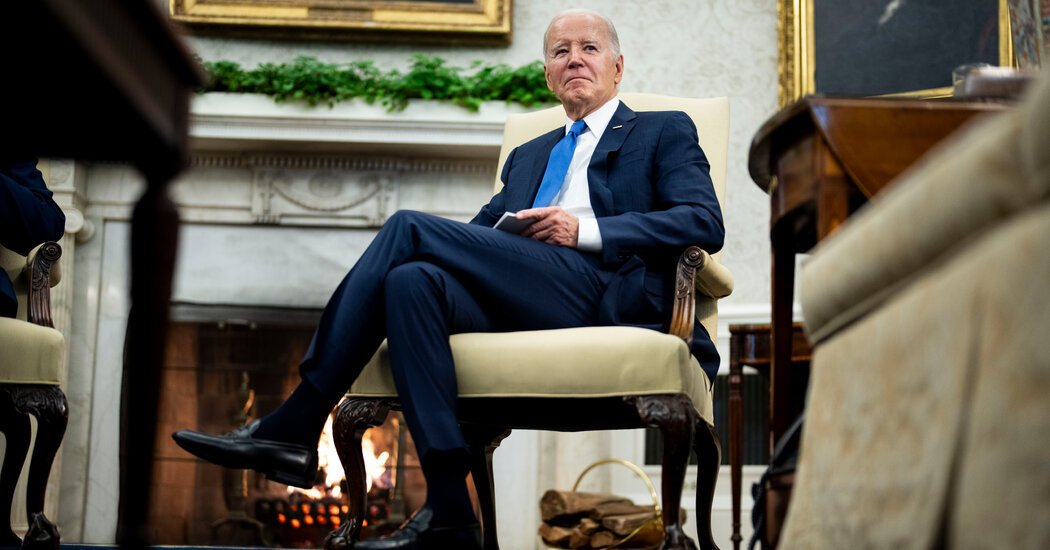
In a dramatic and deeply personal development that exposes the raw, painful intersection of high-stakes American politics and private human grief, former President Joseph R. Biden Jr. has filed a major lawsuit against the United States Department of Justice. Filed late on a Tuesday, this extraordinary legal challenge represents a desperate, final stand by a retired leader seeking to block his own former department from publicly releasing intimate, raw audio recordings of conversations he had with his ghostwriter years ago. To understand the gravity of this lawsuit, one must look past the dry legal terminology and recognize the profoundly human struggle at its core. These recordings do not contain classified state secrets, weapon designs, or covert intelligence briefings; instead, they hold the unvarnished, emotionally raw voice of a father trying to navigate the unimaginable pain of losing his eldest son, Beau, to brain cancer while simultaneously bearing the heavy burdens of the vice presidency. By launching this lawsuit, the former president is attempting to erect a legal firewall around the sanctuary of his personal home and his family’s private suffering, challenging the notion that entering public service obligates an individual to surrender their humanity and their most sacred domestic memories to the public domain. This case represents an escalating clash between the unyielding, often heartless machinery of modern political warfare and the fundamental right of an individual to protect their most vulnerable, painful personal revelations from being weaponized, analyzed, and exploited by their political adversaries on the grandest stage of American public life, forcing a crucial national debate over where a public official’s duty ends and a human being’s right to peace begins.
The origin of these disputed audio tapes dates back to the poignant, final years of Biden’s vice presidency when he collaborated with author Mark Zwonitzer to write his deeply reflective 2017 memoir, “Promise Me, Dad: A Year of Hope, Hardship, and Purpose.” During their many late-night sessions, Biden spoke freely into a recorder, treating the ghostwriter not just as a professional collaborator but as a quiet, trusted sounding board to process his immense personal grief and the political dilemmas of the time. These sessions were intended to capture the spontaneous, unpolished thoughts of a man in mourning, creating a safe space to discuss the grueling reality of his son’s final days, his family’s agonizing journey through the healthcare system, and the devastating impact of this loss on his political future. However, these intensely private reflections were unexpectedly dragged into the public light in 2023 when Attorney General Merrick B. Garland appointed Special Counsel Robert K. Hur to investigate whether Biden had improperly retained classified vice-presidential documents at his private residence. As part of this sweeping federal investigation, Zwonitzer cooperated with investigators and surrendered a hard drive containing the original raw audio recordings of his sessions with the former vice president. While the eventual 2024 report concluded that there was insufficient evidence to bring criminal charges against the sitting president, it delivered a devastating personal and political blow by publicly characterizing Biden as a “well-meaning, elderly man with a poor memory”—a description that weaponized the raw, hesitant voice of a grieving father on those very tapes to paint a picture of mental decline, setting the stage for the intense, partisan hunger to make the underlying audio files public.
The current courtroom battle has been triggered by a sudden, jarring shift in policy by the Department of Justice under the administration of Donald Trump, illustrating the terrifying fluidity of federal institutions and the precarity of presidential privacy in a deeply polarized nation. Under the Biden administration, the Justice Department consistently and vigorously fought to keep the raw audio recordings sealed under strict privacy exemptions, especially when conservative organizations like the Heritage Foundation launched aggressive public records lawsuits to obtain them. This protective stance, however, evaporated in early 2026 when the newly reorganized Justice Department under the current administration executed a dramatic and unprecedented about-face. According to the details disclosed in Biden’s lawsuit, the office of the deputy attorney general abruptly notified his legal team on February 25 that the department intended to release the audio recordings and transcripts to the Heritage Foundation with only minimal, limited redactions. This institutional whiplash escalated rapidly on March 19 when the Department of Justice informed Biden’s lawyers that it also intended to surrender the full, unredacted recordings to the Republican-led House Judiciary Committee, which had stepped up its efforts to secure the tapes. This sudden betrayal by the very department he once oversaw has forced the former president to seek emergency intervention from a federal judge, illustrating how quickly the protective machinery of the state can be weaponized against a former leader when the political tides of Washington shift and institutional loyalty is overwritten by partisan motivations.
In their comprehensive and sharply worded complaint, Biden’s attorneys have mounted a vigorous defense of fundamental constitutional privacy rights, arguing that the unrelenting demand for these audio files by congressional investigators is a dangerous overreach devoid of any legitimate legislative purpose. The legal team asserts that the Republican-led House Judiciary Committee—which has spent years conducting exhaustive and highly politicized investigations into the Biden family—is using its congressional subpoena power as a mere “pretext” to secure embarrassing audio clips for political theater rather than to draft meaningful public policy. The lawsuit makes a powerful, universal argument that resonates far beyond the hallways of Congress: that every American citizen, regardless of whether they have held the highest offices in the land, possesses an inviolable, natural right to privacy within the walls of their own home. Biden’s lawyers emphasize that when personal materials are collected during the course of a federal criminal investigation—particularly one that ultimately resulted in no criminal charges or indictments—the Department of Justice bears a solemn, non-negotiable legal and moral responsibility to protect that sensitive information from public disclosure. To do otherwise, the suit argues, would transform the federal law enforcement apparatus into a partisan library, allowing investigators to seize private family diaries, memories, and conversations under the guise of an investigation and then leak them to the public for political gain, setting a terrifying precedent that erodes the civil liberties of all citizens facing government scrutiny.
At the absolute center of this legal and political firestorm is the ghost of Beau Biden and the deeply private grief of a family that has spent decades in the public eye. The raw conversations caught on these audio tapes capture Biden at his most vulnerable, speaking about the agonizing experience of watching his eldest son, a promising public servant in his own right, suffer and die from terminal brain cancer. On these recordings, Biden and Zwonitzer analyzed the profound emotional impact of Beau’s illness on the family, discussing how this devastating tragedy directly shaped Biden’s agonizing decision not to seek the presidency in 2016, a decision that altered the course of American history. For Biden, these sessions were never intended to be polished, public statements or permanent historical records; they were raw, unfiltered, and deeply human moments of introspection. His legal team has argued that the current Justice Department’s refusal to enact key redactions requested by the former president is a cruel disregard for the basic dignity of a mourning family. By fighting to protect these tapes, Biden is not merely trying to shield his political legacy or avoid embarrassing gaffes; he is fighting to preserve the dignity of his son’s memory and prevent his family’s most sacred, unpolished moments of pure human suffering from being commodified, sliced into partisan sound bites, and distributed across social media platforms for political mockery. It is a defense of the quiet, sacred space where a father is allowed to cry for his child without the cold, judgmental eye of the public record capturing every break in his voice.
Ultimately, this unprecedented lawsuit raises profound, chilling questions about the erosion of the boundary between public service and private life in modern America, signaling a dangerous new frontier in political combat. If the private, domestic conversations of a former president—recorded in the quiet safety of his own home while processing the death of his child—can be subpoenaed, seized, and broadcast to the world by his political opponents, then the very concept of personal privacy for public figures has ceased to exist. This legal battle is a stark warning of what lies ahead if federal law enforcement is allowed to become an instrument of political exposure, threatening to deter future generations of leaders from ever writing personal journals, speaking candidly with biographers, or showing the kind of vulnerable, authentic humanity that is so desperately needed in public life. As a federal judge prepares to rule on this high-stakes dispute, the case stands as a powerful, symbolic defense of the fragile, human spaces that must remain off-limits to the insatiable appetites of partisan warfare. By standing his ground against the Department of Justice, Joe Biden is fighting not just for his own privacy, but for the fundamental right of every American public servant to be more than just a political character—to be a human being who is allowed to grieve, reflect, and speak in private without the fear of their words being turned into political weapons. Without this protection, the arena of public leadership will become even more sterile, guarded, and devoid of the human empathy that only comes when leaders are permitted to live and heal away from the cameras.