




A Border Shattered: How a Russian Drone Strike in Romania Exposed the Vulnerabilities of NATO’s Eastern Flank
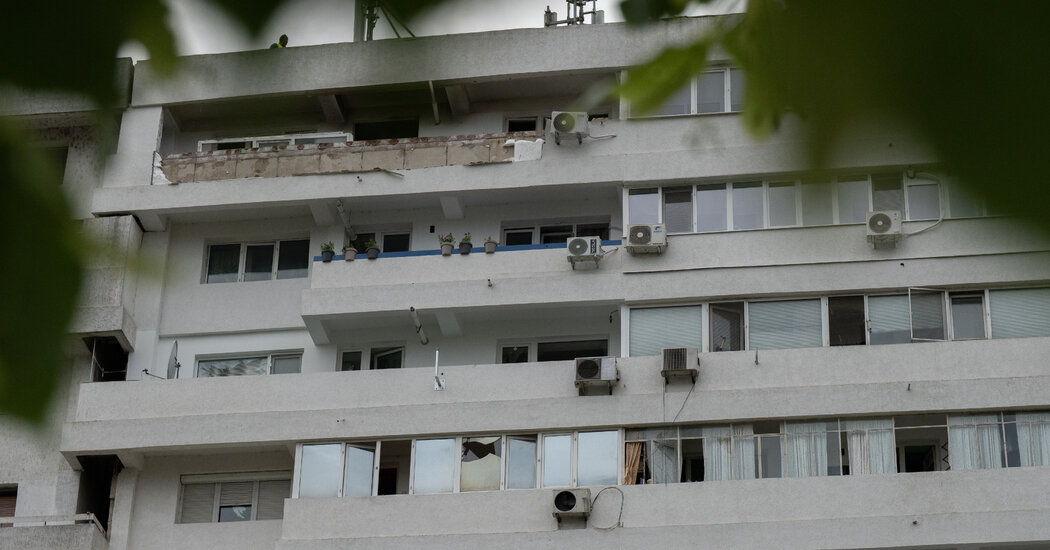
The fragile peace that has hung over Europe’s eastern borders since the spring of 2022 was violently punctured in the early dawn hours of Friday, when a Russian-made attack drone smashed into a multi-story apartment building in the eastern Romanian city of Galati, marking a dangerous new escalation in the spillover of the war in Ukraine. This devastating strike, which directly wounded two civilians and caused widespread structural damage in a quiet residential district, represents the first time that an imperialist Russian air assault has caused direct physical injury to citizens residing deep within sovereign territory belonging to the North Atlantic Treaty Organization (NATO). Although local authorities and national defense analysts have warned for over four years that the relentless bombardment of southern Ukrainian port cities along the Danube would eventually yield humanitarian crises across the border, the absolute reality of an explosive payload detonating inside a Romanian living room has shattered any remaining illusions of safety. According to official intelligence briefings delivered in the hours following the strike, this catastrophic incident marks the 28th documented violation of Romanian airspace by Russian military hardware since the launch of Moscow’s full-scale invasion of Ukraine in February 2022—a stark historical tally that runs alongside at least forty-seven separate incursions where highly combustible drone wreckage and fuselage debris have rained down upon agricultural fields, forests, and small fishing villages along the Danube. In an official, strongly worded communiqué released from Bucharest shortly after emergency responders secured the smoking blast site in Galati, the Romanian Ministry of National Defense condemned the attack in the strongest possible diplomatic terms, explicitly stating that these recurring and increasingly aggressive airspace violations represent not only a systematic lack of respect on the part of the Russian Federation for the fundamental tenets of international law but also a direct, existential threat to the collective security framework of the entire NATO alliance.
The Silent Skies of Galati: Desensitization and the Human Toll of Perpetual Air Alert Sirens
For the traumatized but resilient civilian populations inhabiting the border municipalities of eastern Romania, particularly those in historical towns like Tulcea and Galati located just a stone’s throw from the embattled Ukrainian shipping hubs of Reni and Izmail, the threat of incoming air attacks has slowly integrated into the fabric of daily existence, breeding an exhausting, psychological normalization of acute systemic danger. Over the past two years, the Romanian government has deployed its “Ro-Alert” emergency digital broadcast system to push real-time alerts directly to citizens’ mobile phones when military radar captures incoming Russian drone swarms heading toward Ukrainian shipping infrastructure, urging residents to seek immediate shelter in basement bunkers or municipal concrete safe zones. Yet, as the months have dragged into years of perpetual conflict, collective exhaustion has set in, and many local families have chosen to ignore the high-pitched digital alarms altogether, electing to remain in their beds rather than endure the disruption of late-night evacuations. The dangerous complacency bred by this structural exhaustion was eloquently crystallized just weeks before the Galati strike by Anca Vramulet, a forty-year-old mother who spoke to reporters while strolling along the picturesque Danube esplanade in Tulcea with her four-year-old son. Reflecting on the near-constant alerts, Vramulet noted that the local community had reluctantly accepted this volatile environment as a form of distorted normality, hoping against hope that because their borders had remained physically unharmed through dozens of near-misses, the incoming fires of war would forever bypass their homes—a collective psychological defense mechanism that was brutally dismantled when the Friday morning explosion brought the war directly into their neighborhood.
Weaponized Skies: The Technical Mechanics of Geran-2 Tech and the Cat-and-Mouse Game of Modern Air Interceptions
The weapon system identified by Romanian recovery teams as the culprit behind the residential devastation in Galati was none other than the Geran-2, a licensed Russian clone of the Iranian-designed Shahed-136 “kamikaze” delta-wing unmanned aerial vehicle, which Moscow has deployed in thousands of relentless raids designed to systematically destroy Ukraine’s electric power grid and agricultural exporting capability. Powered by a cheap, extraordinarily noisy piston engine that gives it a signature acoustic profile colloquially known as the “flying moped,” the Geran-2 carries a substantial high-explosive warhead and operates on low-altitude, pre-programmed GPS coordinates, making it difficult for traditional, high-altitude cold-war era search radars to effectively track and destroy before it reaches its target. The tactical calculus of handling these low-orbiting threats is further complicated by the extensive deployment of heavy electronic warfare and tactical GPS-jamming systems by both Russian and Ukrainian militaries along the front lines; these powerful signals often scramble the guidance computers of incoming drones, causing them to drift wildly off course and inadvertently violate Romanian and Baltic airspaces. This technological volatility was on full display during the Friday morning crisis when the Romanian Air Force scrambled two supersonic F-16 fighter jets to intercept the oncoming target, only for the pilots to ultimately hold their fire and watch the drone cross into civilian territory because, as President Nicusor Dan explained in a sober national address, the tactical conditions did not allow for a kinetic interception over the urban area without risking a rain of heavy supersonic shrapnel that could have caused far higher civilian casualties than a controlled crash.
Triggering Article 4: The Diplomatic Calibration of NATO’s Collective Self-Defense Under Shadow Warfare
The unprecedented wounding of Romanian citizens on their own domestic soil has immediately reignited intense strategic debates within European diplomatic circles regarding the legal activation thresholds of NATO’s founding collective defense mechanisms, with Romanian Foreign Minister Oana Toiu stating during an urgent televised broadcast that Bucharest could formally invoke Article 4 of the North Atlantic Treaty in response to the assault. Unlike the famous mutual assistance clause of Article 5, which mandates a collective kinetic military response in the event of an armed attack against a member state, Article 4 serves as the premier mechanism for emergency security consultations, allowing any ally to officially summon the North Atlantic Council when they believe their territorial integrity, political independence, or foundational national security is actively threatened. This high-ranking diplomatic warning signal has been locked in discussions since September, when a coordinated wave of Russian drone incursions over Poland and aggressive airspace penetrations by Russian military jets over Estonia forced eastern European allies to demand a unified, systematic response to Moscow’s grey-zone incursions. While newly appointed NATO Secretary General Mark Rutte sought to reassure anxious Baltic and Black Sea populations by issuing a powerful public warning stating that the alliance stands resolutely prepared to defend every single inch of allied territory, the diplomatic reality remains highly delicate, as Western military strategists must find a way to robustly deter these repeated, unprovoked intrusions without providing the Kremlin with a pretext to expand the war into a direct, catastrophic theater-wide confrontation between NATO forces and the Russian military.
Erecting the Drone Wall: Europe’s Ambitious Strategic Defense Overhaul Across the Eastern Flank
As the geographic reality of Russia’s drone campaign continues to threaten sovereign European borders, defense ministries throughout the continent are moving rapidly to construct a highly sophisticated, multi-national defensive barrier known colloquially as the “drone wall,” designed to run uninterrupted along the entire eastern flank of NATO from the sub-arctic forests of Finland all the way down to the warm waters of the Black Sea. This ambitious, billions-of-euros defensive infrastructure plan represents a joint strategic collaboration between the European Union and frontline NATO member states, seeking to seamlessly integrate thousands of ultra-modern acoustic detection sensors, thermal imaging tracking arrays, local electronic warfare signal interceptors, and kinetic low-altitude air defense systems into a unified, automated early warning radar shield. However, the execution of this monumental tactical shield has been plagued by deep-seated structural delays, supply chain bottlenecks within European defense production lines, and the agonizingly slow bureaucratic pace of modern military procurement, leaving frontline nations like Romania temporarily vulnerable and forcing regional leaders to repeatedly plead with major Western powers to expedite the shipping of specialized counter-unmanned aerial systems (C-UAS). Romania’s foreign ministry has made it clear that while long-term plans for regional integration are underway, the immediate tactical threat requires NATO to immediately deploy mobile short-range air defense systems, such as the German-made Gepard self-propelled anti-aircraft guns, directly to the banks of the Danube to protect vulnerable riverside cities from future navigational errors committed by Russian drone pilots.
The Black Sea Dilemma: Navigating the Fragile Path of Regional Sovereignty and Future Security Guarantees
The shocking visual of smoke rising from a civilian residential complex in Galati serves as a dark, prophetic warning of a fundamentally transformed global security paradigm, wherein the proliferation of low-cost, expendable autonomous weapon systems has forever altered the geography of modern warfare by effectively erasing the traditional geographic boundaries that once separated active war zones from sovereign, protected peace sanctuaries. In this new era of non-linear conflict, the Black Sea basin has transitioned from a vital global maritime commercial corridor into one of the most volatile geopolitical fault lines on earth, a highly militarized zone where small tactical miscalculations, stray navigation coordinates, or localized electronic signal interference can instantly threaten to unleash a devastating cascade of global escalation. For the citizens of Romania and their regional partners along the eastern flank, the path forward will require a profound, painful transition away from the comfortable security guarantees of the post-Cold War era toward a permanent, vigilant posture of civil defense readiness, strategic resilience, and structural military preparation. Ultimately, as Western capitals study the aftermath of the debris field in Galati, the international community must confront the hard truth that unless a decisive, unified line is drawn against these continuous violations of democratic airspace, the normalization of explosive warfare over sovereign NATO skies will signal to revisionist powers worldwide that the territorial integrity of European democracies is no longer an absolute, untouchable reality, but rather a flexible perimeter open to constant, violent testing.