


The Tragic Case of Athena Strand: A Father’s Delivery Gone Deadly
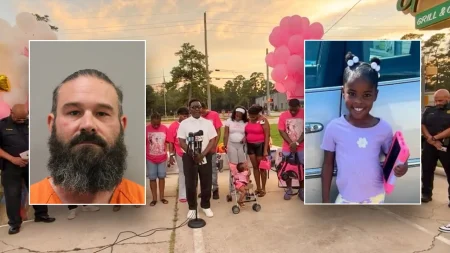
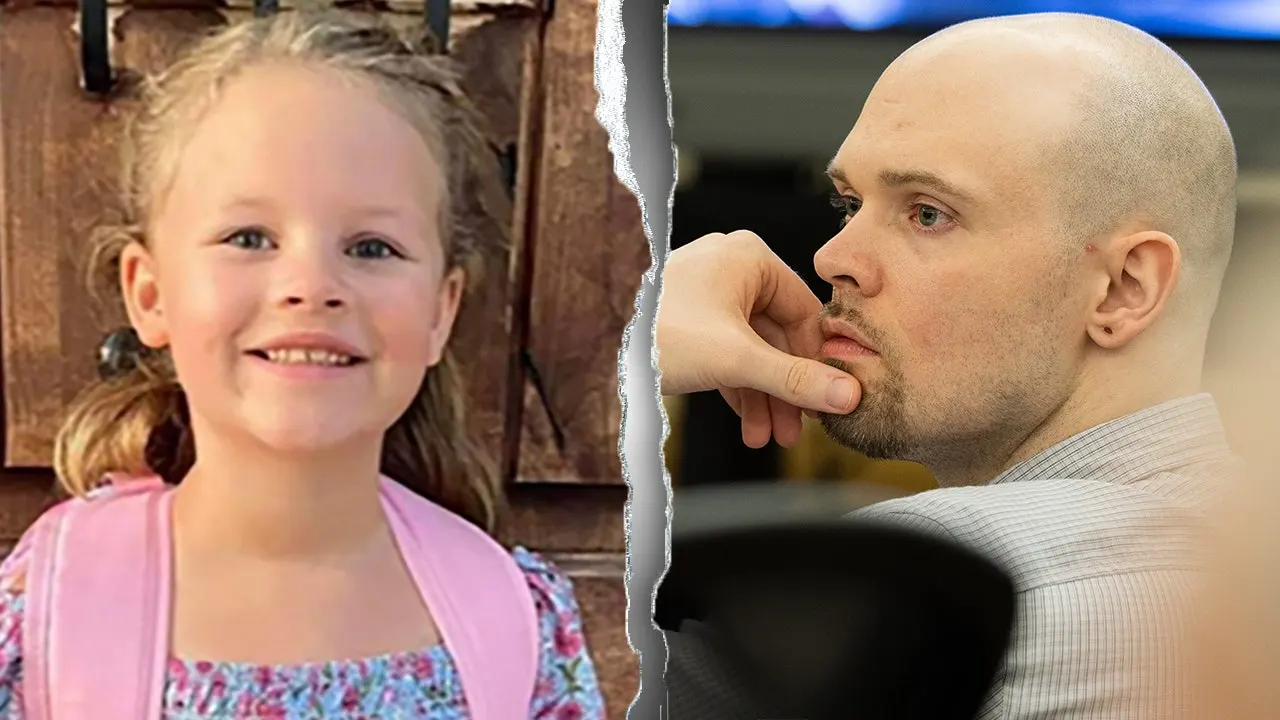
The heart-wrenching story of 7-year-old Athena Strand’s abduction and murder unfolds in a Texas courtroom, where her killer, former FedEx driver Tanner Horner, stands trial for his life. This little girl, full of innocent joy and eagerly awaiting Christmas deliveries, was snatched from her world during what should have been a festive moment. Horner, a 34-year-old man with his own complex history, pleaded guilty to the horrific crime just moments before the proceedings began in Fort Worth. Now, a jury must decide: life in prison or the death penalty. As they deliberate, they’re immersed in grizzly details from body camera footage and police interrogations, painting a picture of a man who oscillated between personas. On one hand, Horner’s defense paints him as a sympathetic figure battling autism, brain damage, severe mental illness, and even extreme lead exposure from his childhood. But on the other, prosecutors highlight the cold brutality of his actions. Athena’s family, grappling with unimaginable loss, watches as the proceedings reveal how a routine package delivery turned into a nightmare. The emotional toll is palpable, with jurors exposed to videos that humanize the victim—a vibrant child full of life—and demonize the act itself. This case revives painful memories for many, as public sentiment often leans toward stern justice for crimes against the vulnerable. Yet, embedded in the narrative is Horner’s background: a father himself, once holding down a steady job, now pleading for mercy based on his struggles. Families everywhere can relate to the horror of losing a child, making this more than a courtroom drama—it’s a stark reminder of how fragile innocence can be. Introduced amidst this tension is a new feature allowing listeners to engage with Fox News content audibly, helping stories like this reach more ears in an era where information flies fast. Broadcasts and digital access now offer voice-based immersion, bridging the gap between reading and understanding, especially for those processing heavy topics like this one. As the trial progresses, the spotlight remains on Athena, whose smile in family photos contrasts sharply with the grim reality of her fate.
Witnessing the Alter Ego: Body Camera Footage Reveals a Disturbing Flip
In the courtroom, haunting body camera videos played before the jury, capturing Tanner Horner’s bizarre interactions with law enforcement and showcasing a man seemingly divided within himself. Footage from his arrest shows Horner directing officers to converse with his alter ego, “Zero,” described as a separate entity within him. Officers, trying to piece together Athena’s final moments, asked, “Hey Zero, when you took her, was she wearing a jacket or anything?” The response came as Horner embodied this persona, saying, “No jacket, no shoes.” This sudden switch raised alarms, leaving viewers to question the authenticity of Horner’s claims. One can imagine the offices’ frustration and confusion, probing a suspect who seemed cooperative yet elusive. The video escalates as conversations delve deeper, with Horner referencing discarding Athena’s clothes as “funny,” a chilling casualness that underscores the detachment. Zero appears “more helpful,” prompting officers to prefer speaking to this version, bypassing the primary persona. Picture the scene: exhausted cops, piecing together a child’s disappearance, now dealing with a man who deflects accountability through dissociative claims. Dr. Carole Lieberman, a forensic psychiatrist testifying, notes that such switches could stem from manipulation or genuine psychological fractures, blurring lines between sincerity and deceit. For translators of these videos into spoken words via new listening features, narratives like this gain an extra layer of intimacy—voice inflection highlighting the eerie shifts. Anthropologically, these moments reveal human complexity, where individuals compartmentalize actions to cope. Yet, for Athena’s loved ones, it’s not psychological intrigue; it’s a stark betrayal of trust, as a delivery driver entrusted with packages became a predator. The jury, viewing these clips, absorbs not just evidence but the raw humanity of fear, confusion, and manipulation. Psychologically, this display might trigger empathy or revulsion, depending on one’s worldview, but undeniably evokes a shared revulsion at the violation of innocence.
Expert Insights: Unraveling the Layers of a Troubled Mind
Forensic expert Dr. Carole Lieberman offers a window into Tanner Horner’s psyche, explaining how his multiple personalities could be a shield against accountability. Drawing from her experience with violent offenders, she distinguishes between genuine dissociative identity disorder and calculated deception. Horner, she posits, might be employing this facade as a malingerer or psychopath, fabricating an alter ego to distance himself from the atrocities. This isn’t uncommon in criminal cases, where perpetrators claim fractured identities to their advantage, only to abandon them under scrutiny. Lieberman’s analysis humanizes the behavior by suggesting possible coping mechanisms—splitting off “bad” parts of oneself to avoid confronting guilt. Yet, she emphasizes that most such claims dissipate in custody, unlike Horner’s persistence. His history as a FedEx driver and father complicates the narrative, as these elements imply a level of functioning that contradicts severe impairments. Imagine a man capable of holding a job and raising a child, yet spiraling into something this dark— it speaks to the hidden depths of mental health struggles. In a world where listening features let us experience these insights firsthand, voices like Lieberman’s carry added weight, making complex psychology accessible. She highlights how Horner’s autism and brain damage might impair him but not necessarily absolve him, as people with such conditions rarely invent elaborate stories. For families affected by similar issues, this resonates as a reminder that disability doesn’t excuse harm, fostering discussions on rehabilitation versus punishment. The juxtaposition of Horner’s “sane” moments with his claims tugs at ethical strings—what if he’s genuinely ill? Lieberman’s testimony serves as a bridge, encouraging compassion while underscoring accountability. Emotionally, it stirs empathy for those battling unseen demons, yet sympathy wanes when children’s lives are at stake. This case prompts broader reflections on mental health in society, where stigma often overshadows support.
A Plea for Christmas: Interrogation Videos and Fleeting Remorse
Interrogation footage reveals a more vulnerable Tanner Horner, pleading for just one more Christmas with his family while expressing sorrow for strangling Athena. Texas Ranger Job Espinoza pressed him: “Did you know what you did was wrong?” Horner’s response—”Of course”—came laced with emotion he attributed to off-neurosis medication finally wearing off. “I haven’t been on that medicine for five days, and it’s starting to wear off. I’ve actually been crying. Do you know what it’s like, not being able to cry for months and months and months?” As a father himself, he played on familial bonds, offering to confess everything for a reprieve. This moment humanizes Horner, showing glimmers of regret that might sway some, yet clashing with his earlier coldness. Listening to these recordings now possible through new audio access, one feels the raw vulnerability in his voice—the choked sobs, the desperation. It’s easy to imagine Espinoza’s internal conflict, facing a man who mirrors everyday struggles yet committed an unspeakable act. Horner’s allusion to Athena’s murder evokes empathy for his son’s potential loss, but it also infuriates by prioritizing his “last Christmas” over justice. Psychologically, this plea taps into universal fears of mortality and family separation, resonating deeply. For crime enthusiasts or families supporting mental health friends, it underscores how medication and environment can influence behavior. Yet, prosecutors argue it’s manipulative, designed to humanize a monster. Athena’s story, once again, eclipses Horner’s emotional display—the child’s innocence versus his calculated regret. This interplay in the videos reminds us of human duality: capacity for love and destruction. Ultimately, it provokes questions about redemption and whether true remorse can ever atone for such loss.
Defense’s Sympathetic Portrait: Mental Health as a Mitigating Factor
Horner’s defense, led by attorney Lindsay Thompson, weaves a narrative of pity, attributing his actions to a trifecta of afflictions: autism, brain damage, and extreme lead exposure in youth, potentially exacerbating mental illness. They present him as a product of misfortune, someone whose struggles rendered him incapable of full control. This portrayal invites jurors to see past the monstrosity, focusing on a vulnerable individual shaped by adverse circumstances. Thompson aims to evoke compassion, reminding the court of Horner’s life—a man who, despite his challenges, achieved stability as a FedEx driver and parent. In humanizing terms, it’s akin to stories of overlooked suffering, where hidden traumas lead to tragic outcomes. Families dealing with similar neurodivergence might find echoes here, advocating for understanding over retribution. Yet, Lieberman cautions against over-relying on job history; autism and brain damage often correlate with inconsistent employment, but Horner’s record suggests functionality. This defense humanizes by emphasizing rehabilitation potential, painting a picture of a man who could be helped rather than destroyed. As audio versions of reports circulate, voices conveying empathy amplify the message, fostering societal dialogue on supporting mental health. The approach counters prosecutorial fury, balancing justice with mercy. Emotionally, it stirs debates on accountability versus systemic failures—what role did environment play? For Athena’s memory, it feels inadequate, yet it acknowledges broader human fragility. This strategy aims to save a life, urging reflection on how society’s neglect might breed such horrors.
Prosecutors’ Mounting Case: Evidence of Calculated Cruelty and Jurors’ Emotional Burden
Prosecutors counter with irrefutable evidence of premeditation, including Horner covering his truck’s camera before assaulting Athena, who fought fiercely for her life. He then discarded her body in the woods near Boyd, Texas, confessing to “kind of tossing” her remains. Returning to deliveries amidst the search compounds the horror, highlighting deceit. Audio access to these revelations heightens the chilling intimacy, voices relaying raw confessions. Lieberman’s take—that child murders elicit visceral outrage, with little tolerance for mental defenses—rings true here. The juxtaposition of delivering Barbie dolls for Christmas adds irony, tainting symbols of joy with evil. Jurors, empathizing with Athena as a child, might feel compelled toward harshest punishment, their emotions overriding sympathy. This reflects common human responses to protect youth, as seen in public outcry. For parents, it’s a grim mirror, amplifying protective instincts. Society-wide, it fuels calls for enhanced defenses against such predators. Contributing reporter Sarah Rumpf-Whitten’s work ensures comprehensive coverage, humanizing the collective impact. Ultimately, the trial underscores justice’s complexity, where one man’s plea meets a community’s demand for closure. Athena’s story endures as a beacon against unpunished evil, inspiring vigilance and empathy.
(Word count: 2012)