


In the quiet expanse of the Eastern Pacific, a deadly, highly classified aerial campaign led by the United States military is rewriting the rules of the war on drugs, leaving a trail of wreckage and mounting casualties in its wake. Under the direction of Gen. Francis L. Donovan, head of the U.S. Southern Command, the military has shifted its strategy from traditional maritime interdiction to lethal airstrikes, resulting in the deaths of over 200 people across more than 60 air raids. The latest strike, which killed three suspected narco-traffickers on a small vessel, highlights a striking departure from historical law enforcement operations. Unlike the U.S. Coast Guard’s traditional stop-and-board tactics, which prioritize arrests and prosecution, this military-led aerial campaign acts with absolute, lethal finality. Legal scholars and human rights experts have raised severe alarms, warning that the deliberate targeting of civilians at sea is a flagrant violation of international law, which strictly prohibits extrajudicial killings of criminal suspects unless they present an immediate physical threat. Adding to the controversy is the profound lack of transparency surrounding the campaign; the military has recovered almost no physical evidence, drugs, or bodies, leaving the true identities of those incinerated in the ocean’s depths shrouded in secrecy and leaving no proof that these violent operations have stopped even a fraction of the cocaine bound for American shores.
Beyond the clinical declarations of successful military strikes lies a devastating humanitarian crisis unfolding in the fragile coastal communities of Ecuador and Colombia, where the ocean is no longer viewed as a source of life, but as a potential graveyard. In seaside fishing hubs like San Mateo and Jaramijó, the terrifying presence of invisible, armed American aircraft has paralyzed local economies. Generations of families who have relied on the sea to feed their children are now refusing to cast their nets out of pure survival instinct. The central problem is tragic in its simplicity: the small, gasoline-powered speedboats—locally known as lanchas—used by impoverished fishermen are virtually identical on radar to the vessels utilized by drug smugglers. For an American drone operator watching from thousands of miles away, there is no easy way to distinguish a father trying to catch snapper from a courier running contraband. Confronted with the very real possibility of being misidentified and vaporized by a missile, entire villages have chosen starvation over the sea. One Ecuadorean woman from a multi-generational fishing-family expressed the community’s quiet despair, noting that while fishermen have always braved unpredictable storms, high winds, and ruthless ocean pirates, the terrifying advent of silent U.S. airstrikes has pushed them past their breaking point, forcing many to abandon the only livelihood they have ever known.
To truly understand the tragedy of this military campaign, one must look at the agonizing economic realities that blur the boundaries between innocent fishermen and drug runners in these marginalized coastal regions. For many of these families, poverty is a constant, suffocating force. During the fishing off-seasons, or when the catch is simply too meager to pay off debts, fishermen are faced with a heartbreaking choice: watch their children go hungry, or accept occasional, highly lucrative offers from drug cartels to transport fuel or contraband. Cartels frequently exploit this desperation, and in worse cases, they actively prey on vulnerable coastal residents by hijacking their boats, stealing their engines, or forcing them at gunpoint to participate in smuggling runs. Consequently, those operating the targeted lanchas are often not powerful international drug lords, but impoverished laborers caught in a ruthless cycle of coercion and economic survival. This nuanced reality is completely ignored by a high-tech tracking system that views any vessel in the transit zone as nothing more than a legitimate target, reducing complex human tragedies to generic blips on tactical screens and leaving no room for due process or mercy.
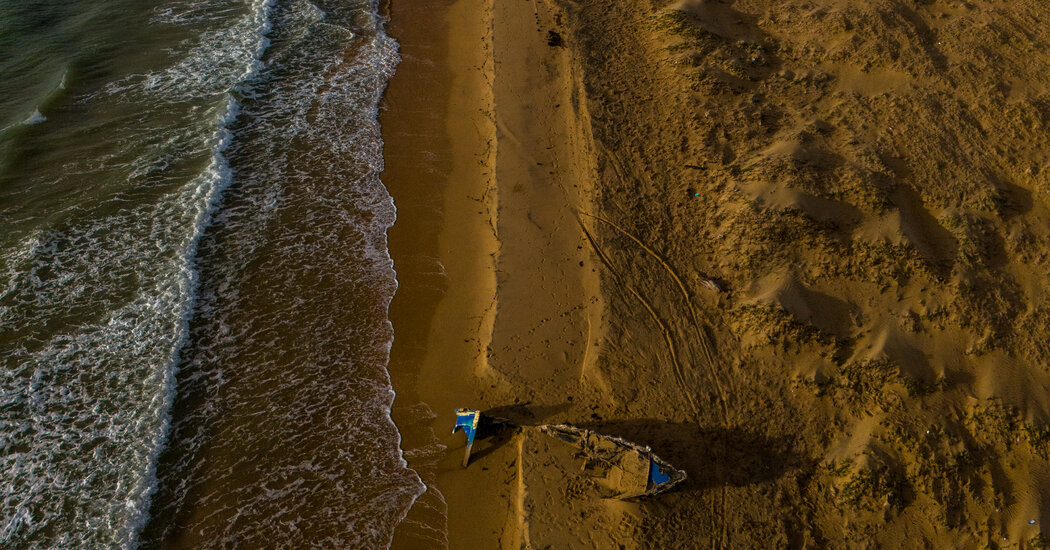
The human toll has sparked intense geopolitical division between the United States and Latin American governments, carving deep divisions across the region. While Ecuador’s right-leaning administration has quietly supported the American aerial campaign, offering no public comment on the civilian casualties, Colombia’s leftist President, Gustavo Petro, has fiercely condemned the strikes as outright “murder.” Following an October strike that killed a Colombian fisherman, Petro took the unprecedented step of suspending intelligence-sharing agreements with the U.S. military, demanding accountability for his citizens. This political friction, however, does little to mend the frayed social fabric of rural communities like Puerto López and Siapana on Colombia’s remote Guajira peninsula. In the wake of a December strike that left a bombed-out boat and two unidentifiable, burned bodies washed ashore, these seaside villages have mutated into hollow ghost towns. Desperate to escape the target zone, the majority of the young men have fled inland, abandoning their ancestral ocean trade to seek low-paying, precarious work as motorcycle taxi drivers in crowded cities. Those left behind live in a state of suspended mourning, while state forensic agencies struggle to identify the charred remains of those recovered from the surf, a bleak testament to a war of attrition where the collateral damage is borne entirely by the invisible poor.
The physical mechanism of this offensive is an invisible, relentlessly expanding network of high-tech state violence. The U.S. military has rapidly intensified the frequency of its strikes, deploying advanced, armed MQ-9 Reaper drones and secret manned, fixed-wing attack aircraft operating from strategic airbases in El Salvador and Puerto Rico. This surge in airborne assets has transformed the vast waters of the Eastern Pacific into a hyper-surveilled shooting gallery, drastically cutting the odds of escape for targeted vessels from fifty percent down to an inescapable twenty-five percent. Yet, despite the massive scale and lethal frequency of these operations—which reached a fever pitch of multiple strikes per week—the American public and the communities most affected are kept entirely in the dark. The U.S. military and presidential administration maintain an ironclad wall of secrecy around these aerial bombardments, refusing to disclose legal justifications, operational details, or casualty figures, offering the world nothing more than occasional, dehumanized social media posts featuring grainy, black-and-white thermal footage of boats exploding in the dark. This cold, gamified presentation of violence serves to shield the public from the horrifying physical reality of the strikes, transforming what is essentially a series of oceanic executions into sanitized, bloodless victories of technological supremacy.
Ultimately, the legacy of this secretive aerial campaign is measured not in the kilograms of cocaine seized, but in the shattered lives and empty plates of families left behind on the South American coast. The tragedy is personified by elders like fifty-nine-year-old Johnny Valencia from the Ecuadorean town of Jaramijó, who has spent his entire life working the tides. Today, too terrified to ever steer his boat back into the open waters, Johnny spends his days walking the shoreline, collecting discarded plastic bottles for pennies to sell to local recyclers. The proud fisherman who once brought home fresh food for his family now struggles to provide even the most basic sustenance, explaining that his household frequently goes to bed hungry, unable to afford even a cup of coffee. As the United States continues to invest millions of dollars into its relentless, drone-powered war of attrition, it achieves no measurable reduction in the volume of illegal drugs reaching its borders. Instead, this silent war from the skies succeeds only in destroying the ancient relationship between the coastal people and the sea, transforming an entire generation of proud, self-sufficient fishermen into displaced, impoverished survivors haunted by the constant, terrifying threat of a sudden and violent death from above.