





Paragraph 1: The Tragic Incident and Identification
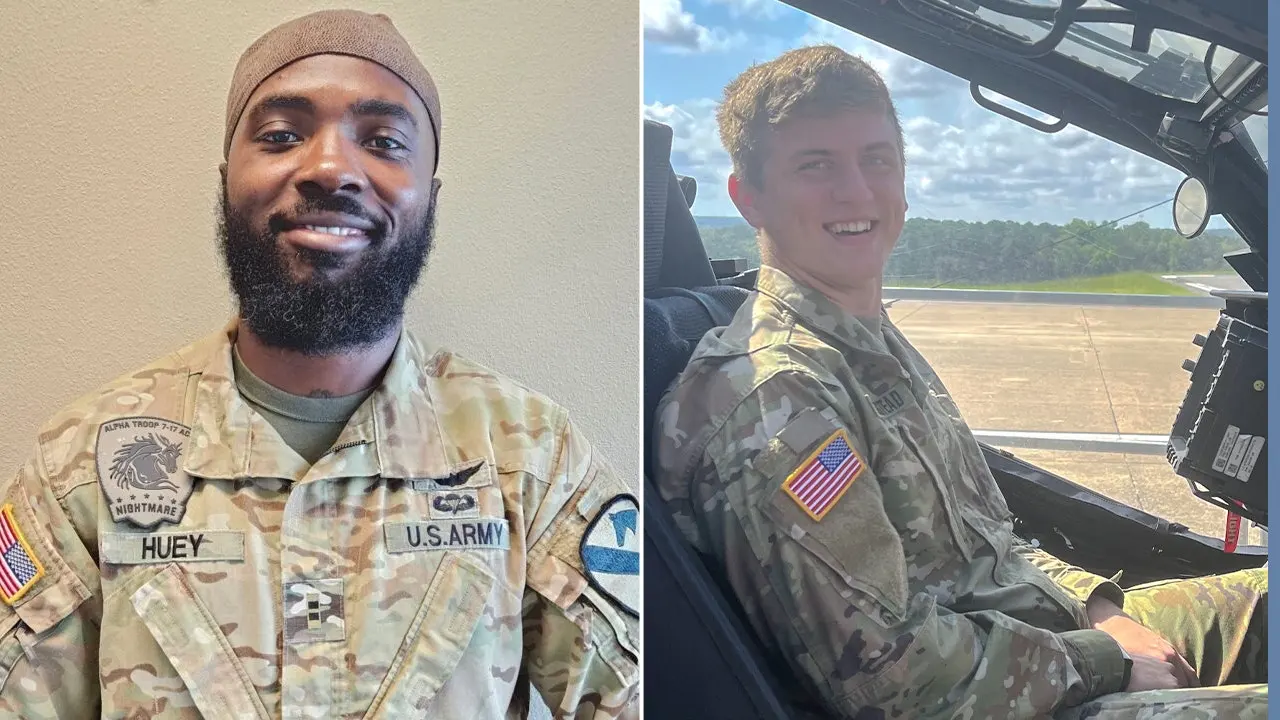
The quiet, rolling plains of Central Texas, usually a canvas of golden grass and serene blue skies, were violently disrupted on a Wednesday afternoon when the roar of an AH-64E Apache helicopter turned into a deafening silence. Near the small town of Salado, roughly thirty minutes from the sprawling military installation of Fort Hood, a routine training exercise transformed into a devastating tragedy. The U.S. Army, with a heavy heart, confirmed the loss of two of its finest aviators, identifying them as Chief Warrant Officer 2 Deontre T. Huey and Warrant Officer Seth L. Olmstead. The crash, which sent a plume of smoke into the Texas sky and sparked a wildfire that demanded a massive emergency response, left a community in mourning and a military family grappling with an unfathomable void. The news rippled through the ranks and the surrounding towns, a stark reminder of the immense risks taken daily by those who volunteer to defend the nation. As the sun set on that fateful day, the focus shifted from the twisted wreckage in the field to the lives of the two men who had dedicated themselves to a life of service, leaving behind families, friends, and a legacy of commitment that would not be forgotten. The Army’s initial statement, released on Friday, was somber and direct, acknowledging the profound loss and setting the stage for a period of grief, investigation, and remembrance.
Paragraph 2: The Journey of Chief Warrant Officer 2 Deontre T. Huey
Chief Warrant Officer 2 Deontre T. Huey was not just a pilot; he was a testament to the relentless pursuit of a dream and the embodiment of the American soldier’s spirit. At 34 years old, Huey hailed from Killeen, Texas, a city intrinsically linked to Fort Hood, and his story was one of steady ascent through the ranks. His military journey began in 2014, not in the cockpit of an aircraft, but on the ground as a motor transport operator. This foundational role, often overlooked, taught him the discipline, mechanical aptitude, and unwavering work ethic that would later define his aviation career. For years, he moved supplies and personnel, learning the intricate logistics that keep an army moving, all the while harboring an ambition to take to the skies. His dedication did not go unnoticed, and in February 2022, he was assigned to Bravo Company, 1st Battalion, 227th Aviation Regiment, 1st Air Cavalry Brigade, 1st Cavalry Division. This assignment was the culmination of years of rigorous training, flight school, and personal sacrifice. To transition from a motor transport operator to an Apache helicopter pilot is a monumental leap, requiring an exceptional level of intelligence, physical stamina, and mental fortitude. Huey’s achievement was a source of immense pride for his family and his community. He was a local boy who had risen to the elite ranks of Army aviation, mastering the complexities of the AH-64E Apache, one of the most advanced and lethal attack helicopters in the world. His presence in the 1st Cavalry Division, known as the “First Team,” placed him in a storied lineage of cavalrymen, and his fellow soldiers looked up to him as a mentor and a leader. His death leaves a gap not only in the cockpit but in the hearts of those who knew him as a dedicated professional, a brother-in-arms, and a man who embodied the very essence of service before self.
Paragraph 3: The Promise of Warrant Officer Seth L. Olmstead
In stark contrast to Huey’s seasoned experience, Warrant Officer Seth L. Olmstead represented the bright, promising future of Army aviation. At just 25 years old, Olmstead was a native of Belton, Texas, another community deeply woven into the fabric of the Fort Hood area. His journey into the Army began in January 2023, when he entered as a warrant officer candidate, a path reserved for the most motivated and capable individuals seeking to become technical experts in their field. The warrant officer cohort is the backbone of Army aviation, and Olmstead’s selection for this demanding track spoke volumes about his character, intelligence, and potential. He was assigned to the same unit—Bravo Company, 1st Battalion, 227th Aviation Regiment—in the months leading up to the tragedy, marking the start of what was sure to be a distinguished career. For a young man from Belton, flying an Apache helicopter was likely the realization of a lifelong dream, a testament to his ambition and drive. He was the new generation, eager to learn from seasoned aviators like Huey, absorbing the tactical knowledge and flight expertise that only years of experience can provide. The dynamic between the two men on that fatal flight was likely one of mentorship and mutual respect—Huey, the veteran who had climbed the ranks from the ground up, and Olmstead, the eager protégé with a world of potential ahead of him. Olmstead’s death is a profound tragedy, a reminder that the future of the nation’s defense is carried on the shoulders of young men and women who are willing to make the ultimate sacrifice. His family in Belton, his fellow warrant officer candidates, and the entire 1st Cavalry Division mourn the loss of a soldier whose journey was just beginning, a life cut tragically short in the service of his country.
Paragraph 4: The Army’s Response and the “Family” in Arms
In the wake of the devastating crash, the leadership of Fort Hood moved swiftly to address the needs of the grieving families and the affected soldiers. Lt. Gen. Kevin D. Admiral, the commanding general of III Armored Corps and Fort Hood, issued a heartfelt statement that resonated with the gravity of the moment. “Our hearts and deepest condolences are with the families of the Soldiers we lost Wednesday,” Admiral said. “The Army is a family, and a tragedy like this is felt throughout our formations and our community.” These words were not mere formalities; they were a reflection of the deep bonds that exist within the military. When a soldier falls, the entire installation feels the impact. Admiral emphasized that the priority in the difficult days ahead would be to ensure that the families and the soldiers have the care and support they need. The Army’s casualty assistance program is a comprehensive network designed to guide families through the logistical and emotional turmoil of losing a loved one. This includes dedicated casualty assistance officers who handle funeral arrangements, benefits, and paperwork, as well as chaplains and behavioral health specialists who provide psychological and spiritual support. The 1st Cavalry Division, known for its fierce esprit de corps, rallied around the memory of Huey and Olmstead, holding memorial formations and providing a space for soldiers to grieve collectively. The sense of loss is palpable, but so is the sense of unity. The Army’s response underscores a fundamental truth: while the mission is paramount, the people are the heart of the institution. The commitment to “leave no one behind” extends beyond the battlefield, ensuring that the families of the fallen are embraced by a community that understands their sacrifice and will stand by them for years to come.
Paragraph 5: The Crash, the Aftermath, and the Investigation
The specific circumstances surrounding the crash remain under intense scrutiny as a safety investigation team from the U.S. Army Combat Readiness Center in Fort Rucker, Alabama, arrived on the scene on August 13 to lead the inquiry. The AH-64E Apache, a twin-engine attack helicopter renowned for its firepower and maneuverability, is a complex machine that demands absolute precision from its pilots. The crash occurred during a training exercise, a routine yet inherently dangerous activity that is essential for maintaining combat readiness. The aircraft went down in a field near Salado, and the impact was severe enough to ignite a wildfire that consumed the surrounding dry brush, necessitating a large-scale emergency response from local fire departments and military personnel. The immediate priority was to contain the fire and secure the crash site, a somber task that involved recovering the remains of the fallen aviators with the utmost dignity and respect. The investigation will be meticulous, examining every component of the aircraft, analyzing flight data recorders, and interviewing witnesses to determine the root cause of the accident. Whether it was a mechanical failure, a bird strike, or a pilot error, the findings will be crucial in preventing future tragedies. The Army’s commitment to safety is unwavering, and every mishap is treated as a learning opportunity to improve training and equipment. However, for the families of Huey and Olmstead, the investigation offers little solace in the immediate aftermath. The questions of “why” and “how” will linger, but the reality of their loss is permanent. The crash serves as a stark reminder of the thin line between life and death that military aviators walk every day, a reality that is often invisible to the civilian population they protect.
Paragraph 6: A Community’s Grief and a Lasting Legacy
For the communities of Killeen and Belton, Texas, this loss is not an abstract news story; it is a personal wound. These towns are inextricably linked to Fort Hood, their economies, their identities, and their daily lives revolving around the soldiers who live and train there. Huey and Olmstead were not just soldiers from distant states; they were neighbors, classmates, and friends. Their deaths have cast a pall over the region, prompting an outpouring of support from local businesses, churches, and residents who have placed flags and flowers at memorials. The 1st Cavalry Division, with its storied history dating back to the Indian Wars, has seen its share of sacrifice, but each loss is felt anew. The legacy of these two men will be defined by their dedication, their courage, and their willingness to serve in a profession where the ultimate price is always a possibility. Huey’s journey from motor transport operator to Apache pilot is an inspiration to enlisted soldiers everywhere, proving that with hard work and determination, any goal is achievable. Olmstead’s brief but impactful service is a reminder of the youth and vitality that fuels the nation’s defense. As the investigation continues and the families prepare to lay their loved ones to rest, the Army will honor them with full military honors, including a 21-gun salute and the presentation of folded flags to their next of kin. The memory of Chief Warrant Officer 2 Deontre T. Huey and Warrant Officer Seth L. Olmstead will be enshrined in the halls of the 227th Aviation Regiment, and their names will be read at memorial ceremonies for years to come. They flew into the wild blue yonder, and though they have fallen, their service will never be forgotten. The silence left by their absence is a profound tribute to the price of freedom, a price paid willingly by the brave men and women of the United States Army.