




A Heart-Wrenching Search in Tucson
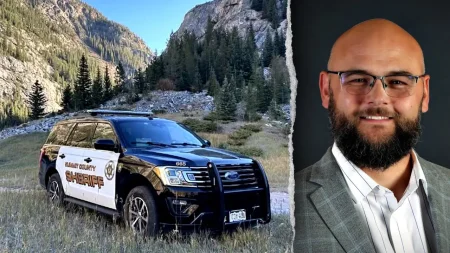
In the sun-drenched expanses of Tucson, Arizona, a community is holding its breath as a desperate search unfolds for Nancy Guthrie, the 84-year-old mother of beloved “Today” show host Savannah Guthrie. Leading the investigation is Pima County Sheriff Chris Nanos, a seasoned law enforcement officer whose usual composure shattered during a live interview with CBS 5 host Briana Whitney on a Monday evening. As the mission entered its fourth day, with rescue teams combing rugged terrains and urban hideaways, Nanos shared the raw human side of the ordeal—the hope, the heartache, and the unyielding determination to bring a mother home. Whitney, sensing the sheriff’s vulnerability, opened the conversation delicately, acknowledging the dual nature of the operation: “In terms of rescue versus recovery, I know you are still calling it a search and rescue. I also know your homicide detectives are part of this investigation.” Her words hung in the air, a gentle reminder of the grim possibilities lurking beneath the optimism. Nanos, a man who has seen countless cases in his career, responded with a voice steadier at first, but the cracks in his emotion were evident. He described the scene at Nancy’s home—a place now cordoned off with yellow tape, detectives sifting through belongings, and forensic teams collecting evidence that might hold the key to her fate. The house, a cozy suburban retreat filled with family photos and mementos from decades past, had become a crime scene overnight. Nancy, known for her strong spirit and love for birdwatching and gardening, had vanished without a trace during the night, sparking nationwide concern. Social media buzzed with messages of support from Guthrie’s fans, who imagined the terror of an elderly woman suddenly gone from the life she knew. Law enforcement officials, including Nanos, combed through surveillance footage from neighboring streets, interviewed friends and neighbors who remembered Nancy as a kind soul always ready with a warm smile, and coordinated with search dogs whose keen senses might detect any lingering trail. Yet, as days turned into what felt like an eternity, the sheriff confessed the mission had evolved. What began as a frantic knock on the door early morning revealed an unlocked house, personal items missing, and signs of a struggle or hasty departure. The team moved swiftly, setting up checkpoints, issuing alerts, and even enlisting the help of drone operators to survey vast desert areas where someone could easily hide. But hopelessness crept in; tests on blood stains and abducted items hinted at darker scenarios. Amid this, Nanos remained a beacon of resilience, his voice cracking not from weakness but from the profound empathy he felt for the family. “We’re just not gonna give up hope,” he said, tears welling up, reflecting the collective prayers of a community rallying around a woman whose life story mirrored so many others—full of quiet joys, enduring love, and now, heartbreaking uncertainty.
Whitney pressed further, her journalistic instinct tempered by compassion, asking the sheriff to share what he truly believed about Nancy’s fate. “Do you believe you are still looking for Nancy Guthrie alive at this point, that she could be held somewhere, and if so, do you believe that is local in the Tucson area, or that she’s been taken somewhere much further at this point?” The question cut deep, forcing Nanos to confront the reality check many families face in abduction cases. With a heavy sigh, he replied, “I don’t… You know, we’re just not gonna give up hope. We hope she’s out there somewhere.” His words echoed a sentiment familiar to anyone who has waited by the phone for a loved one: clinging to hope even when logic whispers otherwise. As an investigator, Nanos knew the statistics—time is the enemy in such cases, with each passing hour shrinking the margins for a safe return. Yet, he humanized the moment by emphasizing emotion over cold facts. Stories from Nancy’s life flooded his mind: tales of her volunteering at local shelters, her unwavering support of Savannah’s career, and the simple pleasures like baking apple pie for grandchildren. These memories fueled the search, turning it into more than a job; it became a personal crusade. The sheriff shared how, in prior cases, improbable rescues had occurred—elderly hostages found in remote cabins, victims of dementia wandering back after frantic chases. Tucson, with its mix of sprawling suburbs and wild outskirts, presented endless possibilities. Locals recalled similar incidents, like the case of a missing hiker who survived against odds, or a kidnapping resolved after a tip from an alert passerby. Residents formed volunteer groups, distributing flyers with Nancy’s photo—a woman with silver hair, warm eyes, and a penchant for crossword puzzles—and scouring parks and trails. Some theorized she might have been lured away by a known associate or fallen victim to a random act of opportunism. But Nanos cautioned against speculation, focusing instead on verified leads, such as credit card traces and calls to her phone that went unanswered. The investigation delved into her routines: mornings spent with coffee and the news, afternoons at community centers, evenings watching reruns of old sitcoms. Had someone exploited her trust? Or was it a health emergency mistaken for foul play? Forensic analysis pointed to potential foul play, with items like her purse and medication gone, suggesting an abduction rather than a voluntary absence. Despite this, the sheriff urged patience, knowing that breakthroughs often come from the mundane—a misplaced hair, a tire tread, a whispered confession. “We hope she’s out there somewhere,” he repeated, his voice a mix of resolve and sorrow, encapsulating the human essence of hope in the face of despair.
The interview deepened as Whitney shifted to the mechanics of the investigation, grounding the emotional conversation in tangible actions. “Are you actively DNA testing any items of evidence from the house now, and if you are, how quickly do you expect to get the results from that?” she inquired, her tone professional yet empathetic, recognizing that science could provide the clarity the heart so desperately needed. Nanos, leaning into the microphone as if addressing a distraught family member, explained the process: “We actually are. So we have our own DNA rapid testing here, and of course, we use a lab. But we’ve been told that the system here in Tucson is down, so we ran that up to Phoenix [Monday].” His explanation painted a picture of a small agency stretched thin, seeking alliances with larger facilities to expedite what could save a life or deliver closure. The evidence collected—a blood-spattered doorknob, half-empty glasses, torn fabric—had been meticulously gathered by gloved technicians in protective suits, each item bagged and labeled with the precision of seasoned professionals. DNA testing, a cornerstone of modern forensics, promised to reveal truths hidden in biological traces. But Lady Luck wasn’t on their side; the local lab faced technical issues, a reminder of how bureaucracies and setbacks can torment investigators. Swiftly, samples were couriered to Phoenix, a 100-mile journey that symbolized the lengths to which the team would go. Nanos detailed the procedure: swabs processed for genetic profiles, compared against Nancy’s known samples from relatives, and cross-referenced with criminal databases. In cases like these, DNA often uncovered surprising links—a distant relative, a forgotten acquaintance, or even the perpetrator’s own traces left behind in haste. The sheriff recounted tales from his career where such tests had cracked hopeless cases, like identifying a kidnapper through a single strand of hair or exonerating suspects via alibis proven by skin cells. Yet, the waiting game was agonizing; even with rapid in-house tools, full lab results could take days, each hour a torment for Nancy’s family. Savannah, from her New York studio, had publicly pleaded for leads, her composed demeanor belying inner turmoil. Friends and family stayed glued to updates, praying for positive identifiers. The process involved PCR amplification to multiply DNA, gel electrophoresis to separate strands, and computer algorithms to match sequences—a ballet of science that Nanos oversaw with bated breath. As he spoke, the sheriff’s eyes shone with determination: “Hopefully here we’ll know something from Phoenix that we can maybe get to our labs and get a rush order done from them, but even then it’s still a few days, and nothing’s fast enough, right?” His acknowledgment of time’s tyranny was a candid admission from a man who understood that in rescues, speed meant everything.
Building on the forensic strides, Whitney probed further into the sheriff’s perspective, asking if he still viewed this as an active rescue mission. “So you still believe this is an active rescue mission at this point?” she pressed, eliciting from Nanos a simple, heartfelt “We hope so.” This exchange humanized the law enforcement process, transforming sterile reports into a dialogue rich with vulnerability. For the sheriff, hope wasn’t just a word; it was the engine driving 200 volunteers, police officers, and search teams through treacherous terrain. Nights were sleepless, filled with briefings where teams reviewed maps of Tucson—highlighting parks like Catalina State Park, where hiking trails could hide secrets, and urban zones prone to quick getaways. Homicide detectives, integrated early, brought specialized skills: profiling potential suspects, analyzing behavioral patterns, and interviewing associates who might know more than they let on. One theory involved a caretaker or handyman who had visited recently; another speculated on interstate travel, given Tucson’s proximity to highways. Volunteers, including off-duty firefighters and community members, set up grids, searching bushes and abandoned buildings with flashlights and drones. Stories from previous rescues inspired them—an 80-year-old man found alive after weeks in the wilderness, guided by sheer will. Yet, the sheriff remained realistic; at 84, Nancy’s health could be a factor, and time’s erosion might mean shifting from rescue to recovery. “We hope so,” Nanos reiterated, a mantra that bridged optimism and harsh reality. In quieter moments, he reflected on victims he’d known—lost hikers, abused elders—and vowed not to add Nancy to that list. Publicly, the department released tips lines, rewarding each lead, from anonymous sightings to abandoned vehicles. Tech played a role too: GPS trackers on search party vehicles and apps coordinating efforts. Savannah’s pleas amplified the message, turning a local search into a national vigil. Emotionally, the sheriff drew strength from the community—barbecues for searchers, fundraisers for rewards—proving that humanity thrives in crisis.
As the interview wound down, Nanos expressed gratitude for the public’s support, noting how hundreds of tips had poured in, each one a thread of hope in the tapestry of uncertainty. “We’re just not gonna give up hope,” he echoed once more, his voice steady yet laced with fatigue, encapsulating the grind of an investigation that had drained his team mentally and physically. The sheriff shared anecdotes from those tense days: officers comforting each other in break rooms, discussing dreams of a triumphant reunion, or the quiet dread of imagining Nancy’s fear. Whitney, sensing the moment’s weight, thanked him for his candor, and as the broadcast faded, viewers were left with a poignant reminder of the fragility of life. Nancy’s daughter, Savannah, issued her own heartfelt update, thanking supporters and urging continued vigilance, her words a testament to a family’s resilience. Behind the scenes, Pima County officials balanced the mission with resources—allocating budgets for overtime, coordinating with FBI agents for broader reach, and consulting psychologists for crisis management. Volunteers spoke of their motivations: love for elderly relatives, memories of lost friends, driving them to brave deserts where temperatures soared. In one touching account, a search dog handler recounted a near-miss detection that reignited spirits. Yet, challenges persisted—misinformation from social media, false leads that drained manpower, and the emotional toll on deputies witnessing grief firsthand. Nanos advocated for safety nets like better elderly monitoring, but for now, the focus was Nancy. As days piled on, the sheriff’s philosophy shone through: law enforcement as a service of the heart, not just the badge.
In closing, the saga of Nancy Guthrie’s disappearance serves as a powerful narrative on human endurance, intertwining tragedy with untold acts of kindness from strangers and colleagues alike. Sheriff Chris Nanos, with his choked-up revelations, personified the heartache of unyielding hope amidst darkness. Briana Whitney’s probing questions illuminated the blend of science, intuition, and compassion guiding the search. DNA testing raced against time, volunteers defied exhaustion, and a nation watched with bated breath, united in a shared desire for resolution. As the fourth day ended and hopes lingered, stories emerged of prior miracles—elderly women returned after abductions, families reunited through perseverance. Nancy, a tapestry of cherished memories—laughter at family gatherings, wisdom in her letters, quiet strength—remained the center. Savannah’s fame amplified voices, but the core was human connection. In Tucson’s embrace, where cactus blooms beside bustling streets, this ordeal underscored life’s preciousness. For Nanos, the mission wasn’t just professional; it was a stand against despair. Volunteers prayed, officials strategized, and hearts ached collectively. As investigations evolved, potential breaks loomed—like anticipated DNA confirmations from Phoenix, hinting at identities or exclusions. Missteps were forgiven, compassion flowed, and the human spirit endured. Whitney’s segment ended on a note of solidarity, reminding all that in uncertainty, community is the greatest rescue force. Months later, reflections would highlight this event as a crucible of empathy, testing yet fortifying bonds. Nancy’s thread, woven into local lore, inspired reforms for vulnerable seniors. Ultimately, whether rescue or recovery, the effort honored her life—a grandmother, a friend, an irreplaceable soul. In the quiet aftermath, Tucson healed, stories shared over coffee spoke of lessons learned, and hope, ever resilient, paved paths for future fights against the unknown.