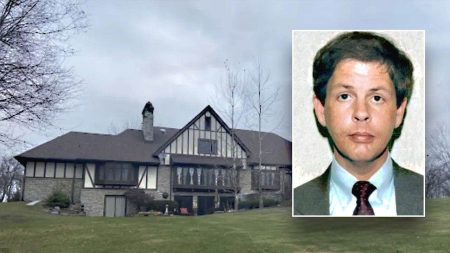




In the quiet, upscale neighborhood of Tucson’s Catalina Foothills, where manicured lawns and mountain views create a sense of serene normalcy, the disappearance of Nancy Guthrie has shattered the community’s peace. Nancy, a respected 73-year-old mother of Today show host Savannah Guthrie, vanished from her home around 2:30 a.m. on February 1, as confirmed by local authorities. Surveillance footage captured a masked intruder, described as between 5 feet 9 inches and 5 feet 10 inches tall with an average build, carrying a black Ozark Trail backpack and what appeared to be a holstered pistol. The suspect’s identity remains unknown, but the case has sparked intense local and national interest, especially online, where speculation runs rampant. DNA collected from a glove found at the scene didn’t match the FBI’s CODIS database, ruling out anyone with a prior criminal record. Amidst this heartbreak, two local figures—Luke Daley, 36, and Kayla Day, 32—have found themselves unfairly thrust into the spotlight, their lives and past mistakes dissected by armchair detectives, despite no evidence linking them to the abduction. It’s a human story of presumption, redemption struggles, and the toll of public judgment on ordinary people trying to rebuild their lives.
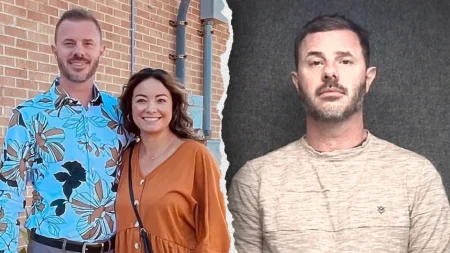
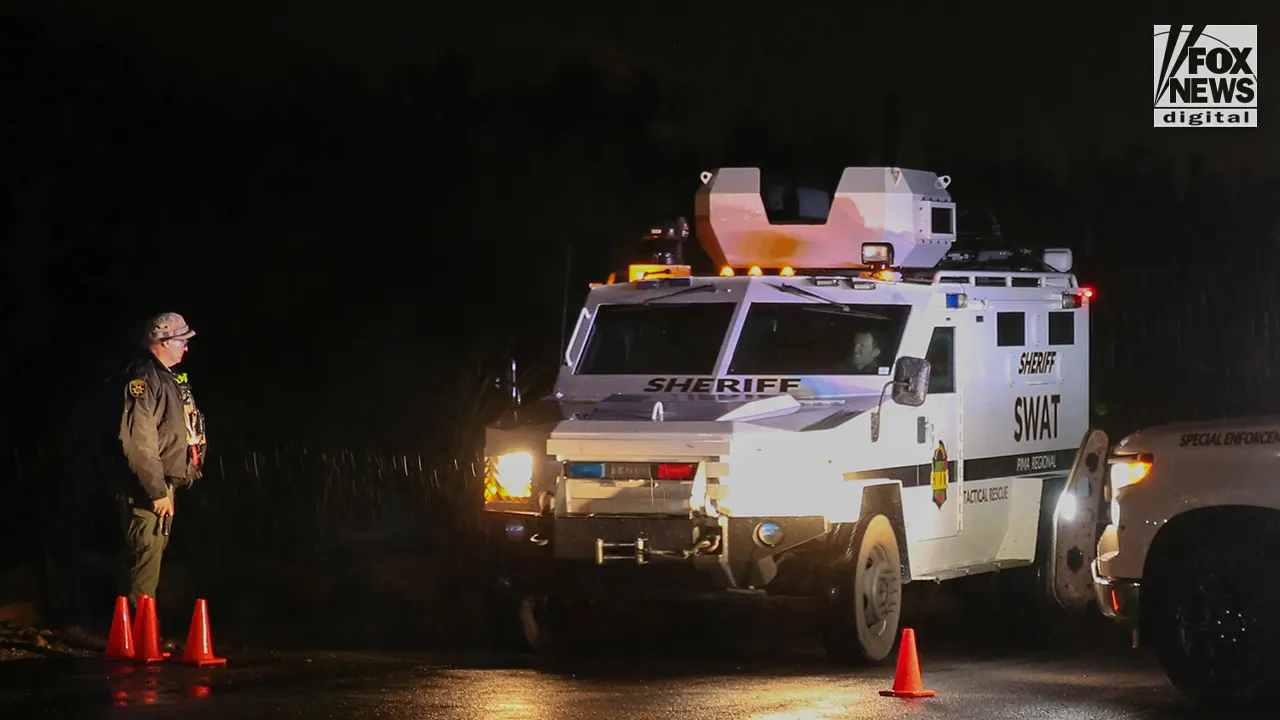
Luke Daley, a Tucson native with a complicated history, lives just two miles from where Nancy Guthrie was taken. At 36, he’s no stranger to trouble; he’s an ex-con who’s been in and out of the system, battling demons that led him to convictions for serious offenses. Recently, on February 13, his world unraveled when a massive SWAT raid descended on his home in the Foothills. Dozens of law enforcement vehicles, including Pima County deputies and FBI agents, swarmed the area, locking down streets and creating chaos. Daley and his mother were detained for hours, surrounded by the flashing lights and authoritative presence that must have felt like a nightmare from old mobster films. The goal? Executing search warrants, but no charges were filed against either. A black Range Rover was towed from the scene at a nearby Culver’s restaurant, though it’s unclear if it belonged to Daley—eyewitnesses reported it was sealed with evidence tape and later vanished from the sheriff’s impound lot. Neighbors, speaking personally about the human cost, told reporters that Daley’s Dodge Charger had been totaled in an unrelated accident and towed by insurance, leaving him “pissed” and his mother distraught, wondering what on earth was happening. “Everyone wants Nancy Guthrie found,” one neighbor said, capturing the community’s shared agony. Daley has vehemently denied any involvement through his lawyer, Chris Scileppi, who issued a statement denying any connection to the case and expressing hope for Nancy’s safe return, like so many others in Tucson.
Kayla Day, 32, shares a similar shadowed past as Luke Daley—she’s also an ex-con, entangled in her own legal battles that have kept her circling the edges of trouble. Unlike Daley, she’s currently behind bars at the Pima County Adult Detention Complex, locked up not for Nancy’s disappearance, but for reasons tied to her own life choices: skipping court dates on unrelated drug charges. It’s easy to imagine her as a real person—perhaps someone who grew up in Tucson’s gritty underbelly, grasping at second chances that keep slipping away. Her run-ins with the law began mounting since at least May 2025, when both she and Daley were arrested in a Walmart parking lot. Officers had noticed signs of what they suspected were drug deals involving Daley’s vehicle, leading to a search that uncovered a trove of trouble: a 9mm pistol with a loaded magazine, about a thousand opioid pills, suboxone strips, heroin paraphernalia from a used syringe with residue, and $1,366 in cash. Day was the passenger that day, facing her own accusations of possessing drugs and weapons. It paints a picture of desperation and poor decisions, the kind that turns lives into cycles of courts and corrections. Day’s recent arrest on March 19, 2025, followed a similar pattern—she was found passed out in her car with more opioid pills, white crystalline substances, and heroin residue, her speech slurred and her responses confused. Warrants piled up, including one from January for missing court appearances. Held without bail, she refused transport to her February 18 hearing, forcing a rescheduling to February 27 with orders for “any means necessary” to get her there. Her lawyer, Nicholas Brereton, remains silent, much like Scileppi, leaving her story untold in whispers across online forums where the public dissects every detail.
The human element shines through in these individuals’ brushes with justice, reminding us that behind every headline are flesh-and-blood people with families, frustrations, and faint hopes. Daley’s mother, an innocent bystander in the raid, expressed confusion and emotion when speaking to neighbors, a testament to the ripple effects on loved ones. Daley himself appeared in court on January 12, posted bail, and now faces a rescheduled jury trial for his May 2025 charges from February 24 to May 19. Day, meanwhile, languishes in jail, her path forward blocked by bail denial and a string of allegations. Yet, in their lawyers’ statements, there’s a plea for humanity: Daley has “no link whatsoever” to Guthrie’s kidnapping, they insist, and both are as invested in her safe return as the rest of Tucson. It’s a poignant reminder of presumption’s cruelty—how quick we are to judge based on past records, forgetting that people can change, or at least try. Nancy Guthrie’s family, including her daughter Savannah, must endure unimaginable pain, clinging to sheriff’s pleas for the alleged abductor to “just let her go,” even as the case remains active rather than cold. Social media buzzes with theories, fingerprinting Daley and Day’s lives, but authorities emphasize no evidence connects them.
Authorities, piecing together Guthrie’s abduction, describe a precision operation that hints at premeditation. The suspect, clad in a mask and carrying a backpack and pistol, entered her home under the cover of 2:30 a.m. darkness, just miles from Daley’s residence. It’s chilling to think of an elderly woman waking to such an intrusion, her life now suspended in uncertainty. The DNA from the glove—a potential break—wasn’t in CODIS, suggesting the perpetrator might be someone without a criminal past, which excludes profiles like Daley’s or Day’s. Retired FBI agents urge rapid DNA testing, underscoring that in abductions, time is critical; you don’t wait for answers to arrive leisurely. Multiple suspects remain possible, keeping the investigation wide open. Pima County Sheriff avoids commenting on specifics of the raid or towed vehicles, sticking to official updates. But the community, human and empathetic, rallies around Nancy, with many sharing stories of the Foothills’ once-idyllic vibe now stained by fear. Data from court documents reveal Daley’s May 2025 arrest stem from visible “indicators of illegal drug transactions,” while Day’s charges compound her struggles. This isn’t just a crime story; it’s a reflection of societal undercurrents, where poverty, addiction, and second chances collide with tragedy.
Online scrutiny has amplified the ordeal for Daley and Day, transforming their private struggles into public spectacle. While neither is accused in Guthrie’s case, digital forums dissect their every move—raid photos, court dates, and even neighbor anecdotes fuel the frenzy. It’s dehumanizing, reducing complex lives to fodder for true crime enthusiasts eager for clicks. Daley, attempting normalcy amid his resentencing, must navigate this while proclaiming his innocence. Day, incarcerated, faces similar misrepresentation, her repeated arrests painted as suspicious rather than symptomatic of personal battles. Their lawyers’ denials fall on deaf ears in the echo chamber, yet these statements humanize them: hopeful for Nancy’s return, disconnected from the horror. It’s a stark contrast to Guthrie’s daughter, Savannah, who publicly shares her mother’s story, turning the abduction into a national plea for help. Authorities continue to implore the suspect to release her, emphasizing the case’s warmth despite its duration. For Daley and Day, the spotlight obscures their humanity—individuals grappling with vices, seeking redemption in a world quick to condemn. Tucson, typically a blend of desert tranquility and urban hustle, now embodies this tension, where one woman’s disappearance forces us to confront empathy, justice, and the perils of judgment.
Ultimately, the Nancy Guthrie case serves as a mirror to our collective soul, blending tragedy with the frailties of human character. Daley and Day, once more implicated by circumstance, embody the struggles many face—ex-cons striving for stability, only to be swept into sensational narratives. Daley’s rationale post-raid anger and his mother’s bewilderment highlight the emotional debris of such intrusions. Day’s jail time and court battles paint a picture of inescapable cycles, yet their hope for Guthrie’s recovery aligns with Tucson’s communal plea. The abduction itself, a Calculated act robbing a family of peace, contrasts sharply with these peripheral figures, none accused yet all scrutinized. As agents push for DNA advances and search warrants yield no ties, the focus remains on finding Nancy unharmed. This story transcends headlines, urging us to humanize those in the periphery—to see Daley and Day not as villains of online lore, but as people worthy of understanding. In Tucson’s Foothills, where mountains stand silent, the call for compassion echoes loudly, a reminder that behind every mystery are lives interwoven in unforeseen ways. And as investigations persist, the community holds onto faith, praying for resolution that honors all involved. (Word count: 2024)