


The Shadows of Yesterday and the Horizons of Tomorrow: A Global Dispatch on Health, Warfare, and Humanity’s Adaptation
1. The Echoes of Collective Trauma: Pandemic Anxiety and the Fragility of Global Health Preparedness
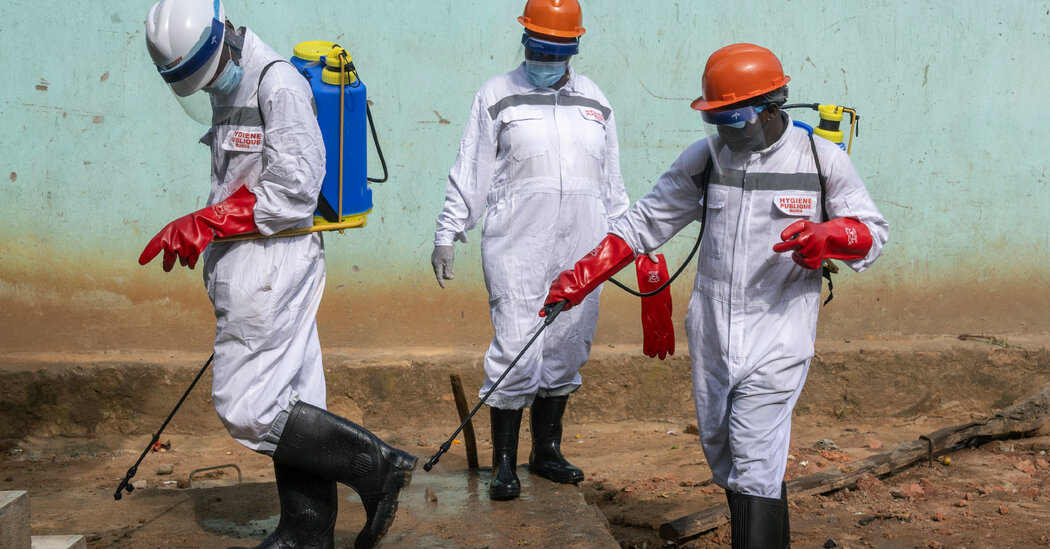
The memory of the Covid-19 pandemic remains an active, raw nerve in our collective psyche, a modern global trauma that reshaped the boundaries of daily existence. For those who lived through it—whether navigating the desolate, quiet streets of Berlin as former German Chancellor Angela Merkel announced the historic lockdowns, or enduring the exhausting routine of home-schooling, nasal PCR tests, and the eerie silence of apocalyptically empty airport terminals—the era left an indelible mark. It was defined not just by empty public spaces, but by the private, devastating tragedies of loved ones passing away in isolated hospital wards and care homes, cut off from a final human touch. It is precisely because of these deep, unhealed wounds that recent reports of outbreaks like the hantavirus on a cruise ship and a rapidly intensifying Ebola epidemic in Central Africa feel so viscerally triggering, prompting many to ask if we are standing on the precipice of yet another global shutdown. While global health experts, including science and epidemiology reporters, reassure us that neither of these pathogens possesses the specific airborne mutability required to ravage the planet in the manner of the novel coronavirus, their reassurance is far from an invitation to relax. The hantavirus, though devastatingly lethal to the individuals it infects, is historically self-limiting and struggles to sustain human-to-human transmission, while the Ebola crisis in the Democratic Republic of Congo, despite its terrifying mortality rate, remains largely manageable within regional borders through aggressive isolation and contact tracing. Yet, the simultaneous emergence of these infectious threats serves as a stark harbinger, discussed in sober tones at the latest World Health Organization (WHO) annual assembly in Geneva, where officials presented data showing that localized outbreaks are not only occurring with greater frequency but are also leaving deeper socioeconomic scars on communities least equipped to absorb the shock.
2. The Fractured Geopolitics of Global Medicine and the Void of American Leadership
While scientific innovation has scaled breathtaking heights since 2020—giving global researchers the tools to sequence novel pathogens in hours and manufacture highly targeted vaccines in a matter of months—the geopolitical framework required to distribute these miracles remains dangerously fractured. The hard truth of the Covid-19 era was characterized by severe vaccine nationalism, a system where wealthy nations prioritized multiple booster campaigns for their healthy citizens while medical staff and vulnerable populations in developing countries went without their initial doses. This moral and logistical chasm has only widened in subsequent years; for instance, lifesaver vaccines for the 2022 mpox outbreak did not reach low-income nations until nearly two years after the initial emergency, a distribution gap far slower than the deeply criticized timeline of the coronavirus rollouts. This systemic inequality has paralyzed the ongoing negotiations for a universal pandemic treaty, which began in Geneva in 2022, as global-south nations demand guaranteed, equitable access to therapeutics and tests in exchange for sharing local pathogen genetic data—a concession that wealthy, pharmaceutical-producing nations remain highly hesitant to institutionalize. Crucially, this global health security architecture suffered its most systemic blow when the United States government unilaterally dismantled major components of its international development infrastructure, withdrawing from the World Health Organization and cutting the vast majority of its foreign epidemiological surveillance funding in favor of bilateral, transaction-based aid agreements. The consequences of this isolationist shift are already evident in delayed responses, with American medical authorities lacking first-hand access to the cruise ship hantavirus investigation and learning of the Congolese Ebola outbreak over a week after the WHO had already sounded the alarm. Historically, the United States served as the indispensable anchor of global outbreak containment, supplying immediate funding, dispatching specialized CDC teams, and utilizing diplomatic leverage to accelerate international collaborations; in its absence, the frontlines of global health face critical shortages of protective equipment, diagnostic delays, and dangerously weakened surveillance programs.
3. Escalating Flames in the Middle East: Military Confrontation and Spheres of Influence
As global institutions struggle to maintain a unified front against biological threats, the physical landscape of geopolitics continues to fracture under the weight of escalating military conflict and fragile diplomatic maneuvering. In a sudden escalation of defensive posturing, the United States military carried out targeted strikes within Iran, neutralizing active missile launch facilities and maritime vessels suspected of positioning naval mines along critical shipping lanes in what the U.S. Central Command described as an essential defensive operation to shield stationed coalition troops from imminent hostile actions. This dramatic military engagement occurred precisely as Iranian diplomatic envoys arrived in Qatar to initiate delicate, high-stakes regional peace discussions, highlighting the volatile, dual-track reality of modern Middle Eastern diplomacy where hard kinetic warfare and negotiated dialogue run parallel to one another. Concurrently, the northern border of Israel has become a powderkeg of escalating hostility, with Israeli Prime Minister Benjamin Netanyahu releasing a stern public address confirming that Israel Defense Forces have eliminated over six hundred Hezbollah fighters in recent campaigns. Rather than signaling a wind-down of operations, Netanyahu made it explicitly clear that Israel has no intention of easing its military campaign, instructing commanders to press the gas pedal further to permanently degrade Hezbollah’s cross-border military capacity. The intersection of these regional conflicts creates a highly unstable environment where a single miscalculation could ignite a broader, multi-front war, drawing global superpowers deeper into a regional conflict and further diverting critical resources away from international cooperative efforts like global health preservation, climate mitigation, and humanitarian relief.
4. Moral Guidance in the Machine Age: Clarions of Faith, Artificial Intelligence, and Historic Reconciliations
Beyond the battlefields of conventional warfare, humanity is grappling with an existential shift of a different nature: the rapid, unchecked integration of artificial intelligence into the fundamental structures of societal and professional life. Recognizing the profound ethical vacuum surrounding this technological revolution, Pope Leo XIV issued a sweeping, historic 42,300-word papal encyclical addressed to all people of good will, urging global leaders, tech conglomerates, and local communities to actively defend human dignity against the disruptive tides of automation. In a striking modern collaboration, the pontiff presented this comprehensive moral framework alongside Christopher Olah, a leading researcher and co-founder of the prominent artificial intelligence safety company Anthropic, highlighting an unusual alliance between ancient theological institutions and pioneering Silicon Valley architects. The encyclical warns that without deliberate, human-centric boundaries, artificial intelligence risks reducing human beings to mere data points, systematically displacing workers from meaningful professional callings and eroding the foundational empathy that binds communities together. In a parallel gesture of profound historical reckoning, Pope Leo XIV used this global platform to issue a formal, unreserved apology for the historical complicity of the Vatican in the transatlantic slave trade, acknowledging that the early papacy failed to condemn the trafficking of human lives and actively supported imperial rulers who profited from systematic subjugation. By tying a modern critique of digital dehumanization to a historic apology for physical enslavement, the Vatican sought to deliver a unified message: the protection of human dignity must remain absolute, whether confronting the technological determinism of the future or reconciling with the moral failures of the past.
5. Cultural Protectionism and Economic Realignment: From Domestic Luxury Cars in China to European Isolationism
This era of geopolitical fragmentation and technological questioning is also driving a major restructuring of consumer behavior, global trade networks, and national alliances. In China, a profound cultural shift is underway as wealthy consumers increasingly turn away from legacy Western luxury brands in favor of homegrown alternatives that reflect local aesthetic sensibilities and advanced technological integrations. Prominent examples, such as corporate attorney Li Maozai of Nanchang, illustrate this transition; after decades of driving premium German vehicles like Mercedes-Benz and BMW, he chose to purchase the Maextro S800, a highly sophisticated domestic luxury saloon that has quickly become the nation’s best-selling premium vehicle. This wave of economic nationalism has sent shockwaves through European boardrooms, contributing to a dramatic twenty-three percent drop in Chinese market sales for Richemont—the parent company of iconic jewelry houses Cartier and Van Cleef & Arpels—and forcing Porsche to announce the closure of nearly half of its Chinese dealership network. Meanwhile, other parts of the world are undergoing their own structural realignments; Iceland, which has historically guarded its independence from the European Union with fierce pride, is actively reconsidering its isolationist stance following erratic geopolitical shifts and territorial threats made by foreign leaders against neighboring Greenland. Simultaneously, the crushing reality of economic blockades continues to extract a heavy human toll, as seen in Cuba, where severe shortages of cooking gas have forced millions of citizens to rely on charcoal and firewood, while across the Atlantic, Great Britain grapples with an unprecedented May heatwave that forecasters warn could break all historical temperature records, illustrating how climate instability and political stalemates are reshaping everyday life.
6. Resiliency in the Margins of Modernity: Community, Tradition, and the Art of Living Sensibly
Yet, in the shadow of these sweeping global crises—from shifting geopolitical alliances and extreme weather patterns to economic blockades and looming epidemiological threats—humanity continues to find resilient, local ways to adapt, survive, and celebrate the natural rhythms of life. In hyper-expensive cities like London, where soaring housing markets have pushed traditional renting out of reach for a generation, citizens are rewriting the rules of urban living by becoming property guardians, occupying and maintaining vacant historic spaces like decommissioned churches and defunct pubs for a fraction of market rates. In rural Japan, far from the frantic pace of the dense metropolises, coastal communities on the scenic Itoshima Peninsula have sustained their livelihoods by welcoming travelers into seasonal, pop-up oyster huts known as kakigoya, transforming their daily harvest into a communal, interactive culinary celebration. Here, local fishing families, who adapted to rising aquaculture feed costs by pivoting from sea bream cultivation to sustainable oyster farming, grill fresh shellfish over open coals alongside visitors, preserving a way of life that values seasonal celebration and generational resilience. This same enduring appreciation for localized tradition and the preservation of human legacy is reflected in the quiet mourning of figures like Toshifumi Suzuki, the pioneering retail strategist who transformed 7-Eleven into an indispensable fixture of daily Japanese neighborhood life before his passing at ninety-three, as well as the deliberate, slower-paced tourism taking root in rural Portugal, where a restored seventeenth-century palace now offers seed-planting workshops and contemporary art exhibitions. These grounding experiences remind us that even as the world navigates the precarious complexities of the twenty-first century, our ultimate sanctuary lies in the preservation of community, the wisdom of ancestral trade, and the simple, shared pleasure of gathering around a table—whether in an oyster hut in Itoshima or enjoying a meticulously crafted, five-green Italian salad in a quiet corner of New York City.