





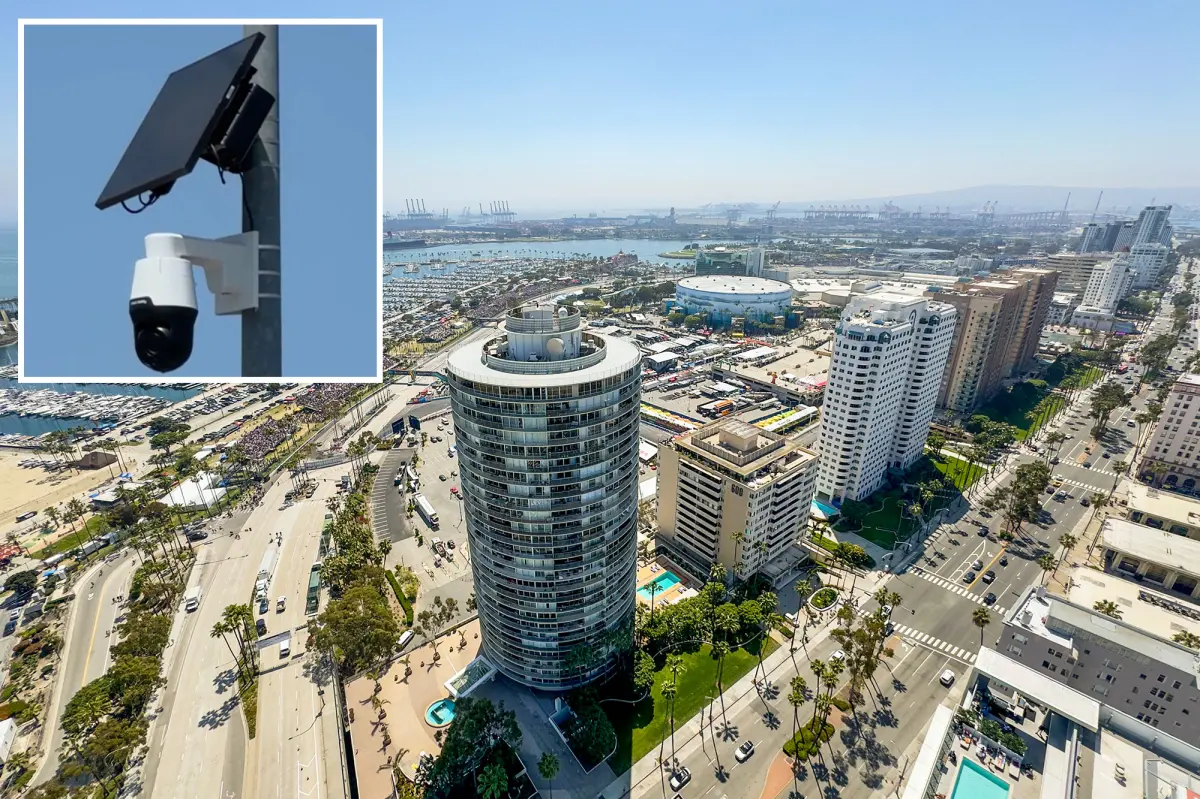
The sun-drenched streets of Long Beach, California, have long been celebrated for their vibrant coastal energy, bustling neighborhoods, and diverse communities. However, beneath the scenic charm of this seaside city lies a growing and dangerous anxiety shared by those who traverse its roads daily. For too long, the simple act of crossing the street or driving to work has felt like a high-stakes gamble, as reckless driving and excessive speeding have turned local thoroughfares into perilous speedways. In a decisive and compassionate effort to reclaim peace, safety, and order on its public ways, city officials have authorized the installation of eighteen automated speed cameras at critical, high-risk locations throughout the municipality, including heavily traveled corridors such as Long Beach Boulevard and Artesia Boulevard. This initiative represents a critical turning point in the city’s approach to traffic management, shifting from traditional, intermittent physical police patrols to a continuous, technologically driven net designed to force drivers to ease their foot off the gas pedal and acknowledge the shared humanity of the roads they travel.
To ensure this transition is met with understanding rather than frustration, local authorities are planning a highly transparent and gradual rollout of the automated system. Before a single dollar in fines is levied, an extensive sixty-day educational and warning period will commence, scheduled to begin no later than October 4. During this grace period, motorists caught speeding by the newly installed cameras will receive warning notices in the mail rather than financial penalties, serving as an informative wake-up call to adjust their habits. Additionally, highly visible signage alerting drivers to the upcoming photo enforcement zones will be prominently displayed well in advance of each camera site, ensuring that no one is caught off guard by a sudden “speed trap.” Come December 3, however, the grace period will officially end, and the cameras—which operate by photographing the rear license plates of speeding vehicles—will begin issuing formal, legally binding citations to any vehicle clocked traveling 11 miles per hour or more over the posted limit.
The financial penalties associated with the new camera system are structured in a progressive, tiered manner, specifically designed to deter the most egregious and dangerous violators while remaining fair to minor offenders. For drivers traveling between 11 and 15 miles per hour over the limit, a fine of $50 will be issued, which increases to $100 for those traveling 16 to 25 miles per hour over the limit. More severe infractions will carry heavier burdens, with a $200 fine for speeds 26 miles per hour or more over the limit, escalating to a massive $500 penalty for anyone caught driving at life-threatening speeds of 100 miles per hour or faster. Importantly, in an effort to focus on immediate behavioral modification rather than long-term financial ruin, the city has structured these citations so they do not impact a driver’s insurance premiums or appear as points on their official driving record. This careful balance ensures that the program functions strictly as a direct deterrent to speeding on local streets without triggering systemic economic hardships for residents.
The driving force behind this technological crackdown is a somber and undeniable reality: the devastating human cost of speed on Long Beach’s roads. In 2025, the city suffered a tragic total of fifty-three traffic fatalities, marking the deadliest year for motorists and pedestrians since the 1990s. Behind each of these cold statistics is a shattered family, an empty seat at a dinner table, and a community traumatized by entirely preventable losses. The terrifying vulnerability of ordinary citizens is movingly illustrated by the story of Sylvia Adams, a local resident and wheelchair user who has survived being struck by vehicles on three separate occasions while navigating the city’s crosswalks. She recounts the terrifying moments when drivers, eager to make a quick turn, completely ignore her right of way and proceed without looking, highlighting a dangerous daily reality where a simple trip down the street can turn life-threatening in an instant for the city’s most defenseless pedestrians.
Adding to the urgency of the situation is a highly dangerous culture of illegal street racing and thrill-seeking that has increasingly plagued the area’s wider lanes. Just last month, the community was shaken by a horrifying drag racing incident in which a young driver miraculously survived after completely totaling her vehicle while racing a BMW at high speed. Witnesses described a chaotic scene of twisted metal and shattered glass, a stark reminder of how quickly youthful bravado and unchecked horsepower can turn catastrophic. This dramatic crash is far from an isolated event; it represents a broader trend of reckless, high-speed behavior that puts not only the participants but also innocent bystanders, families, and commuters at immense risk. By targeting these extreme behaviors, the new speed cameras aim to dismantle this hazardous car culture, sending a clear and unmistakable message that the city’s public streets are shared spaces meant for safe transit, not unregulated racetracks.
Ultimately, the introduction of these eighteen speed cameras is about much more than issuing tickets, collecting revenue, or implementing surveillance; it is a fundamental reassessment of what it means to coexist safely in a modern urban environment. As Long Beach stands on the precipice of this new enforcement era, the collective hope of residents and city officials alike is that the combination of clear warnings, visible signage, and consistent financial penalties will slowly but surely reshape driver psychology. Success for this program will not be measured by the number of citations mailed out or the fines collected, but by the lives saved, the decline in collisions, and the return of peace to neighborhoods that have long felt besieged by traffic. For vulnerable residents like Sylvia Adams, and for the families of the fifty-three individuals who lost their lives in 2025, these cameras represent a crucial step toward building a community where everyone can travel safely and without fear.