


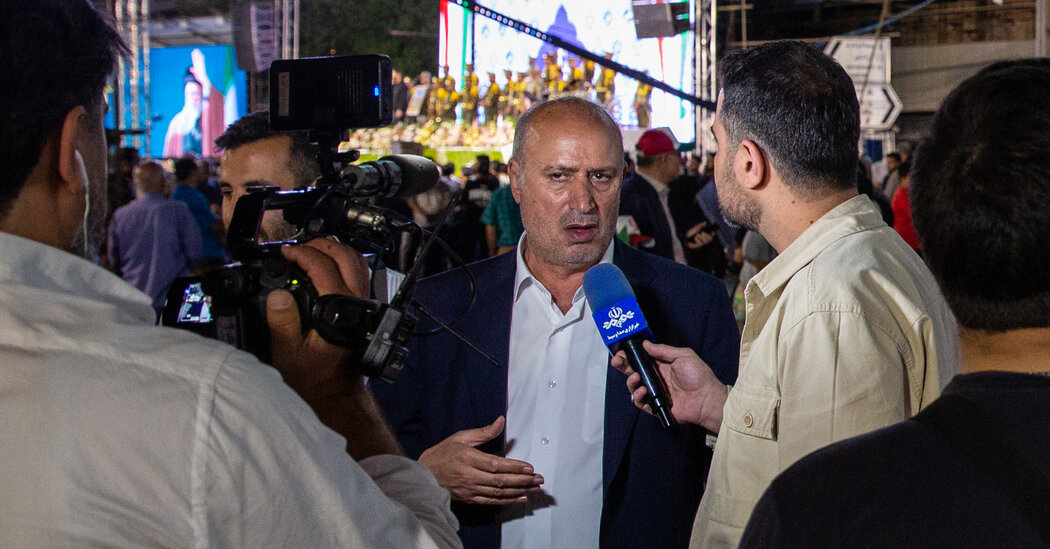
For the elite athletes of Iran’s national soccer team, the journey to the upcoming World Cup in North America was supposed to be the absolute pinnacle of their professional lives—a hard-earned celebration of athletic excellence after becoming the third nation globally to qualify for this historic, forty-eight-team tournament. Instead, their dreams and daily training sessions have been cast into a turbulent limbo, overshadowed by the terrifying realities of an active war, hostile political rhetoric, and the agonizing uncertainty of whether they will even be permitted to set foot on North American soil to compete. Behind the sterile press releases and corporate statements lies a human drama of immense proportions, as these young men, who have dedicated their entire lives to mastering a ball, find themselves suddenly thrust into the reluctant role of geopolitical symbols. At the heart of this intense geopolitical storm stands Mehdi Taj, the long-serving president of Iran’s soccer federation, whose own complex history as a former commander in the Islamic Revolutionary Guards Corps (IRGC) makes him both a target for Western sanctions and a fierce, weary defender of his players’ rights. In a rare and unusually candid video interview from Tehran, Taj laid bare the profound emotional and logistical toll this conflict has extracted from his squad, pointing directly to the United States government as the primary source of the administrative roadblocks, shifting security protocols, and unresolved visa applications that have systematically compromised his team’s physical and psychological preparations. The sheer historical anomaly of this tournament cannot be overstated; for the first time in the nearly century-long history of the World Cup, a host nation is in an active state of military conflict with one of the competing participants, transforming what should be a global festival of unity and sports diplomacy into a highly volatile diplomatic battleground where the athletic aspirations of young men are held hostage by geopolitical maneuvering. For the Iranian populace, who look to their football team as a source of profound national pride and a brief respite from the grinding hardships of international isolation, the unfolding crisis is not merely a matter of sports administration; it is a painful reminder of how deeply global politics can penetrate and poison the few arenas of human connection that are supposed to remain sacred and neutral.
The material fallout of this diplomatic warfare has forced the Iranian squad into a nomadic, exhausting, and deeply destabilizing existence, disrupting their preparation at the exact moment they require absolute stability and peace of mind. For much of the past month, the players have been isolated at a training camp in southwestern Turkey, attempting to maintain the grueling physical routines of elite athletes while being physically separated from their families and constantly checking their phones for updates on their visa status. The logistical chaos of moving an entire operations team, training gear, and medical equipment at a moment’s notice was a bureaucratic nightmare that robbed the players of vital recovery time and focus. Their original logistical itinerary was to establish a state-of-the-art training base in the arid heat of Tucson, Arizona, which would have allowed them to acclimate to the environmental conditions of the region well in advance of their highly anticipated June 15 opening clash against New Zealand in Los Angeles. However, in a startling, eleventh-hour decision negotiated under heavy duress between the Iranian federation and FIFA, this plan was abruptly aborted, and the squad’s base camp was relocated across the border to Tijuana, Mexico. This sudden, late-stage geographical shift exposes the raw, human indignity of the situation: Mexican President Claudia Sheinbaum publicly revealed that the relocation was an emergency measure because the United States administration made it clear that they did not want the Iranian squad staying overnight on American soil. While Mehdi Taj has tried to put a brave face on the relocation—insisting that Tijuana offers excellent training facilities, a more favorable climate, and closer proximity to their match venues—the psychological impact on the players is undeniable; they are elite competitors treated as pariahs, forced to train in the shadow of a heavily militarized border, knowing that the host country of their life’s biggest tournament views their very presence at night as an unacceptable national security threat.
Adding to this atmosphere of profound alienation is the ongoing nightmare of the visa application process, which has transformed from a standard administrative procedure into a bureaucratic weapon designed to stall, intimidate, and exclude. As the tournament’s official June 11 kickoff looms dangerously close, the Iranian squad has yet to receive formal approval to enter the United States for their scheduled games on the American West Coast, leaving the players in a state of agonizing vocational and emotional limbo. These young men are not policymakers, yet they bear the direct consequences of decisions made in distant government offices where the human cost of a visa denial is rarely considered. This paralyzing administrative gridlock is deeply tied to the collective penalization of the team’s roster through their past association with the IRGC. Under domestic Iranian law, military service is strictly mandatory for all eligible young men, and for many aspiring professional athletes, fulfilling this civic obligation meant serving in the ranks of the Revolutionary Guards—an organization that both the United States and Canada have officially designated as a terrorist group. During a recent high-profile White House appearance alongside President Donald Trump, Secretary of State Marco Rubio made it unequivocally clear that any trainers, coaching staff, or athletic officials with even tenuous links to the IRGC would be strictly barred from entering American territory. For several players on Iran’s roster, including their veteran captain, who completed their compulsory service years ago as teenagers with absolutely no control over their military assignment, this unyielding stance represents a heartbreaking turn of events. It transforms a mundane, inescapable aspect of domestic Iranian life into an insurmountable obstacle, proving that on the global stage, the nuance of individual human lived experience is quickly erased by sweeping, black-and-white geopolitical decrees that treat young athletes as security threats rather than international ambassadors of sport.
The administrative hostility emanating from North American authorities has not been confined to the playing squad; it has directly targeted the leadership of Iranian football, most notably Mehdi Taj himself, whose personal journey mirrors the broader struggles of his nation. Taj’s transition from a battlefield commander in the Revolutionary Guards during the formative years of his youth to a prominent, suit-wearing sports executive has made him a lightning rod for international controversy, severely restricting his physical mobility and his capacity to represent his federation on the global stage. In the tense months leading up to the tournament, Taj has endured a humiliating succession of travel blockades; he was denied the necessary credentials to attend the critical World Cup draw in Washington, and more recently, Canadian immigration authorities abruptly revoked his transit documents while he was en route to Vancouver for FIFA’s annual congress. The airport terminal in Toronto became an unlikely diplomatic stage, where a former soldier and modern sports official was forced to plead for basic transit rights, highlighting the deep dysfunction of modern international travel for citizens of sanctioned nations. Taj described the subsequent encounter at the Toronto airport as a painful, hours-long ordeal during which he and the rest of the Iranian delegation were subjected to aggressive questioning by border officials, forcing them to spend their transit time defending their national identity and sovereignty rather than discussing football. In a gesture of exhausted dignity, Taj ultimately chose to abandon the trip entirely, flying back to Tehran in protest of what he viewed as targeted harassment. While Taj insists he has long since severed all active operational ties with the IRGC, he continuously finds himself caught in a profound cultural divide, defending an organization that he views as a legitimate, historically vital defender of Iranian soil, but which Western governments classify as a source of global terror, leaving him to fight a lonely, uphill diplomatic battle on behalf of his young squad.
Deep within the high-pressure environment of the Iranian locker room, this volatile mixture of geopolitical conflict, forced exile, and constant suspicion has created an atmosphere of immense psychological anxiety, threatening to dismantle the squad’s internal cohesion just as they face the athletic test of their lives. The emotional burden borne by these young athletes is staggeringly heavy; they are expected to prepare for elite competition while their homeland is gripped by the trauma of war, including the targeted killing of Iran’s supreme leader and a devastating school bombing that claimed the lives of over a hundred innocent children. This background of national grief and political instability has also sparked internal friction, most visible in the controversial exclusion of star forward Sardar Azmoun from the final World Cup roster. Azmoun, a talismanic player and a favorite of the fans, was left off the squad following a social media post that government hardliners branded as disloyal and subversive during a time of existential conflict. The heavy silence of his absence hangs over every tactical meeting, a stark reminder to every other player that their own security, careers, and personal voices can be dismantled instantly by the very state they are expected to proudly represent on the playing field. The omission of such a critical player serves as a painful illustration of the impossible tightrope these athletes are forced to walk: they are pressured by their home government to demonstrate absolute political loyalty during a national crisis, while simultaneously being treated as suspicious entities by Western governments who assume they are agents of state policy. As the remaining squad members prepare for their final tune-up match against Mali before their fraught journey to Tijuana, they must somehow find the emotional reserve to compartmentalize their grief, ignore the intense external scrutiny, and play for a population that desperately needs a reason to hope, even as their own locker room is quieted by the conspicuous absence of their brother-in-arms.
For FIFA, the wealthy and powerful governing body of international soccer, this unfolding crisis represents a profound and highly public collapse of its prized illusion of political neutrality, forcing its leadership to navigate an ethical minefield of conflicting commercial interests, national security claims, and humanitarian principles. FIFA President Gianni Infantino, who has long cultivated cozy, mutually beneficial relationships with global political leaders like Donald Trump, has attempted a delicate, increasingly untenable balancing act; he traveled to Turkey in March to offer performative solidarity to the struggling Iranian team, even as his administration quietly accommodated the highly hostile security demands of the American hosts. This perceived double standard has drawn sharp, public condemnation from Mehdi Taj, who has repeatedly invoked FIFA’s foundational “Fair Play” charter, asserting that it is the unilateral responsibility of the governing body—not the individual, embattled national federations—to protect qualified teams from the discriminatory whims of host nations. Yet, when pushed on whether he is confident that Iran will actually take the field against New Zealand on June 15 in Los Angeles, Taj offers no optimistic promises, weary of a system that has repeatedly let his players down and simply stating that any guarantees must come directly from FIFA. Ultimately, the fate of Iran’s participation hangs by a single thread, leaving millions of passionate fans in Tehran and across the globe to wonder if they will witness their heroes play, or if the cold machinery of war will triumph over the open spirit of play once and for all. The deep tragedy of this entire saga is that the World Cup, an event designed to transcend the artificial borders of nationhood and celebrate our shared humanity through sport, has instead become a mirror reflecting our most violent global divisions. As the young men of Team Melli lace up their boots in the heat of Tijuana, staring across a heavily guarded border towards the stadiums of California, the promise of the beautiful game feels less like a bridge for peace and more like a heartbreaking mirage, proving that even the most cherished arenas of human achievement can be easily swallowed by the darkness of international conflict.