





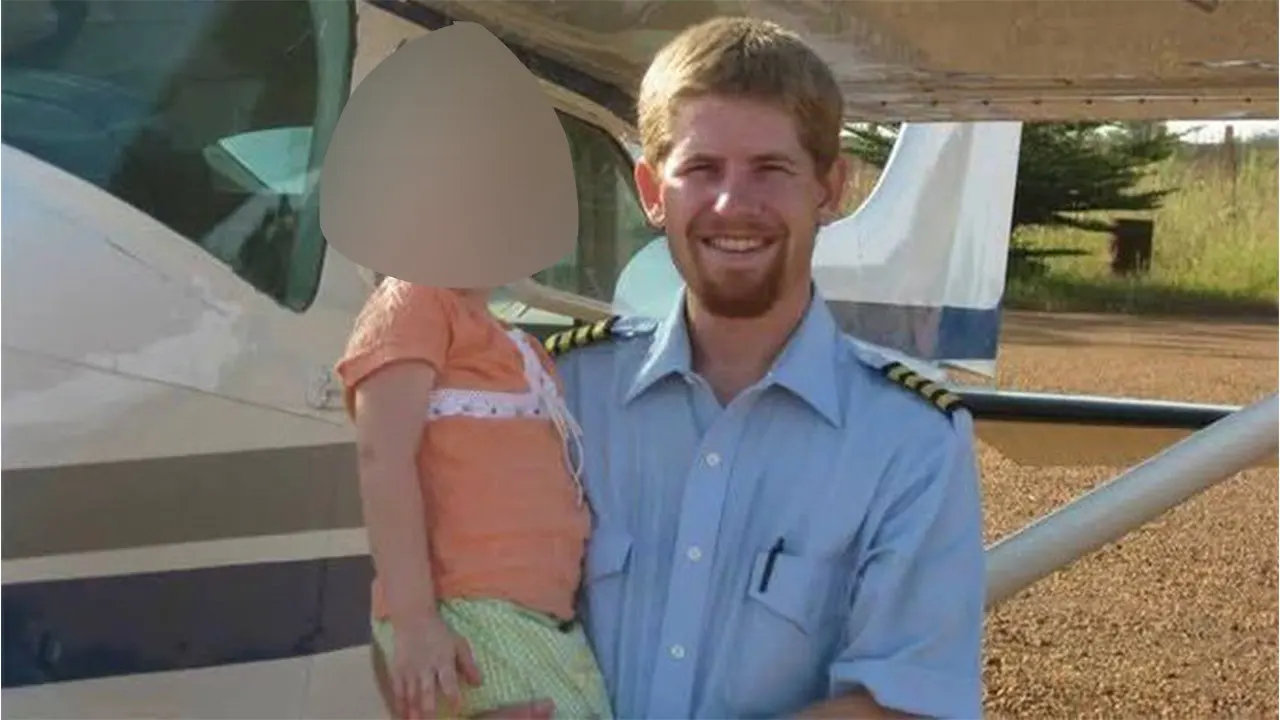
For more than nine months, the family and friends of Kevin Rideout held their breath, praying for a man who had vanished from the streets of Niger’s capital without warning or explanation. Rideout, an American missionary and pilot, was not a soldier or a diplomat; he was a man of faith who had devoted his life to serving others in a region increasingly marked by instability. When the news finally broke that he had been released, it was not just a headline—it was an answered prayer, a long-awaited reunion, and a reminder of the quiet courage of those who work in dangerous places. SIM International, the Christian missionary organization that Rideout serves, confirmed his release with a statement filled with gratitude and relief. “We are grateful to confirm that our good friend and brother in Christ, Kevin Rideout, has been released after over nine months in captivity,” the organization said. The words were simple, but the weight behind them was immense. For the first time in nearly a year, his wife Krista and their children could finally allow themselves to exhale. The nightmare of uncertainty, of waiting, of not knowing whether they would ever see him again, was finally over.
Rideout’s ordeal began on October 21, 2025, in a way that still seems almost impossible to comprehend. He was kidnapped near his home in Niamey, Niger’s capital, in a location that should have been safe—just 150 feet from the presidential palace, according to reports from The Washington Post. The proximity to such a heavily guarded symbol of state authority made the abduction all the more shocking. It was a brazen act, carried out in broad daylight or under the cover of night, and it sent a chill through the missionary community and beyond. For more than nine months, there were no confirmed details about who had taken him or where he was being held. His family was left to cling to faith and hope, while authorities and organizations worked behind the scenes to secure his freedom. When release finally came, he was handed over into the care of U.S. officials, and SIM International reported that he was in good health. Those words—“in good health”—carried a depth of relief that cannot be overstated. After months of captivity, of uncertainty, of potential danger, he emerged alive and well enough to be reunited with his loved ones. The organization said he would soon be back with Krista, his children, and his extended family, turning a long season of fear into a moment of overwhelming joy.
To understand who Kevin Rideout is, one has to look beyond the headlines and see the man behind the mission. He serves as a pilot for SIM International, a North Carolina-based organization that has long worked in Africa and around the world, bringing aid, hope, and the Christian message to communities in need. For Rideout, flying was not just a job; it was a calling. It meant transporting supplies, personnel, and support to remote areas where the road was impassable and the need was great. It meant being a lifeline for missionaries, local churches, and vulnerable populations. His work placed him in Niger, a country that has become increasingly volatile, but his presence there was not about politics or power. It was about service. The statement from SIM International reflected the deep spiritual and emotional dimension of his captivity and release. “Krista and the rest of Kevin’s family are profoundly grateful for the prayers offered on their behalf by people around the world throughout his captivity, and in particular for the deep level of prayer and support offered by our SIM family,” the organization said. This was not a story of political maneuvering or military intervention alone; it was a story of a community bound together by faith, interceding for a brother in chains, and celebrating his return with open hearts.
But Rideout’s release cannot be fully understood without acknowledging the dangerous world he was caught up in. Niger has been in turmoil since a military junta overthrew the democratically elected government in 2023. The coup was a turning point for the country and for the entire Sahel region. In the aftermath, the new military leadership expelled French and U.S. military personnel, forcing Western nations to abandon Air Base 101 in Niamey, a strategic installation that had been used for counterterrorism operations across the region. The withdrawal left a vacuum, and into that vacuum stepped a range of armed groups, many of them with ties to global terrorist networks. The United States Africa Command has noted the consequences of that decision, as the security situation deteriorated and the ability to monitor and counter threats diminished. For ordinary Nigeriens, the coup brought not just political change but a deepening sense of insecurity. For foreigners like Rideout, it meant operating in an environment where the rules had changed, where the protections once offered by international military presence were gone, and where the risk of abduction or violence had become a grim reality.
The groups that have thrived in this environment are among the most dangerous in the world. The Islamic State Sahel Province, often known as ISSP, and the al Qaeda-affiliated Jama’at Nusrat al-Islam wal-Muslimin, or JNIM, have both expanded their influence in Niger since the takeover. These are not fringe movements; they are organized, brutal, and deeply entrenched in the region’s complex dynamics. According to the Global Terrorism Index in 2025, JNIM activity in Niger saw a substantial increase, with an almost fourteenfold rise in fatalities and the highest number of deaths and attacks by the group in the country to date. The numbers are staggering, but behind each statistic is a human story—a family shattered, a village terrorized, a life lost. The kidnapping of an American missionary was not an isolated incident but part of a broader pattern of violence and instability that has made the Sahel one of the most dangerous regions on Earth. While no group immediately claimed responsibility for Rideout’s abduction, analysts speculated that his capture was connected to the Islamic terror groups operating in the area. For those who knew him, the danger was never abstract. It was a daily reality, and his release, while a cause for celebration, also serves as a sobering reminder of the many others who remain in captivity or who have not survived such ordeals.
As Kevin Rideout prepares to return to his family, there is much to reflect on. His story is one of survival, faith, and the power of collective prayer. It is also a story that raises difficult questions—questions about the fate of those still held, about the effectiveness of counterterrorism efforts in a region where extremists have gained ground, and about the wisdom of sending civilians into places where the risk of harm is so great. For Rideout’s family, those questions are likely secondary to the simple, profound joy of having him home. The months of waiting, of wondering, of hoping against hope, are finally behind them. But for the broader community, his release is a moment to remember that behind every news story about hostages and terrorism, there is a human being with a name, a family, and a purpose. Kevin Rideout went to Niger to serve, and he was taken because of the chaos around him. He emerged not as a political pawn but as a man of faith who endured an unimaginable trial. His return is a testament to the resilience of the human spirit and the unwavering hope that even in the darkest places, light can break through. The prayers that sustained his family are now prayers of gratitude, and the silence that marked his captivity has been replaced by the sound of a family reunited. For those who followed his story, the lesson is clear: never underestimate the power of hope, the strength of community, and the enduring belief that love can carry us through even the longest and darkest nights.