


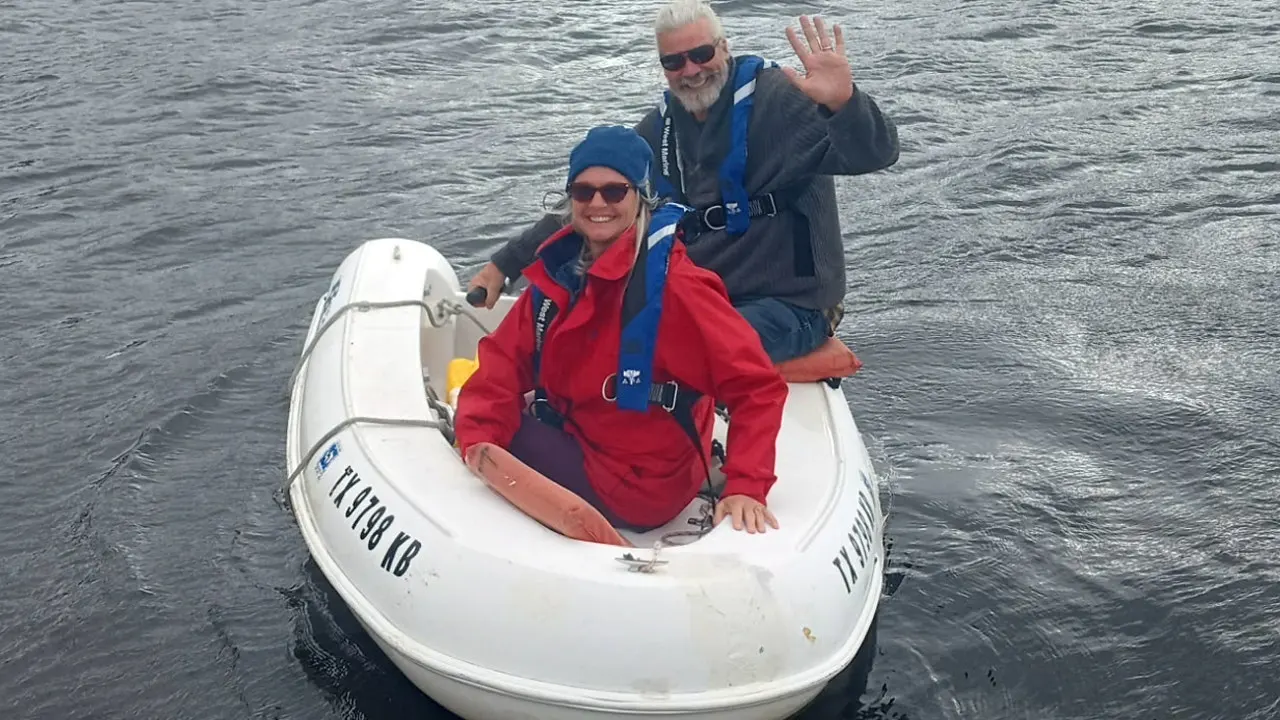
Imagine walking into the life of Lynette Hooker, a vibrant 55-year-old woman who had finally hit the sweet spot of retirement dreams. Picture her and her husband, Brian, 58, leaving behind the everyday grind for a nomadic life on the open seas, sailing from Texas to the Gulf, their boat becoming a floating home after years of hard work. Friends like John Waters recall meeting them at an oyster bar in Panama City Beach back in 2023—they were just starting out, full of that wide-eyed excitement about hitting the waves. Lynette and Brian weren’t seasoned mariners; they were everyday folks chasing adventure, building a modest social media following that showcased their escapades, from calm harbors to bustling fishing spots. Their online posts painted a picture of freedom, like that recent Instagram shot of Lynette aboard with the playful caption, “Not going anywhere for a while?!” It was the kind of journey that makes you think about what it means to live without a fixed address, where every stop feels like a chapter in a personalized novel of escape and connection.
Then came the heartbreaking twist in Hope Town, Bahamas, on a Saturday evening when the sun dipped below the horizon just after 7:30 p.m. Lynette and Brian set out from the Abaco Inn in a small dinghy, heading toward their yacht anchored off Elbow Cay. According to Brian’s account to officials, tragedy unfolded quickly: a fierce current, winds whipping through the pitch-dark night with no moon in sight, and rough waters that made the little boat treacherous. Lynette allegedly fell overboard with the ignition key in her pocket, causing the engine to die. Brian paddled desperately back to the marina at Marsh Harbor, reporting her missing around 4 a.m. the next day. It’s the kind of scenario that chills you—two people out in unfamiliar waters, relying on that fragile dinghy, with Lynette’s daughter, Karli Aylesworth, now speaking out about how her mom never even drove it. “I’m confused why she has the keys,” Karli says, her voice a mix of bewilderment and suspicion. You can’t help but wonder what really happened in those stormy seas, especially when Karli describes Brian’s temper flaring with alcohol, turning playful moments into pointed jabs, and hints at a history where he choked her mother or threatened to throw her overboard. It’s not just a missing persons case; it’s a window into a relationship shadowed by tension, where trust wobbles like a boat in choppy waves.
Authorities, including the Royal Bahamas Police Force and the Defense Force, are piecing together the puzzle, with Hope Town Volunteer Fire and Rescue’s Richard Cook bluntly calling it “a lot of bad decisions”—nighttime boating with strong winds and no life jacket mention, which Lynette might not have been wearing. From an outsider’s view, it feels negligent, but experts like Geoff Fahringer, a former dive team member, see it as a hauntingly common accident: inexperienced sailors hitting rough conditions. Still, Karli isn’t buying the slippery story. In interviews, she pleads for the truth, believing foul play lingered beneath the surface, especially given Brian’s violent past. Fox News reached out multiple times to Brian for his side, but silence reigns—no charges yet, just an investigation unfolding. As a human story, it tugs at the heartstrings: Lynette described as “very fit” and steady-footed, not someone who’d topple easily. You start questioning if this was destiny’s cruel prank or something darker, the kind of doubt that keeps families awake at night, grasping for answers in a world where accidents can mask misfortunes.
Meanwhile, the search presses on, three days in without solid leads, amidst official cautions about boating perils in the Bahamas. The U.S. State Department has flagged the area with a Level 2 advisory due to crime, jet ski mishaps, and boating dangers—fatalities have happened before because regulations are lax, as if the islands’ allure comes with hidden risks. Lynette’s disappearance isn’t isolated; it’s a reflection of how dreams can turn perilous when nature and human frailties collide. Friends like John Waters paint a rosier picture of the couple—genuine, nice people living a lifestyle straight out of a travel blog. But Karli’s accounts add layers: a stepmother-son dynamic where she’s not blood-related to Brian, yet fiercely protective, recounting incidents that scream red flags. It’s like reading a thriller where the protagonist is trapped not on a sinking ship, but in a narrative of denial. You empathize with Karli’s frustration—the media circuits she’s spinning through, hoping exposure brings justice or closure.
Digging deeper into their world, Lynette and Brian’s social media aura stands out as a testament to their escape. Posts chronicling their refit in Texas, the year spent transforming a humble boat into a vessel for wanderlust, show hearts full of hope. They forged connections across states, from Gulf ports to Bahamian shores, not just sailers but storytellers sharing snippets of freedom. Yet, that freedom now feels fragile, with Bahamian officials tracking the current’s pull and the dark horizon. Richard Cook notes the conditions were harsh—windy, moonless, rough—and for inexperienced boaters, it’s a recipe for disaster. It’s easy to feel the weight of what-ifs: if only they’d waited for daylight, or if a life jacket had been involved, or if their arguing hadn’t escalated. Karli’s insistence that Brian always piloted the dinghy chips away at the facade, making you root for transparency, for the Bahamian authorities to unearth evidence beyond the waves.
Ultimately, this tale of Lynette Hooker embodies the bittersweet chase of retirement fantasies in a unforgiving world. As the investigation continues, with experts like Fahringer echoing that such incidents are sadly routine, the human element shines through—relationships marred by violence, dreams interrupted by tragedy, and a family’s plea for truth amid uncertainty. Lynette’s fitness and Karli’s allegations cast doubt on the simple fall, urging us to ponder if trust can survive such storms. In the end, it’s a reminder that behind every adventurous post, there are real lives, real risks, and real heartache, leaving us hoping for resolution in the choppy waters of inquiry. The Bahamas loom as both paradise and peril, a place where one wrong move can redefine everything, and Lynette’s story serves as a cautionary whisper to all who dare to sail into the unknown. It’s not just news; it’s a poignant narrative of human vulnerability, bound by love, mistrust, and the relentless pull of the sea. As updates trickle in, we wait, gripped by the what-ifs, the accusations, and the aching search for answers in a case that no one wants to see slip away unanswered. Lynette deserves that much—her journey, like ours, deserves a clear horizon.