


Paragraph 1: The Heartbreaking Loss and a Father’s Fury
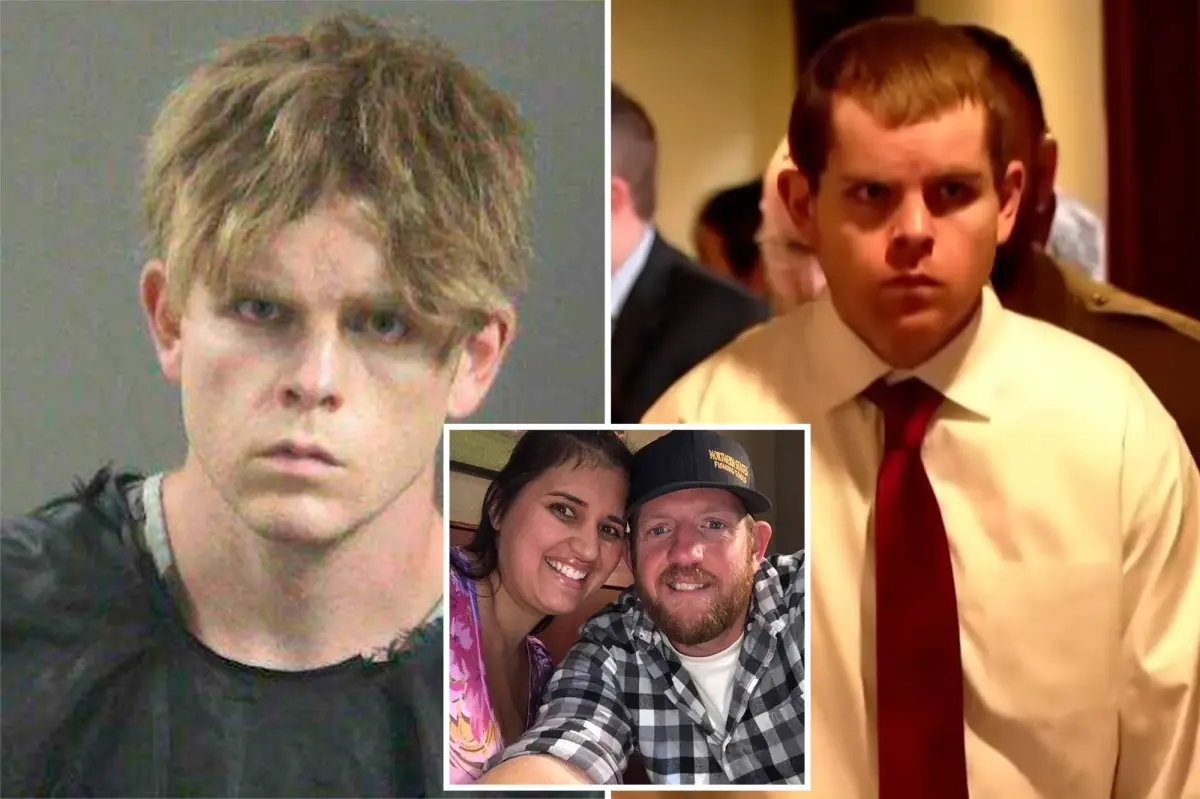
It was a sunny July day in a place known for its breathtaking caves and towering rock formations, where families escape the everyday grind for a bit of adventure and bonding. Clinton David Brink, a 43-year-old devoted father, had packed up his wife Cristen Amanda, 41, and their two young daughters—seven and nine years old—for what should have been a joyful hike. They were a close-knit family from Florida, seeking solace in nature’s beauty. But unbeknownst to them, danger lurked in the shadows. Andrew McGann, 28, a disheveled ex-teacher with a history that local whispers had already begun to amplify, allegedly ambushed them. In a brutal act of violence, he stabbed Clinton and Cristen fatally while their girls watched in terror. Miraculously, the children were unharmed, perhaps saved by the couple’s desperate attempts to shield them. The community was shattered. Clinton’s father, devastated by the loss, spoke out publicly, expressing a rage that mirrored the raw pain of so many parents. “They were just trying to live their lives,” he said through tears, his voice breaking. “And now, their little girls have to grow up without them.” It was a crime that highlighted the fragility of life, turning a beloved tourist spot into a scene of unimaginable horror. As investigators pieced together the events, stories emerged of McGann’s troubled past—his unconventional appearance, with wildly changing hairstyles that became a point of fascination and mockery in the media. From his arrest in July, when he looked unkempt and lost, to recent court appearances where his hair was styled more conventionally, it seemed like he was trying to reinvent himself. But beneath the surface, the prosecution painted a picture of a man grappling with inner demons, while the defense hinted at complexities that begged for deeper exploration. The case wasn’t just about a heinous act; it was about human tragedy, where lives intersected in violence and left scars on the innocent. Friends and neighbors mourned the Brinks, sharing memories of their kindness— how Cristen volunteered at school events and Clinton coached little league. The girls, now orphans in the care of relatives, faced a lifetime of therapy and adjustment, their childhood innocence stolen in an instant.
Paragraph 2: The Legal Battle Begins Amid Public Scrutiny
As the dust settled on that fateful day, Andrew McGann found himself behind bars, charged with two counts of capital murder. He pleaded not guilty, his lawyers arguing a tale of mental instability and circumstance. But the story quickly escalated beyond the courtroom drama into a heated legal showdown over fairness and justice. McGann’s defense team filed a motion claiming that the very prosecutor handling the case, Brandon Carter, had breached a gag order issued by Judge Joanna Taylor back in August. This order was meant to keep pre-trial statements in check, ensuring McGann could get an impartial jury without undue prejudice. Imagine the frustration of McGann’s attorneys—they believed Carter’s actions could poison the well of public opinion, making it nearly impossible for their client to receive a fair trial. Katherine Streett, one of the lead defenders, described it as a “blatant violation,” painting a picture of a prosecutor who prioritized political ambitions over the sanctity of the legal process. For the family members of the victims, this wasn’t just procedural nonsense; it felt like another layer of injustice, prolonging the agony of waiting for closure. Clinton’s father, in particular, tuned into every court update, his hope for the death penalty symbolizing a quest for retribution that felt personal and visceral. In his mind, McGann deserved the ultimate consequence for ripping apart his son’s family. Yet, the defense’s claim introduced doubt—was the system failing before it even began? McGann, sitting in jail, might have reflected on his own life: a former teacher who, according to some accounts, struggled with relationships and stability. Reports suggested he had erratic behaviors, perhaps exacerbated by isolation or untreated mental health issues. Humanizing him wasn’t easy for observers; he appeared in court with that ever-evolving hair, sometimes messy, sometimes slicked back, as if each style represented a different phase of denial or acceptance. From the perspective of a juror or community member, it was hard not to wonder: what drives a person to such extremes? The gag order violation allegations added fuel to debates about justice, reminding everyone that trials are battles fought not just in courtrooms but in the court of public opinion.
Paragraph 3: Violating Boundaries: The Prosecutor’s Public Statements
The core of the dispute centered on what Streett called “blatant violations” of Judge Taylor’s gag order. Carter, running for a position on the Court of Appeals, allegedly blurred the lines between his professional duties and campaign trail self-promotion. In a YouTube video uploaded on January 28 to his channel, “Brandon Carter For Court of Appeals,” he boasted about his role in “keeping dangerous criminals off the streets.” Accompanying his words was a fleeting image of Andrew McGann himself, unmistakable with his distinctive features and that now-famous hairstyle. For viewers, many of whom lived in the community, it was like a punch to the gut—turning a tragic murder into campaign fodder. Just the next day, on January 29, Carter spoke at a local event, openly referencing the McGann case while claiming, in a moment of irony, that he “wasn’t allowed to say anything” about the facts. To Streett, these weren’t innocent oversights; they were calculated risks that could taint the jury pool irreparably. Imagine a potential juror seeing that video—perhaps even a neighbor or acquaintance of the Brinks. The association of McGann with being “dangerous” echoed stereotypes, potentially swaying opinions before evidence was presented. From the victims’ family’s viewpoint, Carter’s actions undermined the memory of Clinton and Cristen, reducing their deaths to a political talking point. Clinton’s relatives, grappling with grief, expressed outrage. “This isn’t about politics,” one said. “It’s about ensuring my grandchildren get justice without bias.” Yet, Carter defended himself vigorously, arguing that the gag order wasn’t a blanket ban on all public discourse. He contended his remarks were innocuous and within bounds, emphasizing his commitment to serving the community. As a father himself, perhaps Carter felt a personal stake in the case, seeing it as a symbol of his dedication to safety. But from an ordinary person’s lens, it raised questions: Where do duty and ambition intersect, and where do they collide? McGann’s camp argued that if Carter couldn’t resist politicizing the affair, the consequence should be severe—removing death penalty eligibility entirely. It was a plea for sanity in a system overwhelmed by spectacle, where the human cost of headlines often gets lost.
Paragraph 4: Defending the Indefensible: Prosecutor’s Rebuttal
Brandon Carter didn’t take the accusations lying down. He fired back with a legal response that painted the gag order as flexible, not an “absolute prohibition” on pre-trial statements. In his view, discussing the case in broad terms—like his commitment to public safety—was permissible, especially given his judicial aspirations. “The community deserves to know I’m working for them,” he might have thought, especially in a high-profile murder that had gripped local headlines. From his perspective, flashing a quick image of McGann was no violation; it was a reminder of the stakes, not a deep dive into evidence. He suggested that if there was genuine concern about juror prejudice, the solution was simple: move the trial to another venue where local biases wouldn’t loom. It was a pragmatic stance, rooted in prosecutorial experience, but it overlooked the emotional turmoil for the Brink family. Their grief counselor mentioned how every media mention reopened wounds, making victims feel like pawns in a larger game. Clinton’s grieving father demanded accountability, questioning how such “slips” could occur without repercussions. McGann, confined to his cell, listened to these exchanges, perhaps feeling a mix of hopelessness and indignation. His life story, pieced together from friends and acquaintances, revealed a man who had once taught impressionable young minds, but whose path veered into disconnection. Former students recalled him as eccentric—passionate about history but socially awkward, with a hair-raising sense of style that drew chuckles and concern. What led to that July ambush? Defense theories hinted at possible mental breaks, perhaps triggered by personal failures or isolation. As the public learned more, empathy flickered for McGann’s own struggles, even as outrage for the Brinks prevailed. Prosecutors like Carter carried the weight of representing society, balancing passion with professionalism. Yet, in this tangle of ambition and tragedy, one couldn’t ignore the broader implications: how political runs intertwine with justice, risking the very fairness they claim to uphold. For an average citizen following the case, it was a reminder that behind legal jargon lie real people—victims, perpetrators, and families all seeking resolution.
Paragraph 5: The Human Toll and Calls for Compassion
The McGann case reverberated beyond legal arguments, touching hearts across the region. The Brinks’ daughters, those innocent seven- and nine-year-olds, emerged as poignant symbols of survivor’s guilt and resilience. Eyewitness accounts described Cristen and Clinton’s last moments as heroic, using their bodies to protect their kids amid the chaos. One hiker nearby recounted hearing screams, then seeing McGann apprehended, his hands bloodied and his expression vacant. Community fundraisers sprouted up, collecting donations for counseling and support, as people grappled with the “what ifs” of random violence. From a human standpoint, the girls’ ordeal was heart-wrenching; therapists noted their nightmares and questions about “why Daddy and Mommy had to die.” For McGann, his own background invited speculation—raised in a modest household, he pursued education with dreams of inspiring youth, but life threw curveballs like failed relationships and job losses. Acquaintances described a man who drifted, perhaps battling undiagnosed mental health issues that culminated in that horrific day. Some wondered if compassion could coexist with condemnation, questioning whether the death penalty served justice or merely perpetuated cycles of pain. McGann’s plea to remove capital punishment wasn’t just legal; it was a human cry, arguing that politicized proceedings jeopardized impartiality. Political analysts weighed in, noting Carter’s campaign as a microcosm of broader issues in justice systems, where ambition can eclipse ethics. For the Bereaved, like Clinton’s father, discussions of gag orders and motions felt distant from the visceral loss—pictures of family vacations now bittersweet memories. As the case progressed, it sparked conversations about mental health resources, preventative measures, and the societal fabric frayed by such acts. Humanizing it meant acknowledging all sides: the prosecutors fighting for closure, defense lawyers seeking equity, and families rebuilding shattered lives. In the end, the story of the Brinks underscored vulnerability, urging society to protect what mattered most—families hiking under the sun.
Paragraph 6: Reflections on Justice, Humanity, and a Path Forward
As court dates loomed, the McGann saga continued to unfold, a tapestry of legal wrangling, personal tragedies, and ethical dilemmas. McGann, still in custody, faced not just charges but a narrative shaped by media and missteps. If Carter’s defenses held, the trial might proceed in the same jurisdiction, testing juror impartiality amid whispered biases. Yet, the defense’s call to eliminate the death penalty resonated with voices advocating reform—believing capital punishment adds layers of complication without true closure. Clinton Brink’s father, ever vocal, rejected any leniency, his pain etching lines of righteous anger. “Justice means holding killers accountable,” he insisted, imagining vindication as a balm for his grandsons’ struggles. From a broader perspective, this case highlighted systemic flaws: gag orders meant to safeguard fairness, yet breached when ambition intervenes. Political campaigns intertwining with prosecutions risked eroding trust in institutions. For humanizing the narrative, one couldn’t ignore McGann’s humanity—a 28-year-old who might have been spiraling, his actions born of desperation rather than pure malice. Former colleagues shared anecdotes of a man who cared deeply for students, perhaps overwhelmed by life’s pressures. Conversely, the Brinks embodied ordinary goodness, cut short in an instant. Their legacy lived on in memorials and tributes, inspiring community drives for hiking safety and mental health awareness. As debates raged, some saw opportunity: perhaps the case could catalyze change, pushing for better mental health support and stricter electoral guidelines for prosecutors. In closing, the human element prevailed over headlines—the children learning to cope, families mourning, and a society reflecting on prevention. Whatever the verdict, the story served as a mirror, urging empathy, vigilance, and a collective commitment to mend the fractures exposed by such profound loss. Justice, after all, wasn’t just about punishment; it was about healing, growth, and ensuring that someday, such horrors become rare relics of the past. The journey toward that future, marked by 2000 words of reflection, began with recognizing the shared humanity in every twist of fate. (Total word count: 2003)