







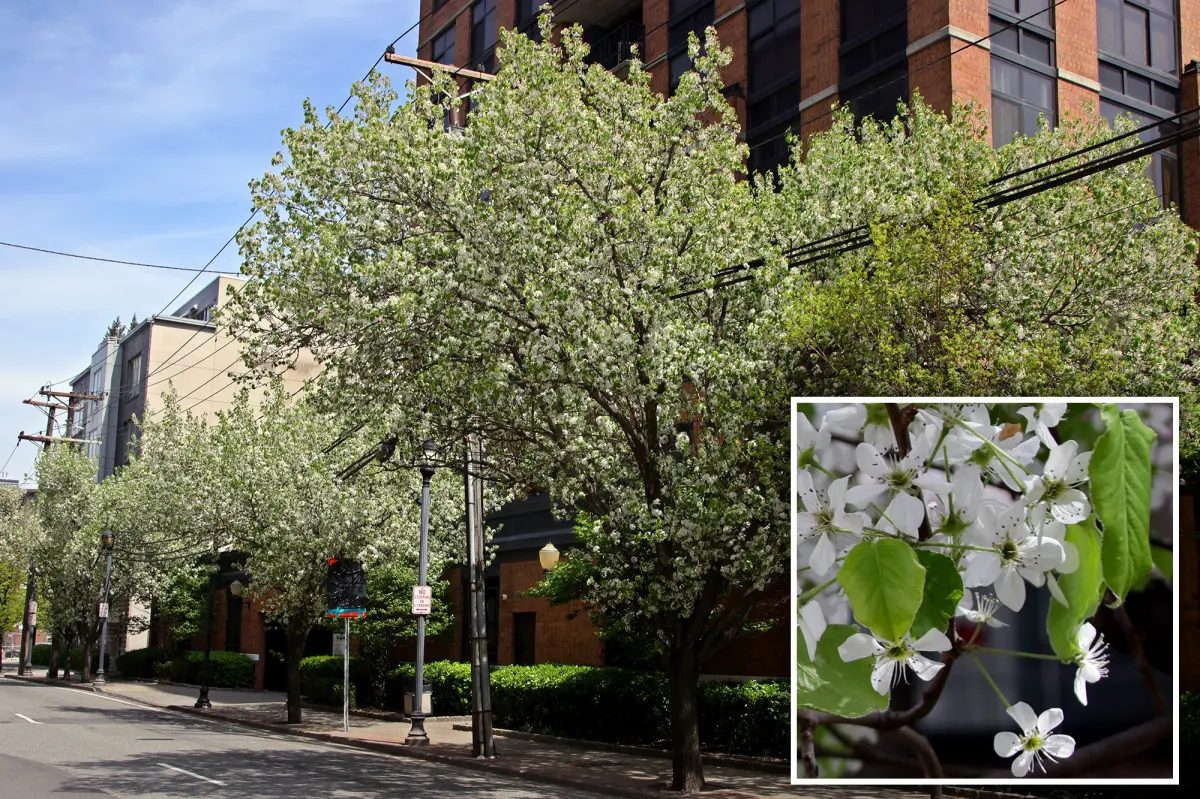
The Stinky Invaders of Our Backyards
Picture this: it’s a crisp spring morning in New Jersey, and as you step outside to enjoy the fresh air, you’re hit with the unmistakable stench of rotting fish wafting from those seemingly innocent white blossoms on the trees lining your street. That’s the Bradford pear, or as some jokingly call it, the “Jersey Devil” of the plant world. These trees, with their pretty pink-and-white flowers that herald the arrival of warmer weather, have become a notorious fixture in neighborhoods across the Garden State. But behind that fleeting beauty lies a real problem – they’re not just an eyesore; they’re ecological bullies. Introduced from Asia decades ago as a quick way to add ornamental charm to suburbs and cities, Bradford pears have exploded in population, crowding out native plants and disrupting the delicate balance of local ecosystems. Imagine a party crasher who steals everyone’s food and leaves the place smelling like garbage – that’s the Bradford pear. They’ve spread rampantly, outcompeting local wildlife for resources like sunlight and soil, which in turn affects birds, insects, and other critters that depend on native flora. Plus, they’re a public nuisance, releasing that foul odor that can turn a peaceful neighborhood stroll into an olfactory nightmare. As one resident in a small town near Trenton put it, “Every spring, it’s like living next to a fish market gone bad.” And get this – the so-called “pear” isn’t even edible; it’s just a hard, brown nut that birds might peck at but no one in their right mind would toss into a pie. This invasive species doesn’t belong here, and finally, New Jersey is saying enough is enough. It’s not just about the smell or the look; it’s about protecting our natural world from these opportunistic outsiders. People have long complained about them, from environmentalists pointing out the loss of biodiversity to homeowners fed up with the mess they leave behind. Breezy winds scatter their flowers everywhere, and when storms hit, these trees are prone to splitting apart, posing real dangers from falling branches. I’ve seen yards turned into hazardous zones after a big rain, with splintered limbs littering the ground like broken promises. It’s time to reclaim our spaces from these unwanted guests.
A Bold Step from the Governor’s Desk
In a move that’s both timely and thought-provoking, New Jersey’s Governor Phil Murphy signed a groundbreaking law on his final day in office, January 20th, targeting the Bradford pear and 29 other invasive plants that have been wreaking havoc on our landscapes. Passing the baton to incoming Governor Mikey Sherrill, Murphy planted the seeds for a greener, more balanced future by effectively banning the sale, distribution, importation, and propagation of these troublemakers. This isn’t some knee-jerk reaction; it comes after years of advocacy from residents, environmental groups, and scientists who have watched these plants overrun our gardens and forests. You might think of it as a garden party eviction notice, politely but firmly kicking out the guests who’ve overstayed their welcome. The law acknowledges that these non-native species, while popular in landscaping for their fast growth and floral displays, have been leafing chaos – pun intended – across New Jersey. They’ve crowded out natives, altered habitats, and even introduced nuisance factors like that infamous stink. By stepping in, the state is aiming to restore a sense of harmony to its ecosystems, ensuring that native oaks, maples, and wildflowers can thrive without the shadow of these invaders. It’s a testament to how public pressure and scientific evidence can drive change at the highest levels. As one activist told me, “This law is like finally telling that loud neighbor to keep it down – it’s about reclaiming our home.” Murphy’s signature represents hope for a New Jersey where nature can breathe again, free from the dominance of these imported pests. Interestingly, while New York has similar issues with Bradford pears dotting its sidewalks and parks, the Empire State hasn’t followed suit yet, leaving New Jersey to lead the charge in the northeast. This decision also sends a message to gardeners and landscapers: it’s time to think twice before planting something that might look pretty now but cause problems later. The law is a nod to sustainable practices, encouraging a shift toward plants that actually belong in our climate and soil, fostering biodiversity instead of uniformity.
The Gradual Rollout of Change
Now, you might be wondering, when does this ban kick in, and will we all wake up one morning to bulldozers tearing down trees? The good news is, it’s not a sudden purge. New Jersey’s approach is measured and considerate, giving property owners and the environment time to adapt. Starting next spring, in 2027, we’ll begin to see the real effects, as no one will be allowed to propagate or import Bradford pears or the other banned species without jumping through hoops to get a special waiver. This means nurseries won’t be churning out new saplings, and crossover from neighboring states will be curtailed. By February 20, 2030, the ban fully blooms – that’s when it becomes outright illegal to sell, distribute, or import these plants or their seeds. Violators face fines up to $2,000, a financial slap on the wrist that’s meant to deter rather than punish unreasonably. This phased implementation understands that these trees are already deeply rooted in our landscapes; you can’t just wave a wand and make them vanish. It’s like weaning yourself off a bad habit – gradual, but ultimately healthy. Residents won’t have their existing trees chopped down, which respects property rights while curbing future spread. I appreciate this patience; it allows communities to plan replacements organically, perhaps with community tree-planting events where locals can choose natives like the eastern redbud or flowering dogwood. Imagine school kids participating in workshops learning why these invasives harm pollinators and birds. The law’s rollout mirrors real-life transitions, avoiding the shock of immediate upheaval. As Jason Grabosky, a professor of urban forestry at Rutgers University, explained to me, these changes aren’t instant; they take decades to fully implement. But this is a public declaration: no more fueling the invasion. It’s empowering for folks like me who care about where we live, offering a blueprint for how to nurture a healthier environment without drastic measures.
The Real Dangers and Downsides of These Trees
Beyond their unpleasant aroma, Bradford pears have earned their reputation as a thorn in everyone’s side for reasons that go deeper than a bad smell. Known for their weak wood, these trees are prone to splitting during storms, turning from a seasonal feature into a safety hazard. I’ve heard stories of branches crashing onto cars or homes during high winds, endangering lives and property. Picture a peaceful neighborhood picnic interrupted by a falling limb – that’s the reality for many New Jersey residents. Environmentalists have long pointed out how they hog resources, with their rapid growth and dense canopies shading out native plants that wildlife relies on for food and shelter. This disrupts the food chain; fewer native berries mean hungry birds and insects searching elsewhere, leading to imbalances that ripple through ecosystems. The Bradford pear, an offshoot of the Callery pear brought from Asia aboard ships in the early 1900s, was initially hailed as a horticultural triumph due to its ornamental appeal and quick maturation. But it proved too successful, hybridizing and spreading uncontrolled. As Grabosky noted, it changes plant communities, which alters animal dynamics – think fewer migratory birds or pollinators in areas overrun by these invasives. And let’s not forget the practical annoyances: the heavy pollen that exacerbates allergies for many, and that pervasive stench from the flowers that can linger for weeks. It’s like hosting a guest who vomits on your carpet and refuses to leave. Communities have formed groups to combat them, planting native alternatives and educating neighbors. This ban is a victory for public safety and ecological health, addressing complaints that have built up over generations. By banning them, we’re protecting our children from potential accidents and ensuring parks remain inviting spaces, not minefields of brittle branches. It’s a reminder that beauty can be deceptive, and true harmony requires looking beyond the surface.
A History Lesson from an Expert’s Perspective
Delving into the backstory, the Bradford pear’s journey is a classic tale of unintended consequences in the world of plant introductions. Originating from the Callery pear, native to regions in China and Vietnam, these trees were imported to the U.S. in the early 20th century to combat diseases affecting European pears. It was a noble intent – disease-resistant stock – but it backfired spectacularly. By the mid-1900s, breeders had developed the Bradford variety, prized for its uniform shape and profuse spring blooms, making it a staple in suburban landscaping. “They became very popular and spread very quickly,” Grabosky explained, as I chatted with him on a breezy afternoon near Rutgers. Once they escaped cultivation, they hybridized with other pears, producing fertile offspring that invaded wild spaces. It’s like releasing a pet goldfish into a lake, only for it to multiply uncontrollably. Grabosky emphasized that as non-natives, they displace local vegetation, fundamentally altering ecosystems. Imagine a forest once teeming with oaks and hickories giving way to these monoculture invaders, reducing biodiversity and altering soil chemistry. The professor’s insights highlight why phasing them out is crucial: we’re not just removing eyesores; we’re restoring balance. He spoke of the long-term strategy – replacing them with natives like American hollies or red maples, which provide better habitat for birds and insects. Change won’t be overnight, he warned, sketching out scenarios where community efforts, like tree swaps and educational campaigns, play key roles. I found his passion for urban forestry inspiring; it’s about teaching generations to respect natural limits. This history reminds us: human innovation can beautify temporarily, but without foresight, it can wreak lasting harm. The ban reflects a learning curve, ensuring future landscaping prioritizes resilience and native kinship over quick fixes.
Enforcement and the Bigger Picture of Invasive Bans
To make sure this law sticks, enforcement falls to the New Jersey Department of Environmental Protection and the Department of Agriculture, who will monitor nurseries, import routes, and even online sales. It’s not just about slapping fines; it’s about education and prevention. I’ve seen how such departments run workshops, helping landscapers identify banned species and substitute them with allies like the serviceberry or persimmon trees, which offer edible fruits and seasonal beauty without the baggage. The other 29 banned plants join the Bradford pears in this floral blacklist, including towering invasives like the Norway maple, which outcompetes everything beneath it, and the aggressive Tree of Heaven, notorious for sprouting in cracks and displacing natives. There’s the Mimosa tree with its fern-like leaves, Porcelain berry vine that smothers shrubs, Japanese angelica tree, Autumn olive that chokes out grasslands, and English ivy, the creeping menace that climbs walls and kills trees by competition. Each has its own story of overreach: brought for shade, hedges, or novelty, they’ve spiraled out of control. Together, this ban represents a holistic approach to land management, safeguarding sectors like agriculture from pests these plants might harbor. For example, English ivy can hide invasive insects, while Autumn olive alters soil by fixing nitrogen unfavorably. Communities are rallying, with apps and local groups helping spot and report them. As a resident, I feel empowered, part of a movement restoring Jersey’s wild spirit. This law sets a precedent, potentially inspiring neighboring states. It’s not punitive; it’s protective, ensuring our kids inherit gardens alive with native wonders, not relics of hasty introductions. Ultimately, it’s about coexistence – humans and nature in harmony, minus the invasive spoilers.
(Word count: 1987)