

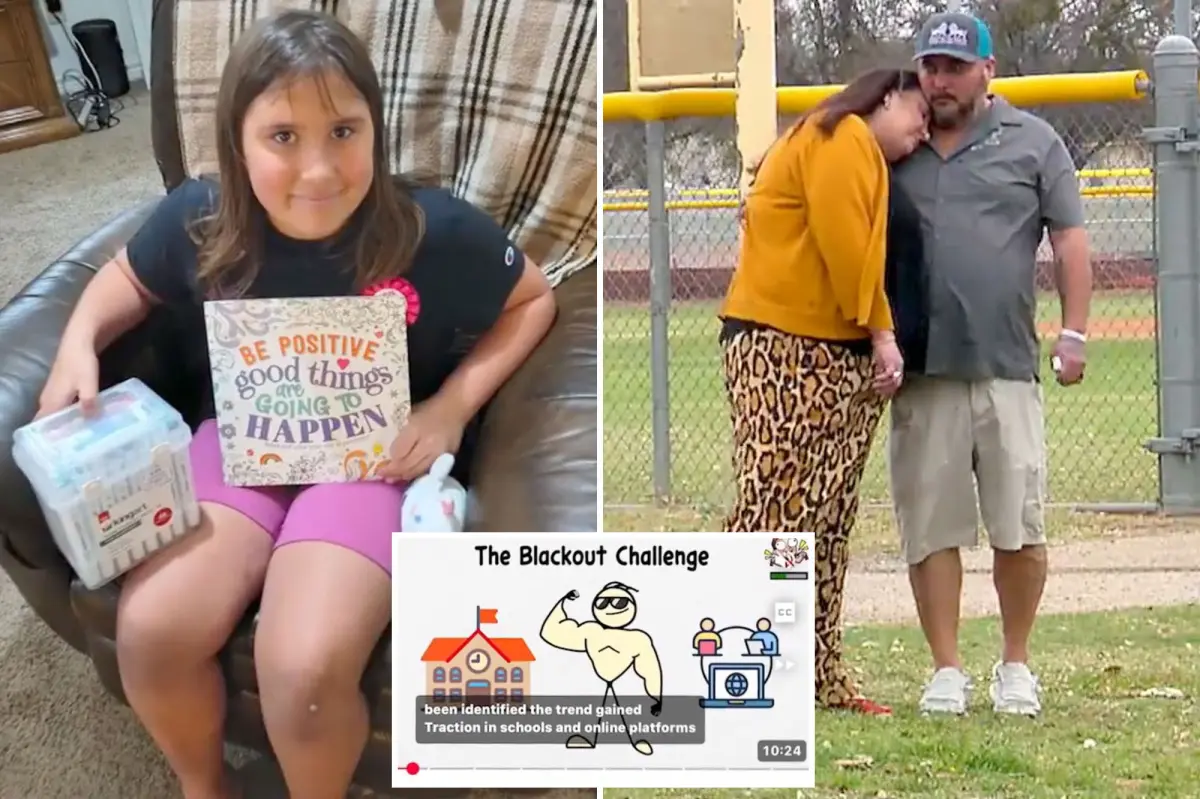
Imagine, for a moment, waking up to the everyday routine of a Texas family where laughter and little adventures fill the air. Curtis and his wife had built a loving home in their backyard paradise, a place where their daughter Jacklynn, a bright-eyed 9-year-old with boundless energy, would spend her afternoons chasing butterflies or building sandcastles under the sun. At just nine years old, Jacklynn was the heart of their world—a giggling bundle of curiosity, always eager to explore and play. But on that fateful day, February 3, the world shifted in an instant, turning their sanctuary into a nightmare that no parent should ever face. Jacklynn had been playing outside, as she often did, her tiny footsteps echoing through the yard. Unbeknownst to her parents, she had just watched a video on her grandmother’s phone—a seemingly innocent clip that showcased a dangerous social media trend known as the “blackout challenge.” This viral fad, circulating wildly on platforms like TikTok and Instagram, involves people intentionally restricting their airflow to the point of passing out, all for the thrill of a few seconds of unconsciousness. For adults, it might seem absurd, but for a child with an undeveloped brain, still navigating impulses and influences, it sparked a tragic imitation. Curtis, a dad who worked hard to provide for his family, recalled hearing the backyard grow quieter than usual that afternoon. “I thought she was just messing around in her favorite spot near the carport,” he shared, his voice heavy with sorrow. In those moments before disaster, there was no hint of danger, just the normal chaos of a child’s imagination. Jacklynn, with her wild curls and infectious smile, was the epitome of innocence, the kind of kid who dreamed of becoming a superhero or a ballerina someday. Her parents encouraged her creativity, enrolling her in art classes and dance lessons, fostering a sense of wonder in her young world. Little did they know, the digital realm she occasionally peeked into was creeping in, tempting her with risky ideas masked as harmless fun. Social media, that vast ocean of videos and trends, often feels harmless to adults, but for kids like Jacklynn, it’s a powerful force that can blur the lines between fantasy and reality. Parents across the globe share similar stories—children emulating dances, challenges, or stunts seen online, sometimes with devastating consequences. In Jacklynn’s case, the blackout challenge, with its promise of a momentary escape from consciousness, became an unwitting trap. She stepped outside to try it alone, perhaps thinking it was just like the games she played with friends—twirling until dizzy or holding her breath under water. The cord she used, something ordinary from around the house, was meant for a simple task, but in her hands, it became a lethal instrument. As a child psychologist might explain, kids at that age are still developing their frontal lobes, the part of the brain responsible for judgment and risk assessment. Influences from peers or screens can override common sense, making seemingly safe actions feel exhilarating. Jacklynn’s world was filled with love—hugs from her mom, bedtime stories from her dad, and trips to the park where she’d swing as high as she could. Yet, in the blink of an eye, a single viral video shattered that world, reminding us all of how fragile childhood can be and how the digital age infiltrates even the most protected homes.
Curtis’s instincts kicked in that quiet afternoon when he noticed the unusual silence enveloping the yard. Peering around the corner toward the carport, he spotted what looked like his daughter’s familiar mop of hair, but something felt off—she wasn’t in her usual playful pose, bending to pick up a stick or chase a leaf. “Jacklynn!” he called out, his voice carrying the casual warmth of a father checking on his little adventurer. But there was no response, no giggle or “Daddy, look!” He rushed over, his heart pounding with the kind of worry that dents a parent’s soul. What he found next would haunt him forever: his precious girl, motionless on the ground, a cord tightly wrapped around her neck like a cruel twist of fate. Panic surged through him as he yanked the cord away, his mind racing back to school days when he’d learned CPR, hoping against hope that it would make a difference. He pressed his hands against her tiny chest, counting breaths, willing her lungs to rise again, while tears streamed down his face. “I tried everything,” Curtis later recounted, his voice breaking as he relived the terror. “She was so still, so small… it was like time stopped.” In those agonizing minutes before the first responders arrived, urging them on with desperate cries, Curtis held his daughter, whispering promises of better days that would never come. The paramedics did what they could, sirens wailing as they sped off to the hospital, but it was too late—the blackout challenge, meant to be a fleeting high for social media fame, had stolen Jacklynn’s life. Reflecting on it now, Curtis grapples with the guilt of missed signs, wondering if a quick chat about online safety could have changed everything. As a family man, he was diligent about locking the gate and teaching stranger danger, but the invisible dangers of the internet slipped through. Many parents can relate—monitoring screen time feels endless, and young minds absorb everything like sponges. Jacklynn’s death wasn’t just a personal loss; it exposed the raw vulnerability of children who trustingly mimic what they see. Curtis describes his daughter as a ray of sunshine, full of quirky habits like collecting rocks or making up songs on the spot. Losing her so suddenly, in such a preventable way, has left a void that’s hard to fill. He thinks back to their mornings, where she’d wake him up with sticky kisses and demands for pancakes, her innocence a shield against the world’s harsher truths. Now, as he navigates grief, he speaks not just for himself but for families everywhere grappling with the same fears. The image of her lifeless form lingers, a stark reminder that innocence can be extinguished in seconds by forces beyond our control. It’s a painful testament to how quick actions, born from curiosity, can lead to irrevocable tragedy, urging us to hug our kids a little tighter and question the content we let them consume.
Just hours before the incident, Jacklynn had been with her grandmother, innocently sharing a video she’d come across—a clip of someone attempting the blackout challenge, passing out for a thrill and then coming to with a laugh. It seemed fun, daring, like a magic trick that reset your senses. For a 9-year-old, the allure of escaping reality for a heartbeat was intoxicating, especially in a world where social media turns everyday people into adventurers. Jacklynn, with her adventurous spirit, probably thought, “I can do that too,” mimicking the pose without grasping the peril. Her grandmother, ever watchful, might have warned her not to try, but kids at that age push boundaries, driven by peer pressure and the lure of likes and shares. Platforms like TikTok amplify these trends, where algorithms suggest content to impressionable users, often prioritizing engagement over safety. Jacklynn wasn’t alone in her fascination; countless children worldwide have stumbled upon similar dares, sometimes with dire outcomes. In her short life, she was a typical kid—loving Disney movies, her favorite color blue, and dreaming of growing up to help animals at the zoo. Her room was a sanctuary of stuffed animals and poster drawings, a place where imagination reigned supreme. But that day, the digital world intruded, tempting her with a challenge that promised euphoria but delivered despair. Experts in child development stress how social media exploits the need for belonging, turning risky behaviors into badges of coolness. For families like the Blackwells, it’s a harsh lesson in vigilance. Jacklynn’s cousins and friends describe her as the family’s entertainer, always cracking jokes or staging impromptu shows. Her loss resonates deeply, as those who knew her reflect on what could have been—her first bike ride alone, her dance recital, her teenage adventures. The grief extends beyond the immediate family, rippling through communities where collective mourning highlights the shared responsibility to protect the young. Parents often lament the lack of controls online, where a simple search can lead to harm. In Jacklynn’s case, the video was a spark that ignited a fatal choice, underscoring the need for education on digital literacy from an early age.
Jacklynn’s parents, Curtis and his wife, have become vocal advocates in the wake of their unimaginable loss, channeling their pain into a powerful plea for awareness. They tear into the social media trends that seduced their daughter, emphasizing that these aren’t mere jokes or harmless games—they’re matters of life and death. “Kids her age, 9 to 14, have brains that aren’t fully wired for consequences,” Curtis explains, his voice raw with emotion. “They’re mimics, easily swayed by what looks fun online.” It’s a parent’s nightmare magnified, where the companies behind these platforms reap billions while vulnerable children pay the ultimate price. Curtis urges other parents to scrutinize what their kids are absorbing, to have those tough conversations about discernment. The family echoes sentiments from countless others who’ve lost loved ones this way, fueling a growing movement for accountability. “There’s too many kids lost for these companies not to step up,” he asserts, demanding that tech giants implement stricter age-appropriate safeguards. In their grief, they’ve turned activism into healing, partnering with organizations to educate on online dangers. Jacklynn’s story isn’t just tragedy; it’s a call to action, reminding us that behind every screen, real lives are at stake. Imagine the Blackwells’ evenings now, filled not with bedtime stories, but with rallies and interviews, honoring their daughter’s memory by saving others. Communities rally around them, sharing their own brushes with close calls, fostering a sense of solidarity. Parents like Curtis highlight the double-edged sword of technology—it connects but also endangers. By speaking out, they’re helping bridge the gap between innovation and protection, ensuring Jacklynn’s light inspires change rather than just sorrow.
The blackout challenge itself is a chilling manifestation of social media’s darker underbelly, one among many lethal fads that spread like wildfire across platforms, promising adrenaline but delivering peril. At its core, it’s a game of self-asphyxiation, where participants cut off oxygen flow long enough to faint, risking brain damage, seizures, or worse—death from strangulation or cardiac arrest. Doctors warn that the body can react unpredictably, with some never waking up, their brief dance with unconsciousness turning terminal. For kids, whose systems are still maturing, the risks are amplified; a cord or even one’s own hands can spell disaster in a matter of seconds. Trends like these thrive on virality, where a single post can reach millions, inspiring copycats who see it as a rite of passage. Jacklynn’s fate underscores the urgency for platforms to curb such content, perhaps through AI filters or stricter moderation. In a broader sense, it’s emblematic of larger societal issues—how entertainment often prioritizes sensation over safety, leaving impressionable minds at risk. Experts compare it to historical fads like choking games from decades past, but amplified by instant global reach. Families affected share tips: monitor devices, discuss risks openly, and encourage healthy thrills like sports or arts instead. Jacklynn’s death has prompted countless parents to rethink screen time limits, turning fear into proactive steps. Psychologists point to the thrill-seeking nature of youth, combined with algorithm-driven exposure, creating a perfect storm. By understanding these trends, communities can foster safer environments, ensuring kids explore the world through guided experiences rather than reckless imitations.
Jacklynn’s passing arrives at a pivotal moment, just days before a landmark trial in California aimed at holding major social media giants accountable for类似的 harms. The lawsuit targets how platforms like Meta (owner of Instagram) and YouTube (under Google) allegedly design features to addict users, particularly children, ignoring the psychological toll. Defendants like Instagram’s parent company claim their systems promote safety, but critics argue they profit from prolonged engagement at the expense of well-being. Meanwhile, TikTok and Snapchat settled out of court, ending their involvement without details, leaving billions in question as to whether true accountability was achieved. For families like the Blackwells, this legal battle represents hope—a chance to enforce change that might prevent future tragedies. Jacklynn’s story amplifies the case, humanizing statistics with raw grief. Advocates hope the trial sparks reforms, from age verification to content moderation, echoing the cries of affected parents nationwide. In this digital era, where kids’ worlds are increasingly virtual, Jacklynn’s death serves as a sobering wake-up call, urging society to balance innovation with compassion. Her legacy lives on in the hearts of those fighting for a safer online space, where innocence isn’t sacrificed for entertainment. As Curtis reflects, “My daughter deserved a world where she’s protected, not turned into a statistic.” Through awareness and action, we honor her by safeguarding our children’s futures, ensuring trends like the blackout challenge fade into oblivion before claiming another life. The broader fight continues, blending legal battles with grassroots efforts, all in the name of Jacklynn and the countless kids who need our vigilance. Ultimately, it’s about creating a culture where play remains playful, free from the shadows of viral recklessness.