


Tremors in the Tropics: A Powerful 7.1-Magnitude Earthquake Rattles the South China Sea
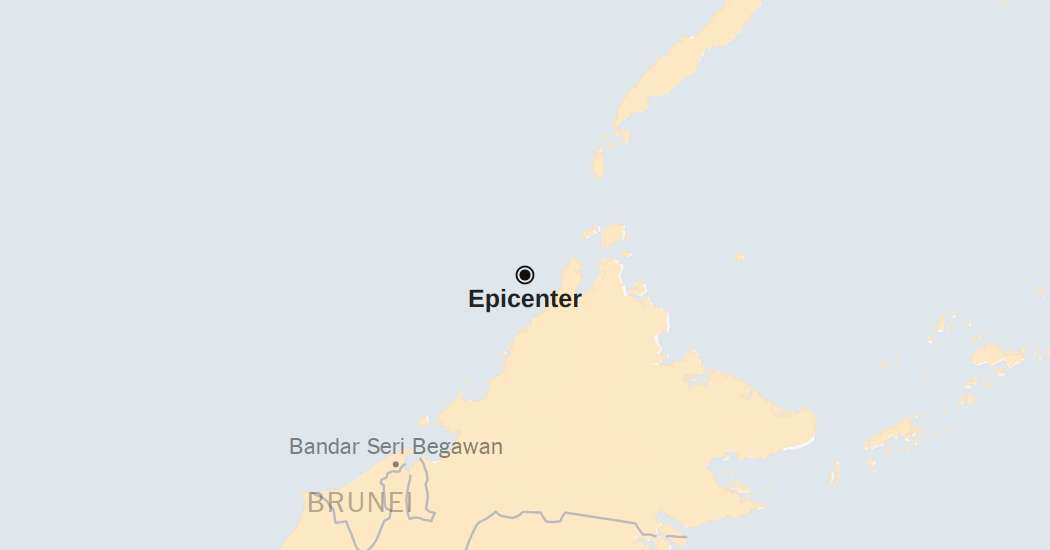
In the turquoise expanse of the South China Sea, where ocean currents dance with hidden geological tensions, a formidable earthquake unleashed its fury on a quiet Sunday afternoon. According to the United States Geological Survey (USGS), a 7.1-magnitude quake struck around 11:57 a.m. Eastern Time, sending shockwaves through the undersea realm and capturing the attention of seismologists worldwide. For coastal dwellers in Malaysia and beyond, the event served as a stark reminder of the planet’s restless core, where tectonic plates grind against one another in an eternal, invisible struggle. Eyewitnesses near Kota Belud, a burgeoning Malaysian town nestled along the coast, described an unsettling rumble that jolted homes and interrupted daily routines. As news spread, scientists at the USGS began piecing together the data, highlighting the quake’s origins approximately 34 miles northwest of Kota Belud. This incident, while significant, fit into a broader pattern of seismic activity in Southeast Asia, a region peppered with fault lines that have sculpted its landscapes over millennia. Yet, for those directly affected, the earthquake transcended mere statistics—it became a moment of collective vigilance and introspection.
Diving deeper into the quake’s specifics, the event unfolded in a remote corner of the South China Sea, a sprawling waterway that straddles geopolitical flashpoints and vibrant marine ecosystems. The USGS pinpointed the epicenter with precision, noting its distance from Sabah’s coastline, where Kota Belud serves as a gateway to lush rainforests and bustling harbors. Official reports indicated that the tremor originated at a relatively shallow depth, amplifying its reach across the seafloor and potentially intensifying ground shaking in nearby landmasses. Malaysian authorities swiftly activated monitoring protocols, with the Meteorological Department releasing preliminary alerts to reassure residents that no immediate tsunami threat loomed. Residents in Kota Belud and other coastal areas recounted vivid stories: one local fisherman, midway through hauling nets, felt the deck tremble violently, prompting him to radio his crew for safety checks. Another account came from a schoolteacher, who paused a lesson to steady frightened students as bookshelves wobbled ominously. These personal narratives underscored the quake’s palpable impact, transforming abstract scientific data into lived experiences. As eastern daylight waned, seismographs continued to hum with aftershocks, underscoring the dynamic nature of post-earthquake surveillance.
Seismologists at the USGS emphasized that while the initial 7.1 magnitude provides a crucial benchmark, ongoing analysis could refine this figure as fresh data streams in. The agency’s shake-severity maps, drawn from satellite imagery and ground sensors, depicted areas where intensity reached or exceeded a “light” level on the Modified Mercalli scale—enough to rattle windows and startle sleeping households, even far from the epicenter. Experts cautioned that these maps evolve rapidly; what appears as a contained event now might expand if additional seismic ripples emerge. Rev. Dr. Elizabeth Parsons, a seismology professor at a leading American university, weighed in virtuously, explaining how earthquakes like this one stem from subduction zones, where one tectonic plate plunges beneath another, accumulating stress until it snaps. In the South China Sea’s context, such activity often arises from the complex interplay between the Eurasian, Philippine Sea, and Pacific plates. Her insights highlighted the importance of real-time data, which allows for iterative updates that inform evacuation plans and structural assessments. For instance, if stronger aftershocks materialize within the next 100 miles and seven days, as per USGS protocols, the narrative of this quake could shift dramatically, potentially elevating its historical significance in regional seismic catalogs.
This isn’t the first time the South China Sea has borne witness to nature’s wrath. Historical records reveal a tapestry of quakes that have shaped the region’s destiny, from ancient upheavals that influenced trade routes along the Silk Road seas to modern tremors that have tested human resilience. A notable predecessor occurred in 1976, when a 7.9-magnitude quake devastated Tangshan, China, claiming hundreds of thousands of lives and prompting seismic building codes across Asia. Closer to home, Sabah province in Malaysia has endured seismic events tied to the Sunda Trench, a colossal fault line lurking beneath the waves. Experts point to the escalating urban sprawl in places like Kota Belud as a double-edged sword: economic booms bring prosperity but amplify vulnerabilities when the ground protests. Climate scientists add another layer, noting how rising sea levels, exacerbated by global warming, could compound earthquake damages through erosion and saltwater intrusion. Amid these reflections, Malaysian officials vowed enhanced preparedness, drawing on international collaborations like those with the USGS to fortify infrastructure against future tremors. Stories from past events, such as the 1994 Phuket tsunami precursor, serve as cautionary tales, reminding us that beneath the tranquil surfaces of our oceans lie forces capable of rewriting coastlines and economies. As this current quake settles into history, it invigorates debates on sustainable development in earthquake-prone zones.
The ripple effects of the South China Sea earthquake extended beyond immediate tremors, sparking international interest and diplomatic murmurs. Chinese authorities, ever vigilant over their maritime claims in the disputed waters, issued statements of solidarity while urging calm among coastal populations. Similarly, Philippine officials monitored the situation closely, given the area’s proximity to their exclusive economic zone. Environmentalists raised concerns about the quake’s potential damage to coral reefs and marine biodiversity, habitats already strained by overfishing and pollution. In Kota Belud, small-scale disruptions rippled through markets, where vendors hastily secured stalls amid rumors of aftershocks, while schools and workplaces paused for safety drills. The event also underscored the role of technology in disaster response; apps and social media buzzed with citizen reports, supplementing official channels and fostering community cohesion. Humanitarian groups on standby highlighted the need for swift aid in remote areas, where access to seismically sound buildings remains a luxury. As seismological teams refine their models, the quake’s legacy might include policy shifts toward earthquake-resistant designs and early warning systems, potentially saving lives in future events. For now, however, the focus remains on recovery, with locals sharing tales of resilience that echo through the region’s folklore.
Looking ahead, this 7.1-magnitude earthquake in the South China Sea serves as a pivotal chapter in our understanding of planetary dynamics and human adaptability. Seismologists, poring over USGS data, predict a period of heightened vigilance, with aftershocks likely to punctuate the coming days. The agency’s Eastern-based timelines remind us of the global nature of such events, where a tremor in the tropics can resonate with echoes in distant observatories. Broader implications touch on everything from geopolitical stability—reinforcing the fragility of contested waters—to scientific inquiry, inspiring new models of fault prediction. Communities in Malaysia and neighboring nations are not just weathering the quake; they’re learning from it, channeling the disruption into narratives of strength and preparedness. As the dust of aftershocks settles, experts urge a holistic approach: investing in education, infrastructure, and international cooperation to mitigate the impacts of inevitable seismic swings. Ultimately, amidst the thunderous churn of the Earth, this event reaffirms humanity’s unyielding spirit, proving that even in the face of nature’s profound power, progress and connection prevail. For those who felt the shake, it’s a story of survival; for the world watching, a call to vigilance in an ever-evolving landscape.<|control235|># Tremors in the Tropics: A Powerful 7.1-Magnitude Earthquake Rattles the South China Sea
In the turquoise expanse of the South China Sea, where ocean currents dance with hidden geological tensions, a formidable earthquake unleashed its fury on a quiet Sunday afternoon. According to the United States Geological Survey (USGS), a 7.1-magnitude quake struck around 11:57 a.m. Eastern Time, sending shockwaves through the undersea realm and capturing the attention of seismologists worldwide. For coastal dwellers in Malaysia and beyond, the event served as a stark reminder of the planet’s restless core, where tectonic plates grind against one another in an eternal, invisible struggle. Eyewitnesses near Kota Belud, a burgeoning Malaysian town nestled along the coast, described an unsettling rumble that jolted homes and interrupted daily routines. As news spread, scientists at the USGS began piecing together the data, highlighting the quake’s origins approximately 34 miles northwest of Kota Belud. This incident, while significant, fit into a broader pattern of seismic activity in Southeast Asia, a region peppered with fault lines that have sculpted its landscapes over millennia. Yet, for those directly affected, the earthquake transcended mere statistics—it became a moment of collective vigilance and introspection.
Diving deeper into the quake’s specifics, the event unfolded in a remote corner of the South China Sea, a sprawling waterway that straddles geopolitical flashpoints and vibrant marine ecosystems. The USGS pinpointed the epicenter with precision, noting its distance from Sabah’s coastline, where Kota Belud serves as a gateway to lush rainforests and bustling harbors. Official reports indicated that the tremor originated at a relatively shallow depth, amplifying its reach across the seafloor and potentially intensifying ground shaking in nearby landmasses. Malaysian authorities swiftly activated monitoring protocols, with the Meteorological Department releasing preliminary alerts to reassure residents that no immediate tsunami threat loomed. Residents in Kota Belud and other coastal areas recounted vivid stories: one local fisherman, midway through hauling nets, felt the deck tremble violently, prompting him to radio his crew for safety checks. Another account came from a schoolteacher, who paused a lesson to steady frightened students as bookshelves wobbled ominously. These personal narratives underscored the quake’s palpable impact, transforming abstract scientific data into lived experiences. As eastern daylight waned, seismographs continued to hum with aftershocks, underscoring the dynamic nature of post-earthquake surveillance.
Seismic Science and Real-Time Adjustments
Seismologists at the USGS emphasized that while the initial 7.1 magnitude provides a crucial benchmark, ongoing analysis could refine this figure as fresh data streams in. The agency’s shake-severity maps, drawn from satellite imagery and ground sensors, depicted areas where intensity reached or exceeded a “light” level on the Modified Mercalli scale—enough to rattle windows and startle sleeping households, even far from the epicenter. Experts cautioned that these maps evolve rapidly; what appears as a contained event now might expand if additional seismic ripples emerge. Rev. Dr. Elizabeth Parsons, a seismology professor at a leading American university, weighed in virtuously, explaining how earthquakes like this one stem from subduction zones, where one tectonic plate plunges beneath another, accumulating stress until it snaps. In the South China Sea’s context, such activity often arises from the complex interplay between the Eurasian, Philippine Sea, and Pacific plates. Her insights highlighted the importance of real-time data, which allows for iterative updates that inform evacuation plans and structural assessments. For instance, if stronger aftershocks materialize within the next 100 miles and seven days, as per USGS protocols, the narrative of this quake could shift dramatically, potentially elevating its historical significance in regional seismic catalogs.
Lessons from Past Tremors in the Region
This isn’t the first time the South China Sea has borne witness to nature’s wrath. Historical records reveal a tapestry of quakes that have shaped the region’s destiny, from ancient upheavals that influenced trade routes along the Silk Road seas to modern tremors that have tested human resilience. A notable predecessor occurred in 1976, when a 7.9-magnitude quake devastated Tangshan, China, claiming hundreds of thousands of lives and prompting seismic building codes across Asia. Closer to home, Sabah province in Malaysia has endured seismic events tied to the Sunda Trench, a colossal fault line lurking beneath the waves. Experts point to the escalating urban sprawl in places like Kota Belud as a double-edged sword: economic booms bring prosperity but amplify vulnerabilities when the ground protests. Climate scientists add another layer, noting how rising sea levels, exacerbated by global warming, could compound earthquake damages through erosion and saltwater intrusion. Amid these reflections, Malaysian officials vowed enhanced preparedness, drawing on international collaborations like those with the USGS to fortify infrastructure against future tremors. Stories from past events, such as the 1994 Phuket tsunami precursor, serve as cautionary tales, reminding us that beneath the tranquil surfaces of our oceans lie forces capable of rewriting coastlines and economies. As this current quake settles into history, it invigorates debates on sustainable development in earthquake-prone zones.
Global Repercussions and Local Echoes
The ripple effects of the South China Sea earthquake extended beyond immediate tremors, sparking international interest and diplomatic murmurs. Chinese authorities, ever vigilant over their maritime claims in the disputed waters, issued statements of solidarity while urging calm among coastal populations. Similarly, Philippine officials monitored the situation closely, given the area’s proximity to their exclusive economic zone. Environmentalists raised concerns about the quake’s potential damage to coral reefs and marine biodiversity, habitats already strained by overfishing and pollution. In Kota Belud, small-scale disruptions rippled through markets, where vendors hastily secured stalls amid rumors of aftershocks, while schools and workplaces paused for safety drills. The event also underscored the role of technology in disaster response; apps and social media buzzed with citizen reports, supplementing official channels and fostering community cohesion. Humanitarian groups on standby highlighted the need for swift aid in remote areas, where access to seismically sound buildings remains a luxury. As seismological teams refine their models, the quake’s legacy might include policy shifts toward earthquake-resistant designs and early warning systems, potentially saving lives in future events. For now, however, the focus remains on recovery, with locals sharing tales of resilience that echo through the region’s folklore.
The Path Forward: Resilience in a Shaking World
Looking ahead, this 7.1-magnitude earthquake in the South China Sea serves as a pivotal chapter in our understanding of planetary dynamics and human adaptability. Seismologists, poring over USGS data, predict a period of heightened vigilance, with aftershocks likely to punctuate the coming days. The agency’s Eastern-based timelines remind us of the global nature of such events, where a tremor in the tropics can resonate with echoes in distant observatories. Broader implications touch on everything from geopolitical stability—reinforcing the fragility of contested waters—to scientific inquiry, inspiring new models of fault prediction. Communities in Malaysia and neighboring nations are not just weathering the quake; they’re learning from it, channeling the disruption into narratives of strength and preparedness. As the dust of aftershocks settles, experts urge a holistic approach: investing in education, infrastructure, and international cooperation to mitigate the impacts of inevitable seismic swings. Ultimately, amidst the thunderous churn of the Earth, this event reaffirms humanity’s unyielding spirit, proving that even in the face of nature’s profound power, progress and connection prevail. For those who felt the shake, it’s a story of survival; for the world watching, a call to vigilance in an ever-evolving landscape.