



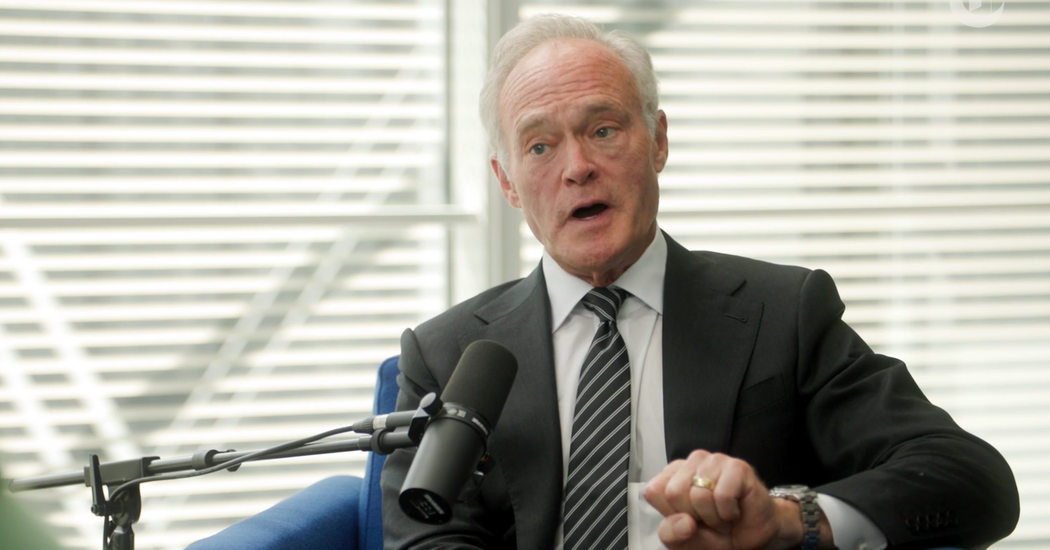
For nearly four decades, Scott Pelley stood as one of the most recognizable and trusted voices on American television, representing an era of journalism defined by objective rigor and ethical clarity. Over his thirty-seven years at CBS News, Pelley climbed the ranks from a dedicated beat reporter to White House correspondent, eventually stepping into the anchor chair of the iconic “CBS Evening News” and serving as an elite correspondent for the network’s flagship magazine program, “60 Minutes.” His abrupt dismissal on a quiet Tuesday morning did not merely mark the quiet retirement of a veteran broadcaster; rather, it sent shockwaves through the media landscape, signaling a seismic and controversial cultural shift within the network itself. His exit followed an aggressive restructuring carried out by the freshly appointed Editor-in-Chief of CBS News, Bari Weiss, who had recently terminated several of Pelley’s veteran colleagues and installed digital-media writer Nick Bilton as the new executive producer of “60 Minutes.” Breaking his silence in an emotional, wide-ranging interview with Lulu Garcia-Navarro, his first since his firing, Pelley chose to shine a light on the internal struggles plaguing the historic news operations. He described a creeping, unprecedented vibe shift in the newsroom, detailing a series of editorial interferences that he believed crossed a dangerous line into partisan appeasement. For Pelley, this loss of independence was the ultimate betrayal of the network’s legacy. “There was a thumb on the scale for the president’s version of events that I felt was a level of political influence that I had never seen in 37 years at CBS News,” he remarked, characterizing his firing as the natural conclusion of standing against a corporate mandate to alter the truth to align with the political elite.
This ideological and cultural war within the legendary network began with what Pelley describes as a profoundly insulting, tone-deaf introductory email sent by the incoming executive producer, Nick Bilton. Bilton, whose career had largely been built reporting on the fast-paced, disruptive world of Silicon Valley technology and culture, seemed to approach the storied legacy of “60 Minutes” not with humility, but with a condescending desire to rebuild it from scratch. In his inaugural communication to the staff, Bilton pointedly declared that it was no longer 1968, helpfully and sarcastically adding that gasoline no longer cost thirty-two cents a gallon. To Pelley and the battle-tested team at “60 Minutes,” this email suggested that the entire program had been frozen in amber for over half a century, completely ignoring the fact that the broadcast had successfully adapted to the digital age, maintaining a massive, 24/7 global online footprint for more than a decade. The message betrayed a fundamental lack of understanding of the program’s unique institutional culture, representing a wider corporate trend where legacy expertise is dismissed as archaic by newly installed executives seeking to force digital-first superficiality onto long-form investigative journalism. Pelley felt a deep sense of indignation that someone with no history in hard-nosed investigative reporting was being imposed upon a team of industry giants, treating their decades of collective experience as an obstacle rather than an asset.
The division between the old guard and the new management came to a dramatic, heartbreaking head during an all-hands staff meeting, an event that Pelley recalled with visible emotion and tears in his eyes. Looking around the briefing room, Pelley realized with a sinking heart that the program’s institutional memory had been systematically dismantled; the veteran senior staff members who usually guided these transitions had been completely wiped out in recent purges, leaving him as the de facto elder statesman of the broadcast. In a moment of raw courage, Pelley stood up to direct his fury at Bari Weiss, accusing her of “murdering” the legendary Sunday night institution. In his interview, Pelley explained that his willingness to speak out was driven by a deep, protective love for his colleagues—the intrepid producers, camera operators, and correspondents who routinely put their lives on the line in pursuit of the truth. He drew a moving parallel between a dedicated newsroom and other high-integrity, high-risk institutions like the military, local police forces, or the heroic firefighters of the FDNY. He spoke of the sacred bond shared by colleagues who travel to hostile war zones and risk everything, noting that there are women in that very room who have reporting assignments in dangerous combat zones while pregnant, driven by a profound sense of duty. To Pelley, having an iconic news organization run by executives who have never felt the weight of those stakes, nor understood the sacrifices of the people on the front line, was a tragedy of historic proportions.
The tension transcended mere corporate politics, bleeding directly into the editorial process and compromising the factual integrity of stories on the air, most notably in a segment Pelley was producing regarding an immigration shooting in Minneapolis. The report focused on a highly sensitive, tragic encounter in which two U.S. citizens, Renee Good and Alex Pretti, were shot and killed by federal immigration agents. Understanding the gravity of the subject, Pelley and his team painstakingly constructed a balanced, factual story, ensuring they documented the intense aggression demonstrated by the protesters at the scene to provide complete, objective context. The segment was overwhelmingly praised during internal screenings, securing the enthusiastic approval of the “60 Minutes” staff and senior editors. However, hours after the strict television deadline had closed, Editor-in-Chief Bari Weiss sent a late-night email to Pelley’s direct superior, Tanya Simon, demanding changes that Pelley viewed as a direct attempt to inject bias and falsehood into the piece. According to Pelley, the email instructed the production team to rewrite the narrative to make the protesters appear more violent and to explicitly state that victim Renee Good had been driving her car directly toward the federal officer. Though CBS News public relations representatives later defended these edits as part of a collaborative, non-political editorial feedback loop designed to strengthen the story, Pelley felt the demands were a clear attempt to alter factual realities to fit a specific, politically convenient narrative of the event.
The chaos surrounding these late-stage editorial modifications had severe operational consequences, bringing the network to the precipice of an embarrassing, unprecedented broadcast failure. Because the production team was forced to scramble after their deadline in an attempt to navigate and address Weiss’s unexpected, late-night editorial directives, the entire episode of “60 Minutes” came within a mere nineteen minutes of missing its airtime. To make matters worse, this frantic rush occurred on the highly lucrative night of the Grammy Awards, a prime-time slot where “60 Minutes” serves as the vital, high-profile lead-in to one of the biggest television events of the year. Had the broadcast missed its window, it would have resulted in devastating financial losses and severe reputational damage for the entire network. Pelley recalled the absolute panic in the control room as technicians and producers worked under agonizing pressure to patch together the final cut, a frantic experience that led him to make a solemn vow that he would never again violate a deadline to satisfy the moving goalposts of upper management. For Pelley, this structural breakdown highlighted a terrifying reality: the network was now being run by executives who were so preoccupied with managing ideological optics that they failed to grasp the basic mechanical principles and strict logistical realities required to produce and air a weekly television broadcast.
Ultimately, Pelley’s public account of his departure serves as a sobering, urgent warning about the vulnerability of legacy journalism when placed in the hands of individuals who lack the specialized knowledge and deep-seated respect required to safeguard it. Utilizing a stark and memorable aviation metaphor, Pelley compared Bari Weiss’s leadership to a completely untrained person stepping into the cockpit of a passenger-heavy Boeing 747 with four hundred souls on board and confidently attempting to fly it to Paris. He expressed a profound sadness that Weiss had lacked the humility to recognize her lack of television expertise and turn down the position, choosing instead to pilot a legendary news program into a dangerous tailspin. Despite the personal pain of his termination and the alarming structural decay he witnessed, Pelley refused to completely surrender to despair regarding the future of the network he called home for nearly forty years. He insisted that the crash could still be prevented and that the integrity of CBS News could still be salvaged from the brink, but warned that time is running out. “We can save this,” Pelley declared, his voice filled with a mixture of enduring affection for his colleagues and sharp defiance against the new regime. “It’s possible to land this plane. But right now, CBS News is on fire.”