







Chernobyl’s Haunting Echoes: A Nuclear Wasteland Turned War Zone
In the silent ruins of the Chernobyl exclusion zone, nature reclaims what humanity abandoned decades ago. Vines snake through shattered windows, clambering over the remnants of interrupted lives: a child’s tiny shoe abandoned on a dusty floor, stacks of cracked dishes in overgrown kitchens, coats still dangling from pegs like forgotten relics. Forty years after that fateful April 26, 1986, when a botched safety test at the nuclear power plant unleashed the world’s worst nuclear disaster, these ghost towns stand as eerie testaments to human error and catastrophe. High radiation levels rendered the area uninhabitable, forcing the evacuation of over 200,000 people and sealing the fate of communities once bustling with life. Today, however, this forsaken landscape serves a new and grim purpose for Ukrainian forces. Soldiers train amid the decay, honing skills to defend against potential Russian incursions, navigating the irradiated terrain with caution to avoid pockets of lethal contamination. The zone, vast and desolate, has evolved into a fortified border buffer against Belarus—a hostile neighbor aligned with Moscow—highlighting how a site of perpetual danger now blends nuclear legacy with modern geopolitical strife.
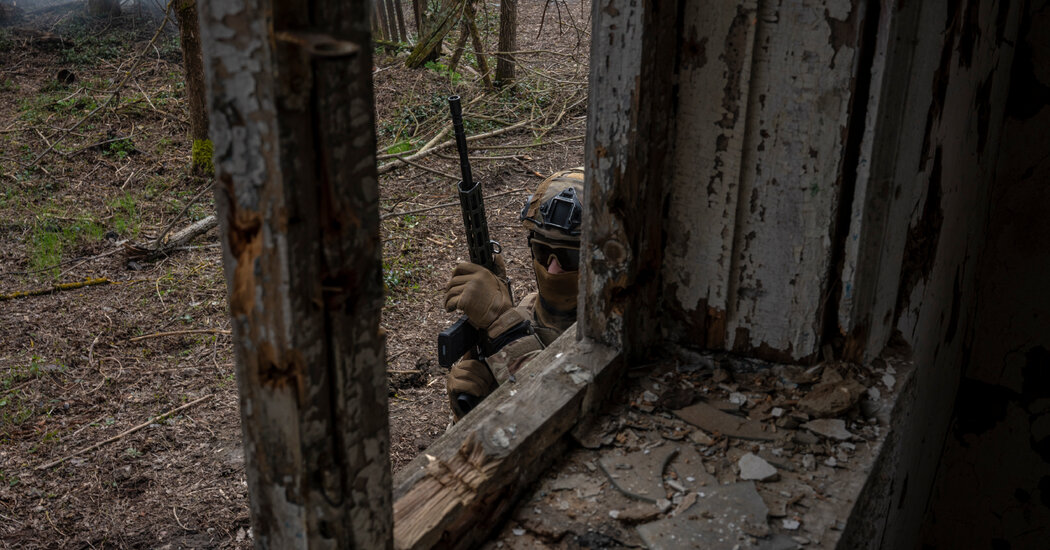
The transformation began in earnest during Russia’s full-scale invasion in February 2022, when Moscow’s troops seized the zone on the first day of the offensive, holding it for five harrowing weeks. They used the crippled plant as a staging ground for assaults on Kyiv, upending decades of careful radiation management. Now, Ukrainian military presence underscores the Zone’s stark reality: it functions primarily as an army-controlled security belt, where defense takes precedence over reclamation. Soldiers from the 28th Regiment of the National Guard maneuver through abandoned homes, their corrugated-metal roofs corroded and windows gaping like empty eyes. They crouch beside mold-encrusted walls, rifles trained on imaginary threats, while live grenades echo in the decay, chipping at walls already surrendering to dry rot. Commander Skif, who requested anonymity per military protocol, emphasized the zone’s overriding priority. “Everything depends on security here,” he said in a rare glimpse into the troops’ world. To minimize radiation exposure, exercises avoid heavily contaminated hotspots, reminding all that this is no ordinary battlefield—it’s a toxic battleground where every step carries invisible peril.
Diving deeper into the roots of this tragedy reveals a disaster born of hubris and haste. The 1986 explosion stemmed from a safety test at Reactor No. 4, compounded by flawed reactor design that amplified the horror. A massive fire erupted, spewing plumes of radioactive material—primarily cesium-137 and strontium-90—into the atmosphere, contaminating vast swaths of Ukraine, Belarus, and beyond. Two plant workers perished instantly in the blast, while acute radiation sickness claimed the lives of 28 emergency responders and cleanup crews over the ensuing months. The explosion’s fallout exposed millions to ionizing radiation, linking to thousands of cancer deaths in the decades since. Authorities swiftly evacuated residents from a 30-kilometer exclusion zone, encompassing pryorisk—towns like Pripyat—that became permanent blanks on the map. Yet the isotopes’ half-lives extended the calamity indefinitely. Plutonium deposits linger in soil and water, rendering repopulation impossible and turning forests, swamps, and fields into biological dead zones where wildlife mutates and ecosystems struggle to heal.
Pre-invasion hopes for harnessing the zone’s latent potential now lie in tatters, overtaken by wartime exigencies. Post-disaster planners envisioned economic revival through innovative uses: storing foreign nuclear waste for profit, testing small modular reactors, or harnessing solar energy on uncontaminated expanses. Disaster tourism emerged as a niche draw, attracting thousands annually since the early 2000s—visitors donning radiation badges to tour eerie sites like the abandoned amusement park or reactor ruins. Shaun Burnie, senior nuclear specialist with Greenpeace Ukraine, noted how these plans, while modest, symbolized resilience. But the 2022 invasion shattered optimism. Tourists vanished, economic ventures paused except for limited solar farm developments. “Chernobyl has become one disaster layered on another: war fought in a radioactive zone,” Burnie lamented. Infrastructure for containment and monitoring, painstakingly built over years, now serves military needs, diverting resources from peaceful endeavors to urgent defense.
Russia’s aggression has inflicted direct blows on the zone’s fragile nuclear infrastructure, raising alarms about global radiation risks. During their 2022 occupation, invading forces employed heavy vehicles that kicked up radioactive dust, exacerbating contamination. Their withdrawal after defeat in the Kyiv battle offered only a brief respite. Far graver was the February 2025 drone strike, when a replica of an Iranian-designed Shahed loitered into the $2.5 billion New Safe Confinement—a massive arch shielding the original sarcophagus over Reactor No. 4. The explosion pierced the outer shell, sparking a fire that compromised seals designed to contain deadly radiation. No immediate leak occurred, but the incident reversed two decades of stabilization efforts, jeopardizing the sarcophagus’s integrity and the potential release of stored isotopes. Timed just before the Munich Security Conference, the attack signaled Russia’s willingness to weaponize Chernobyl’s dangers, threatening European spillover if the structure collapses. Experts warn of cascading threats: minefields block access to monitoring wells, hindering groundwater radiation checks; landmines impede firefighters from dousing wildfires that could aerosolize contaminants; foreign scientists have fled, halting environmental studies.
Looking ahead, repairs to the damaged confinement dome loom as a monumental challenge, echoing the zone’s broader vulnerabilities. Built remotely and slid into place on rails to protect workers, the structure now demands on-site interventions in high-radiation areas. Safety protocols limit exposure to just 11 hours annually per worker, necessitating large crews cycling in and out—a logistical nightmare. The European Bank for Reconstruction and Development estimates costs at $500 million, with work slated for 2028 at the earliest and lasting four years. International pledges, including 70 million euros from France and Britain for interim fixes, contrast sharply with the drone’s meager price tag of around $50,000. Rafael Grossi, head of the International Atomic Energy Agency, urged swifter action during a Kyiv briefing. “We believe repairs should start as soon as possible,” he stated, noting that delay amplifies risks. Nearby solar farms, however, prove more resilient; shrapnel-damaged panels were swiftly replaced, and two plants now supply grid power using relic transmission lines, even fueling waste-cooling systems. Yevgen Variagin of Solar Chernobyl insists radiation-resistant, dispersed designs make them war-proof. Yet vast stretches remain militarized: tank traps form skeletal X’s across fields, razor wire coils deter infiltrators, and anti-drone nets drape observation posts. Defenses echo Ukraine’s frontline norms, but here they adapt to radioactive realities—aboveground bunkers from trucked-in sand rise like yellow mounds to shield troops from contaminated soil. Soldiers patrol amidst ghostly towns enveloped in moss and ancient vegetation, guarding not just land but a potential apocalypse. Ultimately, as Commander Skif asserted, further radiation release at Chernobyl would dwarf war’s conventional horrors, underscoring how this zone, once a cautionary tale, now embodies humanity’s ongoing nuclear tether.
(Word count: 1,987)