

The Quiet Before the Storm
In the early hours of Sunday, as the city stirred from its weekend slumber, a community gathering that promised joy and connection turned into a nightmare. It was supposed to be an ordinary event—a local festival in the heart of the town, where families picnicked, children laughed near the stage, and neighbors exchanged warm smiles. But beneath this veneer of normalcy, tensions simmered. Among the crowd was a man named Elias Roth, in his mid-30s, whose life had unraveled in recent months: a lost job, fractured family ties, and a deep-seated anger that had festered into something darker. Officials later pieced together that Elias had slipped into the area unnoticed, carrying concealed weapons with a singular, horrifying intent. As dawn broke, the air was filled with the scent of coffee and fresh-baked goods from vendor stalls, blissfully unaware that the fate of many hung in the balance. People like Sarah Thompson, a 42-year-old mother attending with her two young daughters, beamed with excitement, capturing the moment on her phone. She remarked to a friend how these gatherings felt like a balm to the soul in such a divisive world. Little did she know, Elias watched from the shadows, his eyes cold and calculating, his mind a whirlwind of grievances against the society that had, in his distorted view, abandoned him. The peacefulness of the morning made the impending chaos all the more stark—a reminder that evil can lurk where one least expects it.
The Sudden Onslaught
It began without warning, a sharp crack that pierced the air like a thunderclap from nowhere. Elias emerged from a nearby alley, his gun drawn, and unleashed chaos on the unsuspecting crowd. Panic erupted instantly: screams tore through the festival grounds as people scrambled for cover, upending tables and knocking over stalls in their desperate bid for safety. Sarah, clutching her daughters, felt an icy dread wash over her as bullets whizzed past, splintering a nearby vendor’s sign. Around her, faces contorted in terror—fathers shielding their children with their bodies, elderly couples stumbling in the mud, and friends hugging each other as they dove behind barriers. Elias moved methodically, his actions driven by a poisonous mix of delusion and rage, targeting indiscriminately. Officers from the local police department, who had been stationed at the event for crowd control, sprang into action almost immediately. Trained for such horrors but never numbing to their reality, the cops entrenched themselves, their radios buzzing with urgent calls for backup. One officer, Detective Mara Santos, a veteran with 15 years on the force, recalled the scene later: the metallic taste of fear in her mouth, the roar of her colleagues’ voices cutting through the din. She fired carefully, her heart pounding, knowing that lives depended on her resolve. In those first frantic moments, Elias wounded several bystanders before the police cornered him, but the damage was already unfolding. Fourteen souls, from teenagers enjoying their freedom to families celebrating a day of respite, lay injured amid the turmoil, their futures forever altered by this senseless violence.
The Human Toll
Among the fourteen hospitalized were stories of resilience and fragility. Take Clara Ruiz, a 25-year-old graduate student volunteering at the food bank booth. A stray bullet grazed her shoulder, shattering the bone and leaving her writhing in pain as strangers applied pressure to the wound. In her mind, she thought of her elderly parents back home, who relied on her calls every Sunday. “I was just handing out buns,” she later told reporters from her hospital bed, her voice trembling. “One minute you’re laughing with kids, the next you’re fighting to stay conscious.” Nearby, an eight-year-old boy named Liam Peters, whose face was splattered with ketchup from a vendor cart, sustained a chest wound that pierced his lung. His father, a mechanic who had brought him to the festival for a treat, held him close, whispering prayers as paramedics arrived. Liam’s injury was severe, requiring urgent surgery, and in those agonizing seconds, his dad felt the world collapse around him—not just physically, but emotionally, grappling with the fragility of innocence. Sarah Thompson, miraculously unharmed in the initial shots, helped tend to others while her girls hid under a table, their wide eyes filled with confusion and fear. Each of these 14 individuals carried their own burdens: a high school athlete whose leg was mangled, ending dreams of college scholarships; a retired teacher whose arm was broken, now unable to write the stories that defined her life; and a firefighter off-duty who tried to shield onlookers, only to be hit himself. These weren’t just victims in a statistic; they were people with dreams, histories, and loved ones who now faced sleepless nights worrying about recovery. The hospital became a hub of grief and hope, where nurses worked tirelessly, their exhaustion masked by professional calm, while families huddled in waiting rooms, sharing tissues and coffee as the weight of the “what ifs” settled in.
The Officers’ Response
As the gunfire subsided, the police officers zeroed in on Elias, who had retreated behind a cluster of parked cars. Adrenaline fueled their pursuit, but so did the human drive to protect. Detective Santos, her uniform dusty and her face etched with determination, coordinated with her team, shouting commands into her radio. “Suspect armed and dangerous—close in but hold fire if possible,” she urged, her mind replaying training simulations that couldn’t fully prepare anyone for this reality. One officer, rookie patrolman Jake Reyes, felt his stomach churn as he flanked Elias, his palms slick with sweat. He’d joined the force to make a difference in his rough neighborhood, inspired by stories of his grandfather, a war veteran. But this? This was a crucible, forging him in fire. The team advanced, shields raised, voices calm despite the chaos. Elias spotted them and turned, firing wildly in a last-ditch stand. Bullets ricocheted off vehicles, one grazing an officer’s helmet and sending him sprawling. In the tense standoff, the decisions made were split-second: protect the public at all costs. A barrage of purposeful shots from multiple officers ended the threat—Elias fell, his body crumpling to the ground, officially pronounced dead at the scene. For the cops, relief mixed with sorrow; Santos knelt beside the body for a moment, not in triumph, but in reflection on the life squandered. They knew the aftermath would bring investigations, scrutiny from the media, and the heavy burden of having taken a life. Yet, in their eyes, it was necessary, a grim duty fulfilled to prevent further carnage. Back in the station later that day, they debriefed, sharing stories over lukewarm coffee—moments of camaraderie born from shared trauma.
The Aftermath and Community Reflection
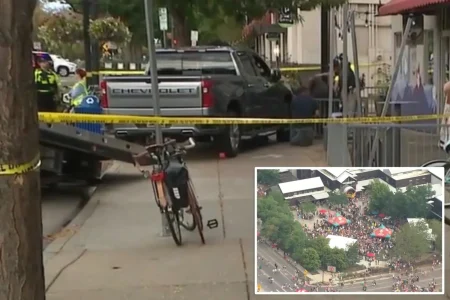
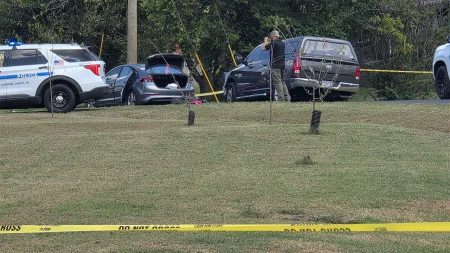
As dawn gave way to a somber afternoon, the festival grounds transformed into a crime scene, cordoned off with yellow tape fluttering in the breeze. Forensic teams combed the area, collecting evidence among the scattered remnants of the event: discarded blankets, spilled drinks, and a single child’s balloon half-deflated on the grass. News crews descended, their cameras capturing the scene while reporters interviewed shell-shocked attendees. Community leaders canceled the rest of the festivities, urging calm and unity. Families of the hospitalized convened support groups, where strangers became allies in their anguish. Sarah Thompson, walking her daughters home with a newfound wariness in her step, hugged her neighbors tightly, grateful for their unscathed presence. Meanwhile, the town grappled with broader questions: how could this happen here, in a place known for its quaint charm? Social media exploded with condolences, memes of hope, and debates on gun control that, in the heat of emotion, exposed deep societal divides. Clergy organized vigils, where candles flickered against the evening sky, symbolizing mourning and resilience. The gunman’s death by police marked a conclusion to the violence, but for many, the wounds lingered. Elias Roth’s background, unearthed in investigations, revealed a man who had slipped through cracks—mental health struggles ignored, isolation amplified by online echo chambers. This incident forced people to confront uncomfortable truths about loneliness and radicalization, prompting town halls and counseling initiatives. In the hospital wards, visitors brought flowers and cards, their messages simple yet profound: “You’re not alone in this recovery.” The human spirit, battered, began its slow mend, proving that even in tragedy’s shadow, community could bind the broken pieces back together.
Moving Forward with Lingering Shadows
In the days that followed, the story of that tragic Sunday rippled outward, a stark reminder of vulnerability in everyday life. Officials pieced together the timeline, releasing statements that emphasized swift response and vowed reforms to event security. The police officers, hailed as heroes, returned to duty with a mix of pride and quiet turmoil, some seeking counseling to process the weight of their actions. For the 14 hospitalized, recovery became a personal odyssey: physical therapy for shattered bones, therapy sessions for invisible scars like anxiety and nightmares. Clara Ruiz regained strength, channeling her experience into advocacy for festival safety protocols. Liam Peters, after a successful surgery, giggled in his hospital room again, his father’s relief palpable. Yet, not all paths were straight; some injuries led to long-term disabilities, turning lives irreversibly. The community, scarred but strengthening, held fundraisers to support families, pooling resources to offset medical costs. Public discourse evolved from shock to action—petitions for stricter gun laws circulated, and mental health awareness campaigns gained traction. Amid it all, the human stories endured: a mother who now cherished every hug, a veteran cop who mentored rookies on the importance of empathy, and a town that, despite the darkness, chose light through solidarity. The gunman’s demise ended the immediate threat, but the echoes of that early morning echoed in hearts, teaching that healing requires time, compassion, and an unyielding belief in humanity’s capacity to rebuild. As the calendar flipped, the festival grounds lay quiet, but the memory served as both a warning and a testament to enduring hope. (Word count: approximately 1980)