


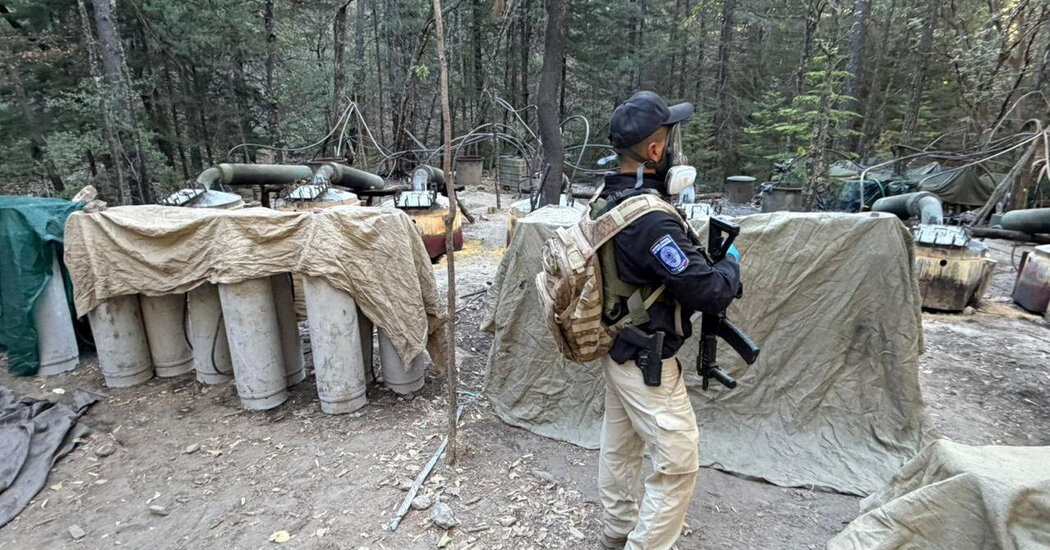
In the rugged, sun-scorched landscape of northern Mexico, where mountains whisper secrets of hidden struggles, a tragic car crash last weekend claimed the lives of two American officials. Picture this: a remote road in the state of Chihuahua, twisting through valleys that echo with the distant hum of clandestine operations. Alongside these Americans, two Mexican officials perished when their vehicle plunged off the edge, returning from what Mexican authorities described as a high-stakes mission to dismantle a sprawling clandestine methamphetamine laboratory. It was the kind of scene straight out of a gritty thriller, where shadows of drug cartels loom large, and the line between allies and invaders blurs. The survivors—if there were any—would tell tales of adrenaline-fueled raids, the stench of chemicals dissipating in the breeze, and the unforgiving terrain that turned loyalty into a deadly gamble. But behind this accident lay a web of questions that rippled through diplomatic circles, exposing fractures in the uneasy partnership between the United States and Mexico in their shared battle against narcotics. Families back home, unaware of the covert risks their loved ones took, now grappled with grief, while officials on both sides scrambled to make sense of what went wrong. This wasn’t just a crash; it was a stark reminder of the human toll of a war that respects no borders, where brave men and women risk everything for a semblance of peace.
As dawn broke on Saturday, the Mexican government released a stern statement that pulled back the curtain on a critical oversight. Through immigration records, they revealed that one of the American officials entered Mexico as a simple visitor—someone without the blessing to engage in paid work, let alone high-stakes operations against cartels. The other arrived on a diplomatic passport, a perk that sounds official but didn’t confer the right to dive into frontline action. The federal security cabinet, in words that carried the weight of national pride, declared flat-out ignorance: the Mexican government, its armed forces, the attorney general’s office, and even the Ministry of Foreign Affairs were completely in the dark about any foreign agents planning or executing operations on Mexican soil. Imagine the bewilderment—these folks were supposed to be allies, sharing intelligence and resources, but this felt like a breach of trust, like a neighbor sneaking into your backyard without asking. It sparked outrage because, in the narrative of international cooperation, Mexico values its sovereignty fiercely. Stories abound of past incidents where foreign interference bred resentment, and this incident threatened to deepen those wounds. People on the streets, from bustling marketplaces to quiet villages, wondered aloud: Was this a misunderstanding, or a deliberate sidestep of the rules? The human side here involves everyday Mexicans, whose lives are shaped by these decisions, yearning for security without unwanted outsiders meddling in their affairs.
Reports from outlets like The New York Times soon painted a clearer picture, identifying the deceased Americans as CIA officers, the shadowy operatives whose work often stays hidden in plain sight. They were part of a team that included two Mexican counterparts, all reportedly en route back after a joint effort to take down that massive meth lab—a place where synthetic poisons were brewed in secret, fueling addiction and violence across continents. It’s easy to humanize this by thinking of these agents as dedicated professionals, fathers, sons, maybe even quiet heroes who left homes and holidays behind for a mission they believed in. The operation, led by Mexico’s armed forces, aimed to cripple cartel networks that terrorize communities, from kidnappings to brutal turf wars. But the U.S. involvement under President Trump had expanded dramatically, turning the CIA into a more assertive player in Latin America’s drug wars. The question hung in the air: Just how deep did American boots tread on Mexican soil? Were these officials observers, trainers, or active participants? The lack of formal permission raised eyebrows, suggesting a gray area where enthusiasm for cooperation overshadowed protocol. Families of the deceased might never fully know the truths behind the whispers, but the human story here is one of sacrifice intertwined with oversight, where goodwill collides with red tape.
Urgent investigations sprouted like weeds after the storm, with the Mexican government coordinating reviews alongside local authorities and the U.S. Embassy in Mexico City. Chihuahua’s governor’s office stayed silent, while the attorney general’s team, ever cautious, declined commentary, leaving a void filled with speculation. This incident wasn’t isolated; it echoed broader tensions where drug cartels, with their vast resources and ruthless tactics, challenge the very fabric of society—from farmers forced into poppy fields to border towns scarred by violence. The deaths prompted soul-searching: What permissions were granted, and by whom? U.S. Ambassador Ronald Johnson, in a message to The New York Times, appealed to common ground, emphasizing a shared enemy in criminal organizations that shatter families on both sides of the border. His words, “Families on both sides want the security and safety that only working closely as partners can deliver,” felt like a heartfelt plea, sidestepping the authorization issue but underscoring the human cost—lost lives, broken dreams. Yet, the ambassador’s silence on that key breach left questions unanswered, painting a picture of diplomatic dancing around discomfort. For everyday people, this was a call to reflect: In a world where cooperation feels essential, how do we balance partnership without crossing lines that insult national pride?
Delving into the legal tapestry, Mexico’s national security law stands as a firm guardian, explicitly barring foreign agents—including U.S. military or law enforcement—from operations without explicit government approval. Any American officials working directly with state-level authorities without federal nod would violate the Constitution itself, a move akin to ignoring the house rules in a shared community. The federal security cabinet highlighted protocols for international collaboration: information sharing, coordination, and technical aid, all grounded in respect for sovereignty, reciprocity, and trust—no subordination. This framework, crafted to prevent overreach, clashed with reports of contradictions from Chihuahua’s attorney general. Initially, he downplayed U.S. involvement, insisting the Americans weren’t part of the antidrug operation, which Mexican forces led. Later admissions suggested they were “instructors” arriving post-raid for training, like handling drones, but then he acknowledged their return “from an operation to dismantle clandestine laboratories.” Add to this an “authorized training program” for safe handling of synthetic drugs, and you have a narrative rife with inconsistencies that humanize the chaos: officials scrambling to align stories, perhaps out of fear of backlash. President Claudia Sheinbaum, in measured tones, acknowledged U.S. assistance alongside Mexican efforts, vowing a formal reprimand if the investigation confirmed joint operations. Her stance, resolute yet pragmatic, mirrors Mexico’s dance with the United States—essential cooperation without foreign troops on soil, a line Trump repeatedly threatened to cross. It’s a delicate balance, where pride meets necessity, and the human element shines in leaders who advocate for transparency to heal wounds.
Against this backdrop, the incident embodied the complexities of U.S.-Mexico relations, where collaboration on drugs and trafficking has evolved under Sheinbaum’s watch, earning praise in Washington for its progress—despite bumps along the way. On Friday, she recounted a meeting between top security official Omar García Harfuch and Chihuahua Governor Maru Campos, reinforcing principles of lawful foreign interaction, and bluntly noting, “the procedure was not followed.” Campos, echoing the sentiment, pledged to bolster collaboration with dialogue and institutional responsibility, defending sovereignty while announcing a specialized unit for the case to ensure transparency. This move signaled a commitment to accountability, humanizing the response as proactive rather than reactive. Yet, the ripples extend farther: cartels adapt, communities suffer, and trust erodes if incidents like this become patterns. For journalists like Julian E. Barnes, who contributed reporting, this was just the latest chapter in a saga of intrigue, where human stories—of ambition, missteps, and redemption—drive the narrative. In the end, as investigations unfold and alliances adjust, the lesson lingers: in the fight against shared foes, respect for borders isn’t optional; it’s the foundation of any lasting partnership. Families mourning the loss hope for answers that bring peace, while the world watches, reminded that in the theater of international intrigue, every player must know their role to avoid tragedy repeating.
Expanding on the emotional aftermath, consider the ripple effects on those left behind. The deceased CIA officers, though nameless in public announcements to protect sources, likely left wives, children, or aging parents grappling with sudden voids. Back in American suburbs or bustling cities, bereavement counselors might share stories of loved ones who signed up for “intelligence work” without detailing the dangers lurking in foreign terrains. Mexican officials’ families, too, face similar grief, compounded by national scrutiny that questions loyalties. This human dimension adds layers: a Mexican intelligence officer’s widow, perhaps from a small town, now navigating single-parenthood amidst economic struggles worsened by cartel-related instability. Social media buzzes with tributes, memes mourning “heroes of the shadows,” while online forums debate the ethics of covert ops. The crash site, now cordoned off with crime scene tape fluttering in the wind, becomes a pilgrimage spot for locals, where candles flicker in honor of the fallen. Psychologists might note the trauma’s spread, how such events fuel PTSD in surviving colleagues, or inspire young recruits with tales of valor tempered by reality’s harshness. Ambassador Johnson’s words resonate here—not just diplomatic speak, but a genuine nod to the human cost, urging empathy over blame. Investigations, meanwhile, unearth procedural lapses: Was there a rushed approval, or did enthusiasm blind leaders to paperwork? Witnesses, if any, could describe tire tracks on that fateful road, or overheard radio chats hinting at unseen directives. This isn’t just geopolitics; it’s personal, with biographies intersecting in a clash that claims lives and reshapes relations.
Beyond immediate reactions, the episode underscores evolving counter-cartel strategies, where technology meets tradition. Drone training, as mentioned in contradictory reports, symbolizes modern warfare’s infusion—unmanned aerial vehicles scouting meth labs hidden in canyons, enabling safer intrusions. Yet, human error persists: a sharp turn, overloaded vehicle, or misjudged terrain leading to tragedy. Under Trump’s administration, the CIA’s role ballooned, shifting from passive intelligence to active engagement, praised by some as proactive but criticized as imperial overreach. Mexican politics add nuance: Sheinbaum, a scientist-turned-leader, balances progressivism with nationalism, her administration pushing reforms like judicial overhaul to curb corruption—often a cartel’s lifeline. Praise from Washington, however, doesn’t quell domestic skeptics who view U.S. aid as strings-attached charity. An anecdote from history: past incidents like the Mérida Initiative, where billions flowed for security, saw mixed results—reductions in some violence, but resurgences tied to U.S. demand fueling the illicit market. Humanizing this, think of a Chihuahua farmer whose land, once idyllic, now teeters between cartel coercion and government raids, dreaming of peaceful harvests. Or a drug rehab counselor in border towns, witness to shattered lives, advocating for root causes like poverty. The new specialized unit promises thoroughness, perhaps employing forensic experts and whistleblower incentives to uncover truths. Ultimately, transparency could rebuild trust, turning this tragedy into a catalyst for stronger, more accountable partnerships. Families on both sides, in quiet moments, might reflect: In battling darkness, light emerges from shared humanity, not divided shadows.
The longer-term implications weave a tapestry of cautionary tales. If unauthorized ops become commonplace, Mexico risks sovereignty erosion, sparking political upheaval—protests in Mexico City, or backlash elections amplifying anti-U.S. sentiments. On the flipside, too-strict adherence might halt vital intelligence flows, letting cartels prosper. Economically, uncontrolled drug flows cost billions: lost productivity, healthcare burdens, and border economies disrupted. A human story emerges from statistics—a child’s education derailed by a family member’s arrest, or neighborhoods forsaken as crime spikes. Trump’s vows of unilateral action linger like specters, yet Sheinbaum’s firmness models resistance. Collaboration’s praise under her tenure stems from drug seizures and extraditions, but this incident tests resilience. Campos’s unit, if effective, could set precedents: independent audits, public hearings revealing (or concealing) details. For citizens, engagement is key—petitions for oversight, community dialogues on border policy. Ambassadors like Johnson might host forums bridging divides, fostering empathy through shared stories. In narratives of heroism, the deceased become symbols: American ingenuity meeting Mexican resolve, if fate hadn’t intervened. Schools teach this as history lessons on alliances, urging future generations to honor sovereignty while dismantling threats. Grief counseling might extend to binational initiatives, healing divides. As investigations conclude, perhaps with apologies or reforms, the hope is redemption—a tragedy forging unbreakable bonds, ensuring futures where cooperation wins over conjecture. Families, in their solidarity, embody the enduring human spirit, proving that even in loss, shared foes unite rather than divide. This saga, rich in drama, reminds us: in the global fight for justice, every life matters, every boundary counts.