

1. The Arrest and the Fear That Prompted It
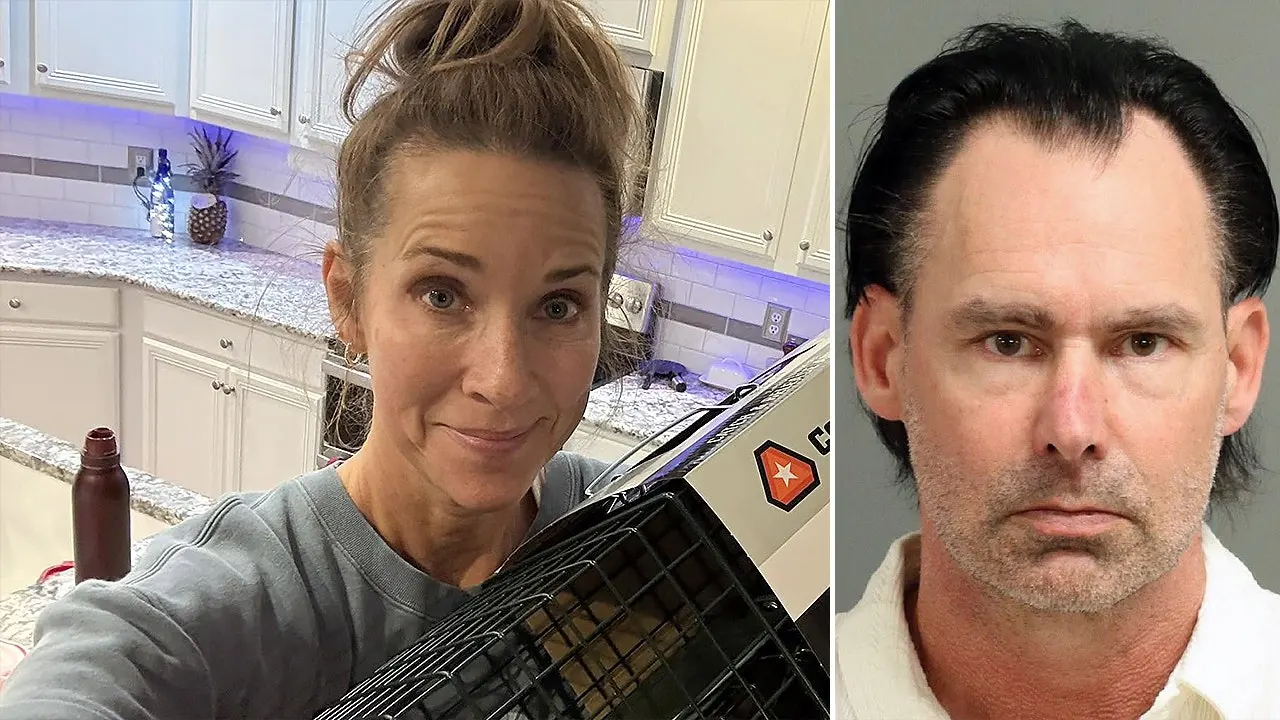
In late October, the life of a celebrated North Carolina television news producer unraveled in a way that shocked colleagues, neighbors, and anyone who had followed his professional rise. Randall Saunders Kerr, a 55-year-old Emmy-winning investigative producer at Raleigh’s WRAL, was arrested and charged with felony stalking and a misdemeanor violation of a domestic violence protective order. The charges stemmed from allegations made by his former wife, Lynda Loveland, a longtime and beloved WRAL anchor. Court records obtained by Fox News Digital painted a harrowing picture of what Loveland said she endured in the months after their marriage collapsed: Kerr allegedly drove past her home multiple times a day, lurked on a street behind her property, tracked her movements through shared technology, bombarded her with endless text messages, and even climbed through a second-story bathroom window after using a ladder. In a complaint filed in December, Loveland wrote with chilling vulnerability, “I’m scared I’m going to wake up one night and see him standing there in my room.” That single sentence captured the unbearable tension of living in a home that no longer felt safe—a place where ordinary moments, like hearing a creak at night or noticing an open window, became sources of dread. The arrest warrant alleged that between Oct. 13 and Oct. 18, Kerr drove within 300 yards of Loveland’s home “multiple times daily,” including along the street directly behind her house. For someone who had spent decades in journalism, telling stories of crime and injustice, Loveland now found herself living inside a story she never wanted to tell. The fear was not abstract; it was rooted in a pattern of behavior that seemed to grow more intrusive with each passing week. She changed locks, checked doors and windows obsessively, and eventually bought pepper spray, hoping to create some small layer of protection between herself and the man she once loved. The arrest brought a measure of relief, but for Loveland, the emotional damage had already been done—and the legal process was only just beginning.
2. A Timeline of Escalating Intrusion and Control
The complaint filed by Loveland in Wake County District Court on Dec. 19, 2025, laid out a painful and methodical timeline of escalating harassment. After Kerr moved out of their shared home in August 2025, the separation quickly turned toxic. Loveland alleged that Kerr searched through her personal belongings, monitored her text messages and emails, and used shared technology—phone services, cloud accounts, and perhaps location-sharing apps—to track her whereabouts. She said he sent as many as 30 unwanted text messages a day, relentless waves of communication that left her feeling suffocated and unable to move on. The messages, she said, came against her explicit wishes, but they did not stop. The most alarming incident involved the second-story bathroom window. In October 2025, Loveland noticed that a bathroom window upstairs had been left open in a way that didn’t make sense. When she questioned Kerr, he allegedly admitted that he had used a ladder to climb through that window because he needed to use the bathroom. That admission, if true, marked a terrifying leap from digital intrusion to physical boundary-breaking. It transformed the case from a matter of unwanted contact into a serious security threat. Loveland began checking her home’s entrances constantly, changing locks, and arming herself with pepper spray. She described the experience as living in a state of constant vigilance, never knowing when Kerr might appear again. The alleged behavior around her home was equally disturbing: he would drive along a street behind her property, close enough to see her coming and going, but far enough to avoid an immediate confrontation. The protective order she sought was not an overreaction; it was a desperate attempt to reclaim a sense of safety. In her written complaint, Loveland gave voice to the fear that so many victims of stalking know all too well—the feeling that no door, no lock, no distance is truly enough. Her words carried the weight of sleepless nights and anxious days, of wondering whether the man who knew her routines better than anyone were watching at that very moment.
3. The Protective Orders and the Legal Response
The legal system moved quickly once Loveland filed for protection. A Wake County judge granted her an emergency domestic violence protective order on Dec. 19, 2025, barring Kerr from contacting or harassing her and requiring him to stay at least 300 yards away from her at all times. That initial order provided temporary relief, but the case was far from over. On Jan. 27, 2026, the court entered a consent protective order signed by both parties and approved by District Court Judge Rhonda Young. This order extended the restrictions: Kerr was prohibited from contacting Loveland and was generally required to remain 300 yards away, with a narrow exception for events involving their adult children. He was also barred from possessing or purchasing firearms. Importantly, the consent order was entered without findings of fact or conclusions of law, meaning that neither side’s version of events was officially adjudicated. This is common in domestic violence cases where both parties agree to an order to avoid a contested hearing, but it also means that the public may never know the full truth of what happened behind closed doors. Still, the existence of the order itself signaled that the court found enough basis to impose serious restrictions on Kerr’s freedom. His legal troubles deepened after his arrest. A Wake County magistrate initially ordered Kerr held without release under North Carolina’s domestic violence pretrial release law, a provision designed to keep accused abusers in custody while awaiting trial. A separate order issued Oct. 21 barred him from contacting Loveland and required him to comply with the existing protective order. It also prohibited him from coming within 100 yards of the alleged victim or locations covered by the restrictions. As of late October, Kerr remained listed as being held without bond on the felony stalking charge. His next court appearance was scheduled for Nov. 6. For Loveland, the protective orders represented a fragile shield—a legal promise that the man who had allegedly terrorized her would be kept at a distance. But the emotional reality of stalking is that the damage is often done long before the court intervenes. Even with an order in place, victims frequently continue to feel unsafe, hyperaware of every shadow and every unfamiliar car. Loveland’s complaint, with its raw confession of fear, underscored that no piece of paper can fully restore a sense of security once it has been shattered.
4. A Marriage’s Long Decline and the Aftermath of Divorce
To understand the depth of the conflict, one must look back at the long arc of Kerr and Loveland’s relationship. The couple married in April 2001 and spent more than two decades building a life together in Raleigh, raising three children who are now adults. On the surface, they appeared to be a successful power couple—both respected in the local media world, Kerr behind the scenes as a producer, Loveland in front of the camera as a trusted anchor. But by August 2025, the marriage had reached its breaking point, and the couple separated. Their divorce was formally dissolved on Oct. 9, just four days before the alleged stalking began. That timing is significant: the end of a marriage, especially one of 24 years, can be a volatile moment, filled with grief, anger, and a struggle for control. Court records show that Loveland filed for divorce in August 2026, seeking to end the marriage after more than a year of separation. She also asked to restore her maiden name, Lynda Lee Loveland, a symbolic act of reclaiming her identity after decades of being defined, in part, by her marital connection. The separation was not simple. The former couple became involved in a dispute over their marital home, with Kerr claiming in December 2025 that Loveland had changed the locks after he moved out. That detail—so domestic and so ordinary—becomes darker when viewed against the allegation that Kerr had once climbed through a second-story window. Changing the locks was not an act of petty revenge; it was a survival instinct. The couple eventually reached an agreement over the division of marital property, with a Wake County judge approving a consent order in August 2026. But the financial settlement did little to heal the emotional wounds. A marriage that had spanned the better part of two decades, that had seen the birth of three children and the ordinary triumphs and struggles of family life, had dissolved into accusations of stalking and a courtroom battle over safety. Behind every legal filing was a human story of betrayal, heartbreak, and the slow erosion of trust. For Loveland, the process of untangling her life from Kerr’s was not just about dividing assets; it was about reclaiming her peace of mind.
5. The Career, the Fall, and the Silence of the Station
Before his arrest, Kerr had built a distinguished career in broadcast journalism. He was a longtime investigative producer at WRAL, a prominent Raleigh station known for its commitment to serious reporting. In 2016, Kerr was among three station employees honored with a regional Emmy Award for a report titled “Swatting,” an investigation into a dangerous prank in which someone makes a hoax emergency call to send armed officers to an unsuspecting victim’s home. The award was a highlight of his professional life—a recognition of his skill in telling stories about threats and dangers faced by ordinary people. The irony is almost too painful to ignore: Kerr had been celebrated for shedding light on a form of terror that preys on fear and vulnerability, and now he stood accused of inflicting that kind of fear on his own former wife. After his arrest, WRAL reported on the case, acknowledging the charges against Kerr and the protective order obtained by Loveland. Fox News Digital reached out to the station for comment on Kerr’s current employment status but received no response. The silence from the station spoke volumes. In a newsroom where he had once been a respected colleague, Kerr’s sudden absence must have raised uncomfortable questions. Did his coworkers suspect anything? Did they notice changes in his behavior? Or were they as blindsided as the public? The case serves as a reminder that professional accomplishment and personal conduct are separate things. A person can win awards, earn the admiration of colleagues, and still engage in deeply troubling behavior behind closed doors. For Loveland, who remained a public figure even as she sought privacy and protection, the ordeal must have been especially difficult. She was not just a victim; she was also a journalist, someone whose job depended on credibility and composure. To go from reporting the news to being the subject of it is a jarring transition, one that forces a person to confront the loss of control over their own narrative. While Kerr sat in jail awaiting trial, his career hung in the balance, and his legacy—once defined by Emmy awards and investigative courage—was now clouded by allegations that painted a much darker picture.
6. A Cautionary Tale and the Quiet Courage of Survival
The story of Randall Kerr and Lynda Loveland is more than a celebrity crime blotter item; it is a cautionary tale about the insidious nature of domestic violence and stalking. It illustrates how easily boundaries can be crossed, how quickly an ordinary divorce can spiral into a campaign of fear, and how even accomplished, intelligent people can become trapped in cycles of intimidation. Stalking is not a single dramatic event; it is a series of small, cumulative violations—a text message, a car idling on the street, an open window—that together create a climate of terror. Loveland’s decision to seek a protective order, to document the harassment, and to speak through the cold language of legal complaints was an act of immense courage. She did not stay silent. She used every tool available to her, from changing locks to calling the police, from filing for protection to cooperating with prosecutors. Her words in the complaint—“I’m scared I’m going to wake up one night and see him standing there in my room”—are heartbreaking, but they also reveal a woman who was willing to articulate her fear in order to be believed. Too often, victims of stalking are dismissed as overly sensitive or paranoid, but Loveland’s detailed timeline and documented incidents made her case impossible to ignore. As this case moves through the courts, it will serve as a reminder that no one is immune to the reach of domestic violence, regardless of income, education, or professional standing. The legal system, while imperfect, provided a measure of accountability: Kerr was held without bond, ordered to stay away, and barred from possessing firearms. But true justice will only be realized if Loveland is able to reclaim her sense of safety and rebuild her life on her own terms. For those who have experienced similar trauma, her story offers both validation and hope. It says: You are not alone. Your fear is real. And seeking help is not a sign of weakness—it is a powerful act of self-preservation. As for Kerr, his future remains uncertain, with a court date pending and the shadow of felony charges hanging over him. But whatever happens in the courtroom, the human cost has already been paid in sleepless nights, anxious moments, and the loss of a marriage that once meant something beautiful. In the end, this is not just a story about a crime; it is a story about the fragile nature of trust, the courage it takes to leave, and the long, difficult road to feeling safe again.