







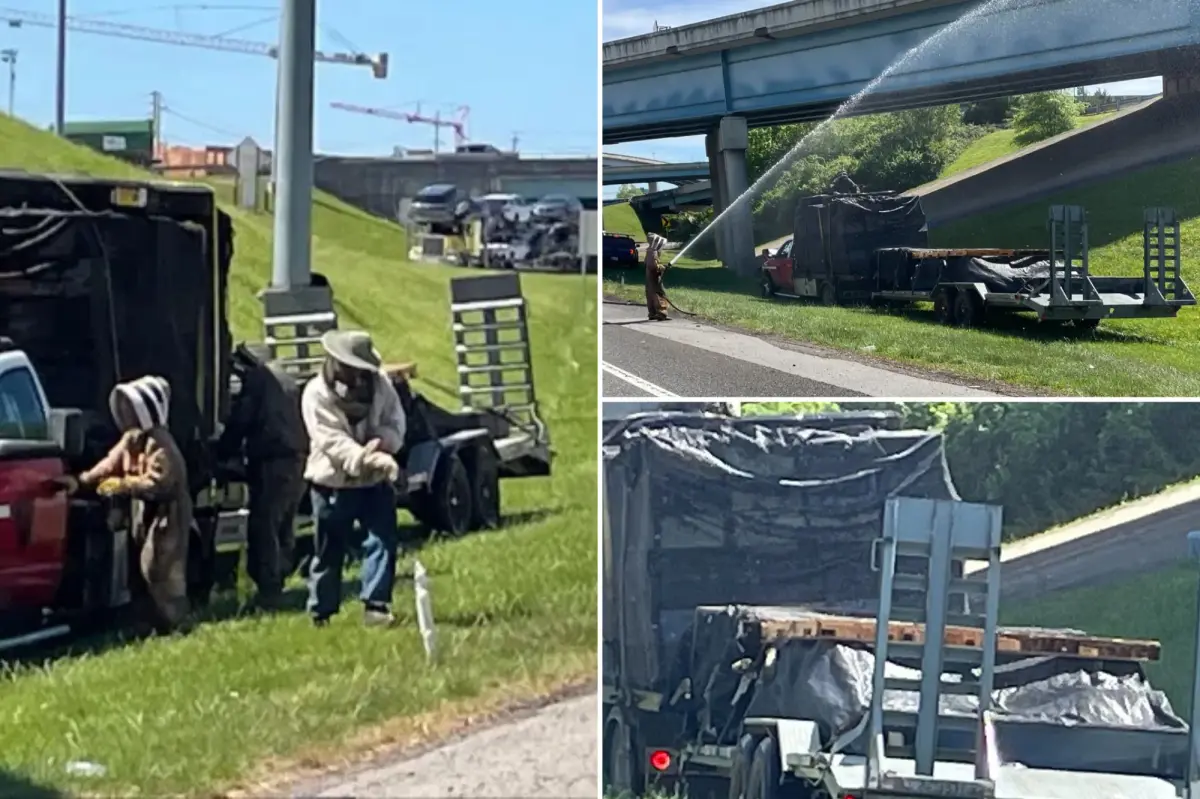
The Buzz on the Highway: A Million Bees Turn Knoxville into a Stinging Surprise
Picture this: It’s a crisp Friday morning in Knoxville, Tennessee, around 11 a.m., and the usual hum of Interstate 40 traffic suddenly turns into something far more chaotic—a literal swarm of chaos. For those of us who’ve driven on that stretch of highway, it’s a vital artery through the city, bustling with commuters heading to work, families on trips, or trucks hauling goods across the country. But on this day, everything halted when a pickup truck carrying a massive shipment of bees lost control near the Henley Street exit. One million bees—yes, a full million—escaped into the open air, turning the roadway into an unexpected apiary adventure. The bee hives, typical for commercial beekeepers who transport them for pollination duties in agriculture, were destined to help pollinate crops far and wide. These aren’t just any bees; they’re like tiny flying farmers, essential for producing fruits, veggies, and even almonds in farms across the U.S. As the truck crashed, the hives ruptured, and out poured the buzzing crowd, eager but disoriented.
Drivers caught in the turmoil must have felt a mix of terror and disbelief peering through their windshields. Bees filled the air like a living cloud, swarming around the wreckage and coating the nearby ramp in a golden haze. Authorities sprang into action quickly, closing the ramp from I-40 East to Henley Street to keep everyone safe. Tennessee Department of Transportation (TDOT) officials, ever the calm orchestrators of road order, advised motorists to stay inside their vehicles, windows up, doors locked. Imagine being a trucker or a mom with kids in the backseat, heart pounding as those little insects danced outside. It’s not every day a highway becomes a natural history museum exhibit, but that’s exactly what unfolded. The bees, clustered thickly on the truck and asphalt, created a spectacle that drew stares and surely sparked some unforgettable stories for dinner tables that night.
Enter the heroes of the day: a team of beekeepers, clad head-to-toe in protective suits like futuristic astronauts descending on an alien planet. These folks, veterans of bee wrangling, worked tirelessly alongside highway crews to reclaim their winged charges. Mark Nagi, a straightforward spokesperson for TDOT, kept the public updated via X (formerly Twitter), painting a picture that was equal parts alarming and oddly amusing. His first post read like a headline: “The ramp from I-40 East to Henley Street is currently closed. A truck carrying a load of bees crashed, and now the bees have escaped and are swarming the area.” It was direct, no frills, reminding us how real-life incidents often blur into the surreal. Later, he shared a photo of a suited beekeeper, cautioning: “Unless you are dressed in this outfit please stay in your vehicles in this area.” You could sense the humor in his tone—bees buzzing freely, after all. Nagi’s updates turned a potentially scary event into something shareable, a reminder that even in emergencies, a touch of wit helps humanize the ordeal.
As the beekeepers maneuvered, smoke guns and gentle coaxing likely helped herd the swarm back into surviving hives or temporary containers. Picture the scene: one bee expert gently waving a branch, another carefully lifting a hive to relocate the insects without further agitation. It required patience and expertise, a dance between human ingenuity and nature’s unpredictable rhythm. For the truck driver, whose day started with a routine delivery, this must have been a nightmare—his vehicle destroyed in the crash, his cargo now the center of highway drama. Yet, the community rallied; neighboring businesses offered refuge for stranded drivers, and neighbors shared water bottles and snacks as folks waited. It’s moments like these that remind us of our interconnectedness—bees crucial for our food chain, and humans banding together to untangle the mess. The beekeepers’ dedication shone through, ensuring no bee unnecessarily perished in the fray.
Hours ticked by, but eventually, the ramp reopened to traffic, a sigh of relief echoing from Knoxville drivers. Nagi updated again: “The ramp from I-40 East to Henley Street is back open, but the truck is destroyed, and the bees are … well … buzzing.” His phrasing captured the essence of the day—chaos resolved, but the memory lingering like a gentle sting. In a statement to Fox News Digital, he confirmed the happy ending: no injuries whatsoever. The truck was towed away, and the bees were safely relocated, preventing any loss to this vital population. For those affected, it was a close call with a “only in Tennessee” flair. Emotionally, drivers likely felt a rush of gratitude mixed with adrenaline-fueled stories— “You’ll never guess what happened on my commute!” life lessons about safety and nature’s power, all in a compact incident.
Looking broader, this isn’t isolated; similar bee escapades have peppered headlines before, highlighting the risks of transporting hives nationwide. Just a year or so ago, a semitruck in Utah spilled millions of bees onto another interstate, causing shutdowns and stings. These events underscore how commercial beekeeping supports U.S. agriculture—bees pollinate over $15 billion in crops annually—but also bring hazards like unexpected crashes. TDOT officials didn’t specify the crash cause in Knoxville, but it could be anything from road conditions to a sudden mechanical failure. The key takeaway? Safety protocols, like secure hive anchoring, are crucial. For bee enthusiasts, it’s a reminder of our guardians’ work—beekeepers who travel tirelessly, ensuring honey, pollination, and ecological balance. As Knoxville returned to normal, the buzz faded, but the human story endures: a day where a accident united strangers, sparked conversations, and celebrated the unsung heroes keeping our world pollinated and productive. In the end, those one million bees didn’t just shut down a highway; they painted a vivid lesson in resilience, community, and the wild beauty of nature intersecting with human life. And who knows? Maybe next time, you’ll look at a jar of honey with a newfound appreciation for the adventure behind it.