





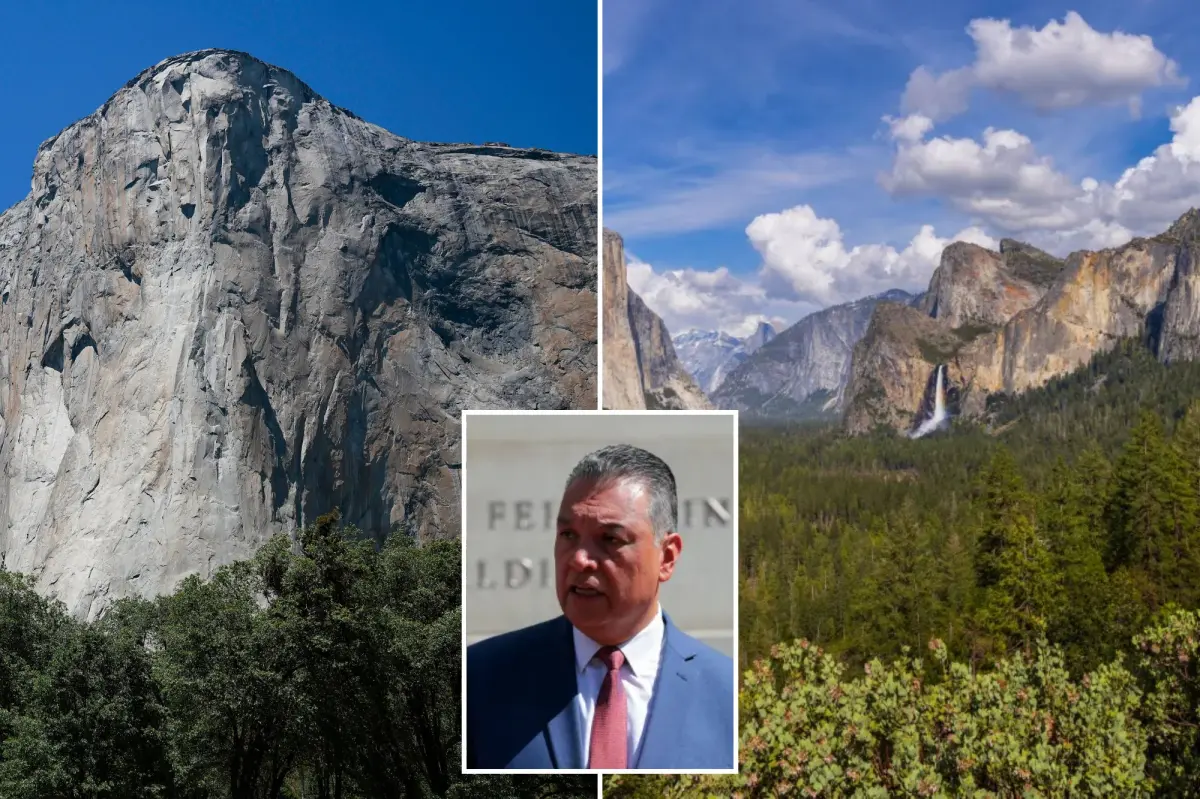
Yosemite National Park, long celebrated as the crown jewel of America’s wilderness, is losing its timeless magic to modern-day gridlock. In a passionate appeal to federal authorities, California Democratic Senators Alex Padilla and Adam Schiff have sounded the alarm over the park’s plunging quality of life. In a scathing letter sent to the Department of the Interior and the National Park Service, the lawmakers warned that the recent decision to abolish Yosemite’s reservation system has transformed a majestic sanctuary into a chaotic, overwhelming zoo. What was once a tranquil escape into nature has quickly deteriorated into an frustrating ordeal of endless traffic jams, where the scent of pristine pine is regularly replaced by the oppressive, suffocating stench of idling engine exhaust.
The roots of this current crisis trace back to April 2025, when Interior Secretary Doug Burgum issued a sweeping federal directive mandating that all national parks remain aggressively open and accessible to the public. In response, park administrators scrapped the successful timed-entry reservation system for the upcoming 2026 season. However, according to the senators, this well-intentioned push for open access has backfired spectacularly. Instead of democratizing the great outdoors, the policy shift has unleashed a wave of unmanageable overcrowding during peak summer months. Visitors seeking a spiritual connection with El Capitan or Half Dome are instead greeted by miles of bumper-to-bumper traffic, blaring car horns, and an overwhelming sense of lawlessness.
This decline is particularly frustrating because prior booking systems actually worked. From 2020 through 2022, and again in 2024, reservation protocols successfully paced the flow of tourists without locking them out. In fact, even with these crowd-control measures in place, Yosemite welcomed more than 4.1 million visitors in 2024, marking its fifth-busiest year on record. Yet, despite this proven balance of preservation and tourism, federal leadership abandoned the reservations without presenting any scientific justification, data-driven reasoning, or meaningful public consultation. Now, the park is paying a steep price for this lack of foresight, as tourists rush in without any coordination or limits.
The impact of this policy shift was almost instantaneous, with Yosemite experiencing a staggering 45 percent surge in visitation this past March compared to the previous year. The fragile ecosystem of the valley floor is bearing the brunt of this unchecked influx. Hiking trails have become heavily congested bottlenecks, and local parking lots fill to capacity in the early hours of the morning. Desperate for a place to park, frustrated drivers have resorted to illegally pulling off the paved roads, bringing heavy metal and rubber onto delicate vegetation and trampling pristine meadows. The physical beauty that visitors travel from around the world to see is literally being crushed under the weight of the crowds.
Making matters worse, the park is grappling with critical staffing shortages that leave its rangers stretched thin. The lawmakers point out that vital safety personnel—whose primary responsibilities should be managing wildfire risks, protecting wildlife, and maintaining trails—have been pulled from their specialized roles just to direct traffic and manage angry crowds. This diversion of resources leaves Yosemite vulnerable to environmental hazards and compromises visitor safety. The very people tasked with keeping the park safe and wild are instead acting as reluctant parking attendants, trying to keep a lid on a pressure cooker of frustrated tourists.
In their poignant July letter, Padilla and Schiff challenged federal park leadership to take immediate responsibility for this ongoing decline. They demanded the release of the specific data and evaluations used to justify dropping the booking system, while urging officials to bring back reservations if the 2026 summer season proves to be a disaster. For many families, a trip to Yosemite is a once-in-a-lifetime dream. Having that dream reduced to hours of circling parking lots in a cloud of exhaust is a tragedy. Protecting Yosemite is not about keeping people out; it is about preserving the awe-inspiring experience of the wild for generations to come, before the park’s natural spirit is permanently paved over.