


Florida Deputies Wrangle Massive 600-Pound Alligator in Sarasota
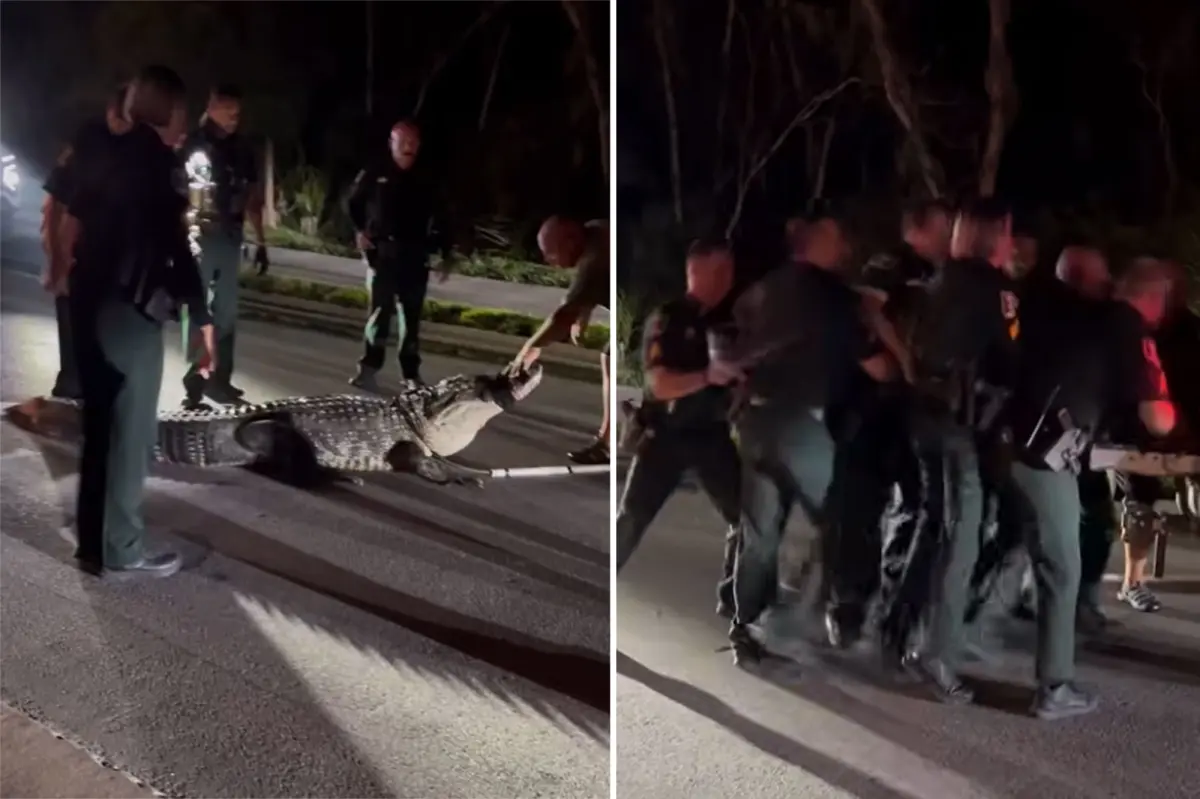
In a remarkable display of teamwork and skill, Sarasota County Sheriff’s deputies successfully captured and relocated a massive 600-pound alligator earlier this week. The dramatic operation, which required seven deputies and a professional animal trapper, highlights the ongoing balance Florida maintains between human safety and wildlife conservation. The incident comes as alligator activity typically begins to slow down for the winter season, making this encounter particularly notable. The 14-foot behemoth was safely transported to an alligator farm after authorities determined it posed a potential risk to the community.
The capture itself was a carefully orchestrated effort that demonstrated the specialized training required for such dangerous operations. Footage released by the Sheriff’s Department shows the professional trapper first securing the alligator’s powerful jaws—the most immediate threat—while deputies simultaneously worked to control the reptile’s limbs and tail. The coordinated action allowed the team to safely restrain the animal before hefting its enormous bulk into a waiting pickup truck. This procedure underscores why Florida law strictly prohibits untrained individuals from handling alligators, as improper techniques can lead to serious injury for both humans and the animals themselves.
This particular alligator encounter is occurring during a transitional period in alligator behavior. According to the Florida Fish and Wildlife Commission, alligators typically become less active as temperatures fall, generally ceasing to feed when temperatures drop below 70 degrees Fahrenheit and entering a dormant state when temperatures fall below 55 degrees. With Sarasota County experiencing temperatures in the 70s this week, the alligator was likely still relatively active, which may explain its visibility and potential nuisance status. Like other reptiles, alligators rely on environmental heat to regulate their body temperature, making their behavior highly seasonal in Florida’s subtropical climate.
Florida’s approach to alligator management reflects decades of evolving policy designed to balance public safety with conservation goals. The state maintains a comprehensive Nuisance Alligator Program that allows concerned citizens to report alligators they believe pose threats to people, pets, or property. When verified, professional trappers like the one involved in this incident are dispatched to safely remove the animal. This system acknowledges the reality that as Florida’s human population continues to expand into traditional alligator habitats, interactions between the species become increasingly common and sometimes problematic.
The size of this particular alligator places it among the largest ever documented in Florida. The state record stands at 14 feet, 3½ inches for an alligator captured at Lake Washington, making this 14-foot specimen a truly remarkable example of the species. American alligators represent one of conservation’s great success stories, having rebounded from endangered status in the mid-20th century to become a stable and sometimes abundant presence throughout the southeastern United States. Their recovery has required careful management to minimize negative human-alligator interactions while maintaining healthy wild populations.
While this incident ended safely for both the alligator and the humans involved, it serves as a reminder of Florida’s unique wildlife challenges. As one of the fastest-growing states in America, Florida constantly navigates the complex relationship between expanding human communities and the diverse native wildlife that has inhabited the region for millennia. The professional handling and relocation of this massive alligator exemplifies the state’s commitment to responsible wildlife management. By transporting the animal to an alligator farm rather than destroying it, authorities demonstrated their dedication to humane solutions that respect these ancient reptiles while prioritizing public safety—an approach that will remain essential as humans and wildlife continue to share Florida’s distinctive landscape.