

Holiday Magic at a Price: How the American Girl “Wicked” Dolls Became 2025’s Most Coveted Collectibles
This year’s holiday shopping season has been bewitched by an unexpected phenomenon that’s leaving parents scrambling and collectors rejoicing. On September 22, American Girl quietly released their limited-edition “Wicked” Collector Series dolls—Glinda and Elphaba—just before the blockbuster sequel “Wicked: For Good” premiered in theaters on November 21. What nobody anticipated was how quickly these meticulously crafted dolls would vanish from shelves, creating a secondary market frenzy that has transformed $300 toys into $1,000 collector’s items almost overnight. While designed with children in mind, it’s predominantly adults who have fallen under the spell of these limited-edition treasures, turning what might have been a special childhood holiday gift into something more akin to a high-stakes investment opportunity.
The social media landscape has become a showcase for the lucky few who managed to secure these coveted collectibles before they disappeared. TikTok is awash with unboxing videos and playful displays of adult collectors twirling with their Glinda dolls or taking their Elphaba companions on adventures around the house. User @katnisseverslay proudly displayed her “$300 homegirl” Glinda, while @carladistefano30 humorously documented “how I spend my days after spending $300 on a green American Girl doll.” The comment sections reveal a mixture of admiration, envy, and shock at the prices some are willing to pay. “She is sold out now, so I guess you have a true collector item,” one commenter observed, while another confessed, “Imagine spending $800 for them and their pajamas, I definitely have a problem.” These interactions highlight a curious shift in toy culture, where twenty-somethings have replaced kindergarteners in the race for the season’s hottest item—driven largely by powerful feelings of nostalgia for their own American Girl-filled childhoods.
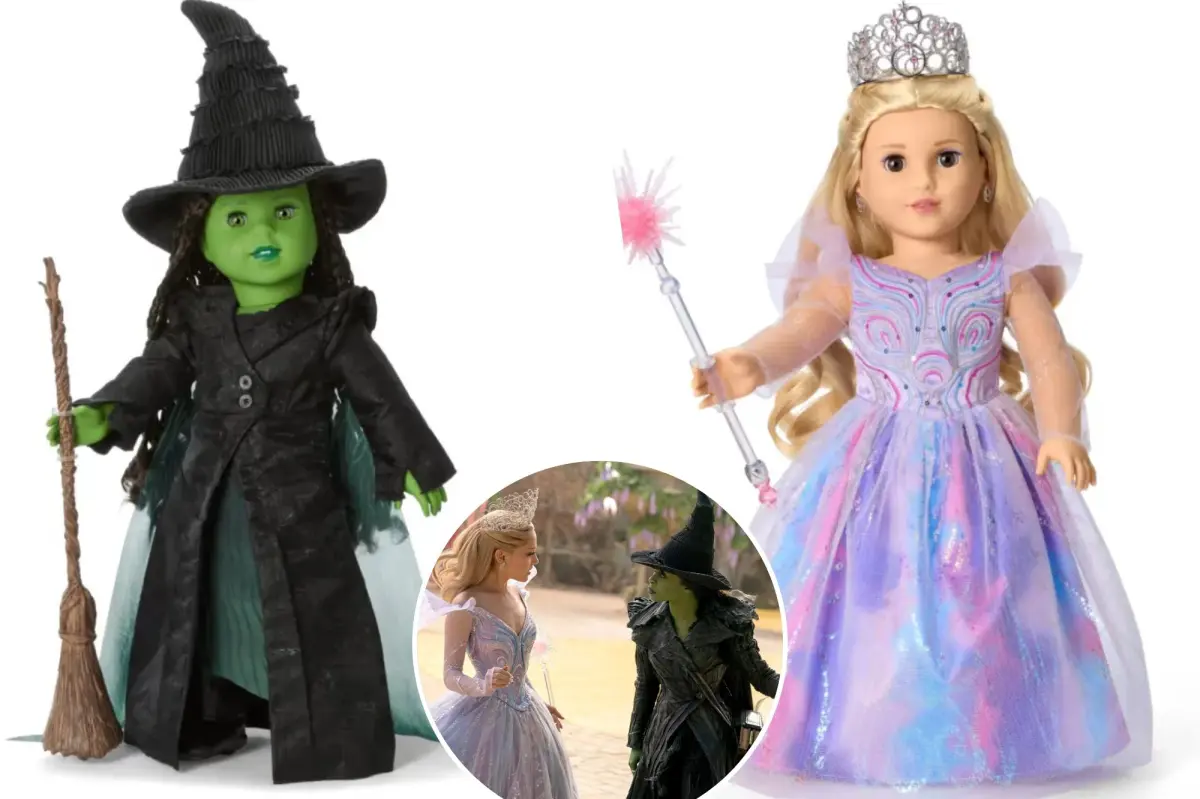
The extraordinary appeal of these dolls lies in their exquisite craftsmanship and the thoughtful details that transform them from mere toys into true works of art. Elphaba, limited to just 6,000 pieces worldwide and initially priced at $295, sports a stunning green-to-black ombré gown, a witch hat, broom, and removable chiffon cape. What makes her truly groundbreaking is her status as the first American Girl doll to feature microbraids, modeled after “Wicked” star Cynthia Erivo, with green-tinged fingers and toes and complementary eyeshadow. Meanwhile, Glinda, limited to 6,800 pieces and also originally priced at $295, dazzles in her iridescent ball gown adorned with enough glitter and rhinestones to “blind a Munchkin,” complete with a bubble wand in her pink-tipped hand, designed to evoke Ariana Grande’s portrayal of the character. Both dolls feature the quality construction American Girl is known for—bendable vinyl limbs, soft cotton bodies—and come with numbered certificates of authenticity that transform them from toys into legitimate collectibles.
The “Wicked” fever doesn’t stop with the dolls themselves—even their accessories have become hot commodities in the resale market. The limited-edition “Popular” pajama sets, originally sold for $80 each, now command astronomical prices on platforms like eBay. Elphaba’s violet sleepwear (designed to contrast beautifully with her green skin) sells for around $295, while Glinda’s bubblegum pink satin ensemble fetches approximately $199. These markup prices reveal the extent to which the “Wicked” collection has transcended ordinary toy status to become a legitimate investment opportunity for those lucky enough to have purchased them at retail price. The phenomenon speaks to a broader trend in consumer culture, where limited-edition items—whether sneakers, trading cards, or in this case, dolls—can appreciate in value almost immediately upon release, turning ordinary shoppers into speculative investors almost by accident.
The online discourse surrounding these collectibles reveals much about our complicated relationship with luxury items, nostalgia, and adult collecting behaviors. Some enthusiasts seem almost sheepish about their purchases, acknowledging the extravagance while simultaneously celebrating their acquisition. “So real. I’ve been taking my Glinda everywhere,” admitted one collector, while another confessed, “I am soooooo torn. I know $800 is CRAZY but oh my goodness I’m obsessed.” Others express more critical views of the phenomenon, with comments like “They’re cute… but not 300 dollars cute” and the more sobering observation, “I can’t even afford rent, I don’t see how people are out here buying $300 dollar American dolls. That doesn’t even favor the characters fr.” These varying perspectives highlight the economic privilege required to participate in such collecting activities and the tensions that emerge when childhood toys become adult luxury items with investment potential.
As we look ahead to 2025, the American Girl “Wicked” doll phenomenon serves as a fascinating case study in how nostalgia, scarcity, and pop culture can transform ordinary consumer goods into coveted treasures. What began as a clever tie-in to a popular movie has evolved into something far more significant—a perfect storm of limited availability, exquisite craftsmanship, and powerful nostalgic appeal that speaks directly to a generation of adults who grew up treasuring their American Girl dolls. While children may have been the intended audience for these magical creations, it’s the grown-ups who have made them the must-have collectible of the season. As one observer wryly noted, “In the end, these witches may not cast spells, but they’re working magic on wallets—and in 2025, the hottest accessory isn’t a wand or a tiara… It’s disposable income.” For better or worse, these emerald and pink treasures have reminded us that sometimes, the most powerful magic of all is our ability to reconnect with the wonder and joy of childhood—even if that magic now comes with a much heftier price tag.