


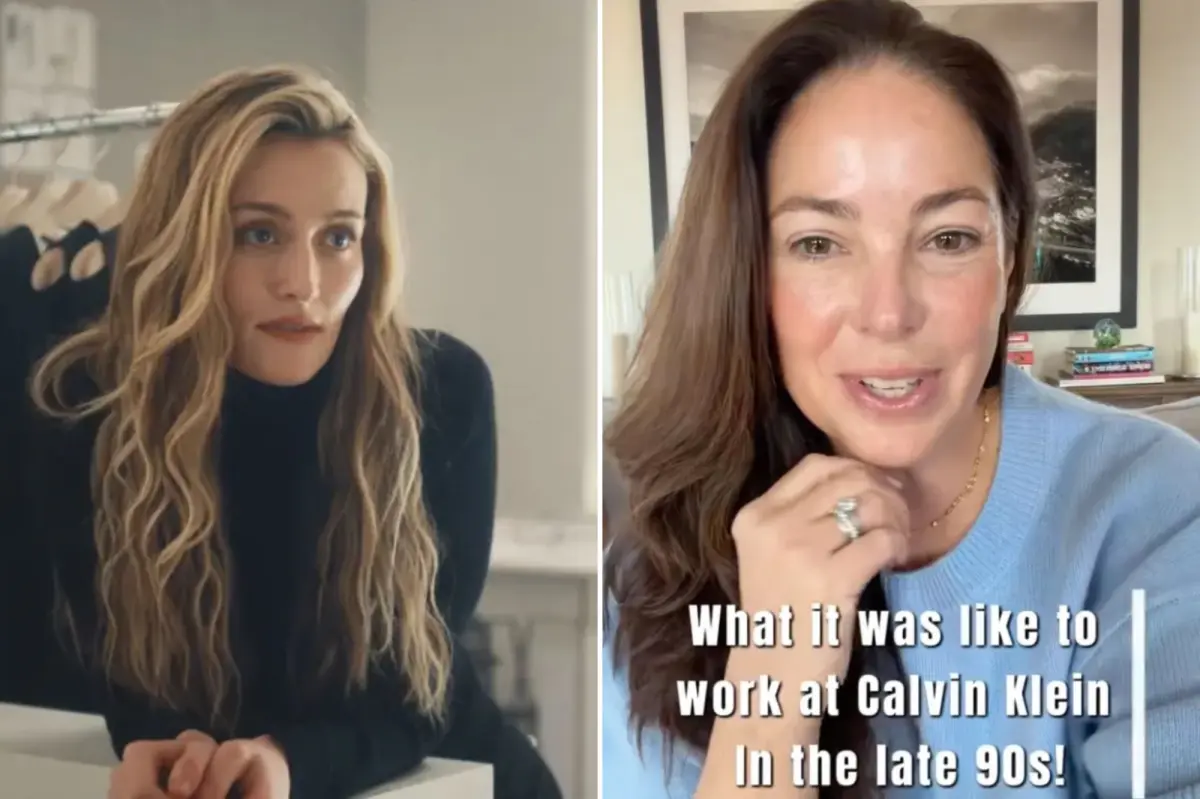
Everyone’s been talking about this Hulu series, “Love Story,” right? It’s the one diving into the whirlwind romance between Carolyn Bessette-Kennedy and John F. Kennedy Jr., set against the glamorous yet gritty backdrop of New York City in the ’90s. People are obsessed—some are even recreating Carolyn’s iconic looks, sporting that signature blonde hair and minimalist chic, while others are flocking to old-school spots like that campy Panna II restaurant in the East Village, just like in the show. It’s got everyone feeling nostalgic for a time when love was daring, fast, and a little bit dramatic. But here’s the thing: as someone who was actually there, working in the same glamorous world as Carolyn, I gotta say, don’t believe everything you see on screen. The series takes some liberties with the Calvin Klein office scenes, and it’s fun to watch, but it doesn’t quite capture the real grind of that place. I stumbled upon it in my own way, and since I’ve been sharing my memories on Instagram and TikTok, where I have a decent following—84,000 on one, 39,000 on the other—I’ve gotten a lot of questions. So let me break it down for you, like chatting over coffee, not just the facts, but the feels of what it was really like back then.
I started at Calvin Klein back in the ’90s, just like Carolyn, right out of my early twenties, fresh-eyed and starry-eyed about the fashion world. It was the dream job for so many of us—minimalist style, controversial ads featuring people like Kate Moss or Mark Wahlberg that screamed edgy and provocative. But let me tell you, the reality was a far cry from the polished drama in the show. Those red roses? Oh, JFK Jr. sending bouquets to Carolyn at work? Calvin himself would never allow that. No way. At Calvin Klein, everything had to be white—preferably calla lilies—to keep that stark, clean aesthetic. We weren’t even allowed personal photos on our desks. Strict rules, you know? You couldn’t talk to Calvin unless he asked you a direct question. It was intimidating, like working in this bubble of perfection where his presence alone could make the room freeze. I remember my first day, heart pounding, trying to blend into the walls while the energy pulsed around me. The brand was at its peak, synonymous with urban cool, and being there felt like the ultimate insider access. But it came with a price: no makeup beyond the bare minimum, nails polished-free, and heaven forbid you ate anything in front of him. The show captures a bit of that with someone quickly stashing a salad when he walks in, but trust me, eating was a no-go in general. I’d chug a Slim Fast out of sight, or sneak Parliament Lights out the window when I could get a quick break. It was all about staying invisible yet ready to hustle.
Now, about that “office” I worked in—it wasn’t glamorous like the show’s showroom. For a while, it was this tiny closet where the models changed, crammed in with just two of us sales associates. No windows, barely any ventilation, and it was always freezing. I swear, half the time, I’d be on the phone or organizing samples while a naked model shuffled behind me, trying to focus without blinking. It was chaotic, cramped, and absolutely not romanticized in movies. The only fresh air came from cracking a window subtly for a smoke break. Celebrities? Oh gosh, yes, they were everywhere. The show has Carolyn crossing paths with Kate Moss and Annette Bening, and I can vouch for that vibe. I once hustled Gwyneth Paltrow at a fashion show right after she’d won the Oscar for Shakespeare in Love. We flew her in, got her seated quickly, and acted like she was background noise. Rules were: don’t look, don’t talk, just facilitate. Gwyneth was this ethereal star back then, and all I could think was how surreal it was to be so close yet so detached. It kept everything professional, which was key in that environment. Nights blurred into days with late hours, making peanuts—around $25,000 a year—but the incentive was knowing it was the place to be, or else 100 other girls were waiting to take your spot. You worked hard, kept your mouth shut, and didn’t complain.
One thing the show nails is that obsession with perfection, like Carolyn carefully measuring the spaces between shoes in the showroom. Calvin did that too—everything had to be just so, symmetrically aligned, no dust or disorder. I’d finish my shift clearing my entire desk, wiping it down like it was precious. It was meticulous, borderline neurotic, but that was the Calvin Klein way: clean, unadorned, powerful. Watching the series, I chuckle at how they portray the fashion world, but it’s spot-on in those small details. And Carolyn’s look? That “child-of-the-beach” blonde hair, as her old colorist called it—everyone emulated it. Thin eyebrows, barely-there makeup; it was the ’90s ideal for us ’90s kids. I rocked that vibe myself, feeling like I was part of something bigger. Carolyn rose quickly through the ranks, from sales to dressing VIPs, then publicity director, and even producing shows. She quit just before marrying John in ’96, you know, that dazzling private ceremony that felt like a fairy tale. I never crossed paths with her directly—we worked in overlapping but separate spheres—but I admired her from afar. People romanticize it now, that era of Manhattan glamour, and with the show, it’s like everyone’s a little in love with the idea of it all. But remember, beneath the shiny surface, it was intense work ethic and a refusal to mess up.
I’m really enjoying the series, though, flaws and all. It brings back so many memories of a time without phones glued to our hands or social media buzzing all day. If you had plans after work, you just… went. No texting, no scrolling. Instead, post-office hangs involved rooftop parties, trendy clubs, or just grabbing a bite in restaurants where smoking was the norm—you sat there chatting with your hands free, lighting up, laughing without screens. Everyone was out, mingling, and yeah, sure, there was the party scene with drinks and whatever kept the energy going. It felt alive, connected, not filtered through apps. Calvin Klein was part of that pulse, a hub for young professionals chasing dreams in a city that never slept. Seeing young women today emulate Carolyn’s style or cringe-laugh at the show’s liberties reminds me how special that decade was for us. It wasn’t just fashion; it was freedom, innovation, and a raw kind of ambition. Sure, the rules were tough—keep your mouth shut, work your butt off—but that’s what made the successes sweeter. Now, retired and consulting, I look back and feel grateful for the shape it gave me. “Love Story” might dramatize it, but it rekindles that spark of what New York could be.
Reflecting on it all, I see why “Love Story” is topping the charts on Hulu—it’s escapist, romantic, pulling you into a love affair intertwined with America’s royal family vibes. Carolyn and John’s story was tragic, ending in that plane crash a few years after their wedding, but the show celebrates the whirlwind. Fans are posting pics in her outfits, revisiting spots from our past, and it’s like a cultural revival. But humanizing it means acknowledging the human cost: the long hours, the rigid hierarchies, the unspoken pressures to be perfect. In real life, Carolyn paid dues just like I did, rising through the ranks with grace and grit. Her no-nonsense style influenced a generation, from her slicked-back hair to her effortless poise. Working at Calvin wasn’t just a job; it was a masterclass in discipline. I’d come home exhausted, nails chipped despite the no-polish rule, and crash into bed dreaming of bigger things. The show romanticizes the office flings and fleeting moments, but for me, it was about survival in a cutthroat industry. Celebrities like Cindy Crawford popping by for fittings added to the allure, but we couldn’t engage. Gwyneth’s arrival was a blur of movement and professionalism. That era taught me resilience, and sharing it now feels like closing a loop—explaining the unvarnished truth behind the dramatized drama.
Ultimately, “Love Story” gets the heart of the romance right, even if the details are Hollywood-ified. Carolyn meeting John on the job, their magnetic pull, the media frenzy—it was real, intoxicating. As someone who lived in that orbit, I appreciate how it humanizes icons, showing them messy and real. No, Calvin wouldn’t send red roses; no, the offices weren’t sprawling showrooms with personal touches. But the passion for perfection? That’s spot-on. Fans thirsting for that ’90s aesthetic prove it’s timeless. For us who were there, it’s bittersweet—a reminder of youth, loss, and lessons learned. The devil wore Calvins, as the pun goes, but in my book, it was more about the angels who endured the system. Young women watching might dream of glamorous love stories, but they’ll also learn about quiet strength. Who knows? Maybe the show will inspire a new wave of dreamers, just like it did for me decades ago. It’s all part of the circle, isn’t it? Decades later, we’re still spinning tales, correcting myths, and smiling at the shared nostalgia. That’s the magic of storytelling—keeping memories alive, flawed and fabulous. And yeah, I’ll keep watching, cigarette in wink.