

Aadam Jacobs was just a wide-eyed music lover in his early twenties, clutching a compact Sony cassette recorder in his pocket like a secret weapon, when he slipped into Dreamerz, a modest club in Chicago, on that sweltering July night in 1989. The air crackled with anticipation as the up-and-coming rock band from Washington took the stage, fronted by a lanky 20-year-old named Kurt Cobain. After a sharp blast of guitar feedback that pierced the smoky haze, Cobain politely mumbled into the mic, “Hello, we’re Nirvana. We’re from Seattle.” With that unassuming introduction, the quartet—Nirvana as they were known back then—dived headfirst into a riff-heavy onslaught, kicking off with “School.” Jacobs, ever the stealthy fan, surreptitiously flipped on his recorder, capturing the raw, fiery energy of a band on the cusp of something massive. Little did he know, this cassette would document Nirvana in their fledgling form, more than two years before “Nevermind” exploded onto the world, turning them into icons. Jacobs wasn’t thinking of legacy that night; he was just a guy living for the music, sneaking in recordings like a modern-day pirate of punk and rock. Over the decades, he’s amassed more than 10,000 concerts, evolving from that simple Sony device to high-end digital tech, traversing Chicago’s vibrant scene and beyond. Now, thanks to a cadre of passionate volunteers scattered across the US and Europe, his tapes are being meticulously cataloged, digitized, and unleashed onto the internet at the Internet Archive—a nonprofit haven where music buffs can stream or download them for free. It’s a digital resurrection of forgotten moments, raw performances, and hidden gems that pulse with the spirit of an era when indie rock and punk weren’t just genres; they were rebellions waiting to be immortalized.
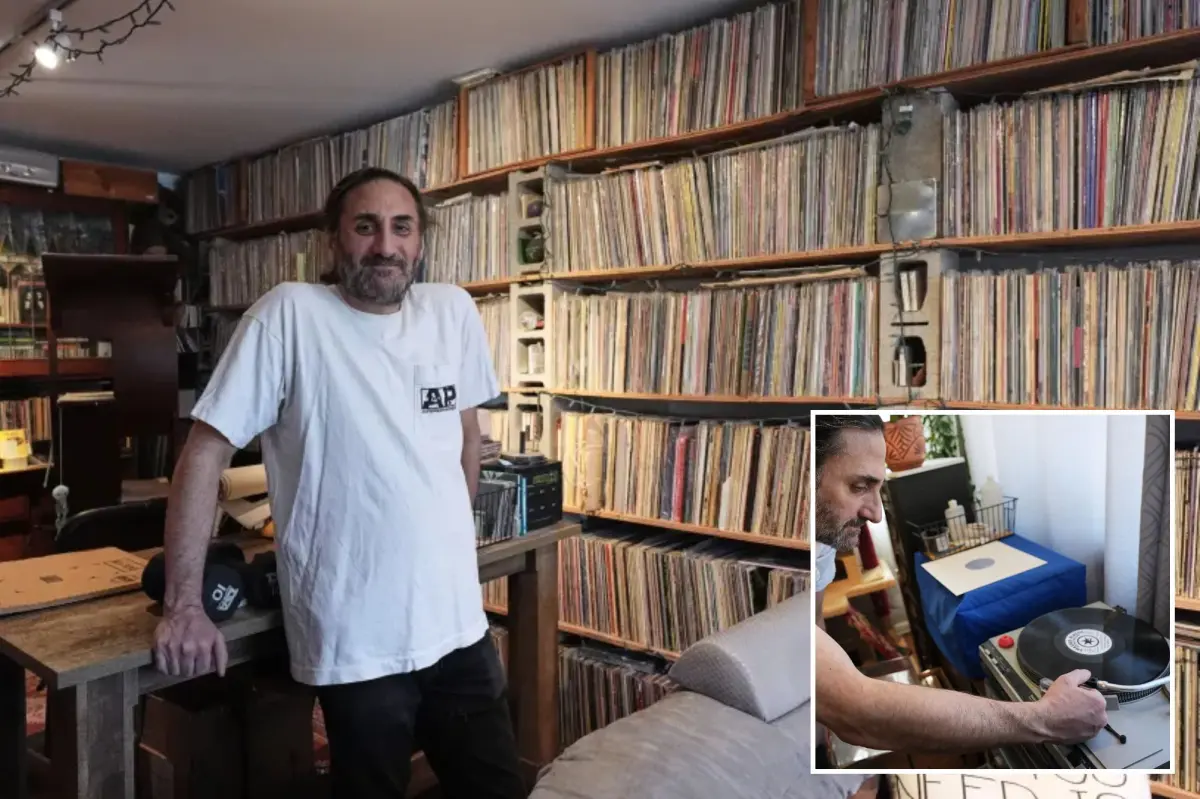
Back in 1984, Jacobs was a teenager obsessed with music, taping songs off the radio onto whatever he could find, building playlists that fueled his dreams. “And I eventually met a fellow who said, ‘You can just take a tape recorder into a show with you, just sneak it in, record the show.’ And I thought, ‘Wow, that’s cool,’” Jacobs, now 59 and reflecting on his beginnings, recalls with a chuckle. His first concert recording was hazy in his memory—a blur of excitement from borrowing his grandmother’s tiny Dictaphone-type device. He’d squirrel it away, capturing echoes of live chaos on borrowed gear. Soon, he upgraded to a Sony Walkman-style recorder, and when that bit the dust, he improvised with his home console cassette machine crammed into a backpack, plugging into generous soundmen’s setups like a resourceful scavenger. “I was using, at times, pretty lackluster equipment, simply because I had no money to buy anything better,” Jacobs admits, his voice carrying the earnestness of someone who did it for love, not glory. He wasn’t some obsessive archivist, as many label him; he was a dedicated fan, hitting a few concerts a week anyway. Why not document the magic? In the early days, club owners were prickly, chasing him out or turning a blind eye, but Jacobs became a fixture, earning free entry as the “taper guy.” His passion shone through innocuous notes and setlists scratched onto tape boxes. Author Bob Mehr, who profiled him in 2004 for the Chicago Reader, calls Jacobs “one of the city’s cultural institutions,” a character whose pure intentions won over skeptics. Even a 2023 documentary prompted him to finally share his collection with the Internet Archive, fearing his tapes would disintegrate with age. Jacobs’s story is one of quiet dedication, a man transforming personal joy into a communal gift.
The Aadam Jacobs Collection is rapidly becoming a goldmine for music aficionados, especially those nostalgic for the 1980s through early 2000s indie and punk explosion—the era when alternative rock seeped into the mainstream veins. It’s not just Nirvana’s embryonic roar; it bursts with early performances from trailblazers like R.E.M., The Cure, The Pixies, The Replacements, Depeche Mode, Stereolab, Sonic Youth, and Björk. Picture these acts as fresh-faced unknowns, thrashing through sets that would later fill stadiums. There’s even a nod to hip-hop’s roots with a 1988 Boogie Down Productions concert, and Phish devotees geeking out over an uncirculated 1990 jam session. But the real heart lies in the hundreds of smaller artists—obscure talents whose names might elude even the deepest crate-diggers. Each upload reveals a slice of history: the grit of underground scenes, the sweat-soaked passion of crowded floors, the experiments that defined generations. Jacobs’s tapes, cleaned up and uploaded, invite listeners to relive these moments, feeling the electricity as if they were there. It’s humanizing music in the truest sense—raw imperfections intact, from feedback fuzz to audience cheers. For fans, it’s like stumbling upon a time capsule, sparking memories-What does your first real concert sound like? For Jacobs, it’s validation of decades of effort, his recordings now a living archive capturing the soul of an era. The Internet Archive hosts it all for free, making these treasures accessible to anyone with an internet connection, democratizing the past in a way that resonates deeply with music’s communal spirit.
Enter Brian Emerick, a suburban Chicago transplant who volunteers his time by hauling 10 or 20 boxes from Jacobs’s house each month, each crammed with 50 or 100 tapes begging for resurrection. His dedicated room is a shrine to retro tech—outdated cassette and DAT decks whirring in unison, relics he’s learned to repair like a mechanic coaxing ancient engines back to life. “So many of the machines I find are broken. They’re trashed. And so I learned how to fix those, get them running again,” Emerick shares, his enthusiasm bubbling. With 10 working cassette decks running simultaneously, he digitizes in real time, cranking out digital files for a network of volunteers across the US, UK, and Germany. Since late 2024, he’s tackled at least 5,500 shows, but the project stretches years ahead, a marathon of patience. These digitized gems land in the hands of engineers who add metadata and polish the audio, transforming Jacobs’s humble tapes into pristine listens. Brooklyn-based Neil deMause marvels at the fidelity, despite “weird RadioShack mics” and primitive setups. “Especially after the first couple years, he’s got it so dialed in that some of these recordings, on, like, crappy little cassette tapes from the early 90s, sound incredible,” he notes, marveling at Jacobs’s intuition. Emerick highlights a 1984 James Brown concert as a standout find—funky, fiery, utterly electric. This volunteer army isn’t just preserving; they’re reviving artistry, personifying the human drive to connect through music.
Yet, the process isn’t all smooth sailing; often, the toughest battle is deciphering the chaos of a live show to nail down song titles. Jacobs sometimes left helpful scribbles, but more often, volunteers huddle for days, cross-referencing online databases, consulting each other, or even reaching out to artists directly to ensure accuracy. It’s detective work blended with passion, unraveling handwritten notes or buzzing setlists from blurred audio. Jacobs assures that most performers are thrilled with their preserved legacies, embracing the free-flowing ethos. Copyright worries loom, but Jacobs is pragmatic: “I think that the general consensus is, it’s easier to say I’m sorry than to ask for permission,” he quips. Only a handful have requested removals, and since neither Jacobs nor the Archive profits, lawsuits are a distant specter. Copyright expert David Nimmer explains the technicalities—artists own compositions and live recordings under anti-bootlegging laws—but the noncommercial spirit shields this endeavor. The Replacements, that seminal punk-alternative crew, even embraced Jacobs’s 1986 tape, blending it with their soundboard for a 2023 live album release in a box set curated by Mehr. Jacobs’s health faltered in recent years, pulling him from the live scene, but he still dives into others’ recordings—now fueled by ubiquitous cellphones democratizing taping. “Since everybody’s got a cellphone, anybody can record a concert,” he observes with a wistful smile. His legacy endures not as a solitary archivist but as an enabler, proving one man’s obsession can ignite a collective rebirth.
In the end, Aadam Jacobs’s journey humanizes the music world—a relatable tale of a kid with a tape recorder blossoming into a cultural force through sheer enthusiasm. From that clandestine Nirvana set to thousands more, his collection stitches together fragments of rebellion and artistry, accessible to all. Volunteers like Emerick and deMause embody the communal pulse, their efforts a reminder that music thrives on shared experiences. Artists cheer his contributions, the Internet Archive safeguards the future, and fans rediscover lost magic. Jacobs’s story isn’t just about recordings; it’s about connection. In an age of streaming giants, his tapes remind us of music’s raw, human heartbeat—the unplanned notes, the crowd’s roar, the personal histories etched in grooves. He’s not a hero, but a mirror: a guy who taped a show, and now, generations later, those sounds echo anew, inviting us to feel the same thrill he did that night in Dreamerz. Through Jacobs, we’re all a bit closer to the music that changes lives. And in that, his legacy pulses on, digitized and alive.>@[+][