


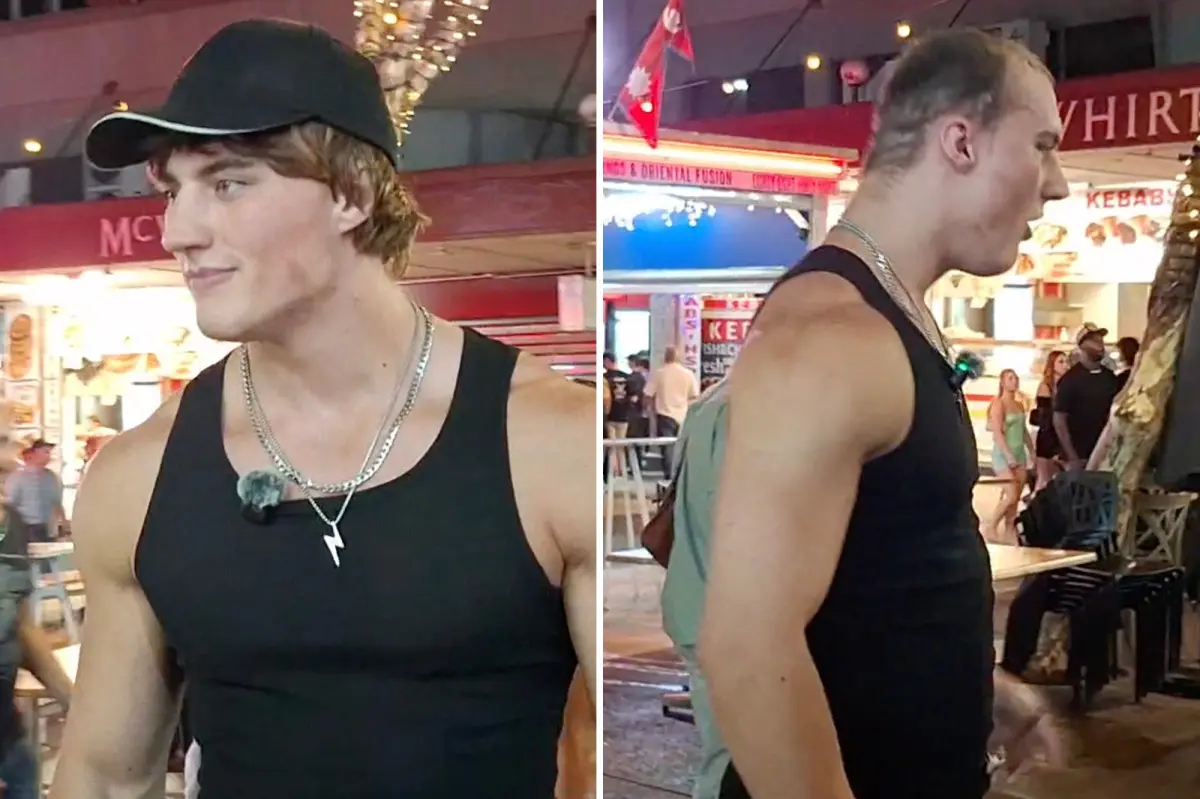
In the bustling world of social media influencers, where image often reigns supreme, a shocking moment captured live on camera has underscored just how fragile that facade can be. Picture this: a confident young man named Androgenic, known for his edgy takes on fitness and modern masculinity, is chatting away in a public space, microphone in hand, sharing advice on how to sculpt the perfect physique and charisma. He’s built a following by championing “looksmaxxing”—a trendy, if obsessive, pursuit of physical perfection. But then, in a blink, his carefully curated presentation unravels. A stranger sneaks up from behind, yanks off what he thought was a stylish baseball cap, only to reveal that it wasn’t just hair—wait, it was fake hair, attached to the hat. The video, just 11 seconds long, exploded online, racking up over 12 million views on X (formerly Twitter) in days. It’s a reminder of how the internet loves a spectacle, turning personal humiliation into global drama. Androgenic, an Australian content creator in his early 20s, embodies a generation grappling with intense pressures around appearance, where every selfie and livestream feels like a test of worth. As someone who’s poured heart and soul into his brand, this incident must have felt like a gut punch—publicly stripped of a cherished illusion, chased down the street in fury, all while the world watches and judges.
Diving deeper into the footage, it unfolds like a surreal comedy gone wrong. Androgenic stands there, dressed in a black tank top that shows off his gym-honed arms, exuding that cocky, livestream energy as he interacts with passersby in what seems like a lively outdoor market or festival vibe. His “wavy gold tresses” peek out from under the hat, adding to his larger-than-life persona—think of him as a cross between a motivational speaker and a edgy meme lord. Then, without warning, a mysterious figure darts in from behind, grabs the cap, and pulls it off. What unravels is a cascade of golden strands, exposing Androgenic’s real head: a receding hairline and an almost bald scalp underneath. He’s caught off-guard, his face twisting into a mix of shock and rage as he bolts after the thief, the camera barely keeping up before the clip cuts off. It’s raw, human vulnerability on display—fury giving way to embarrassment in front of thousands, potentially millions. As an onlooker, you can’t help but feel a twinge of empathy; imagine dedicating years to building an online identity tied to looking “maxed out,” only for it to crumble in seconds. The stranger’s act, whether prank or malice, strips away not just fabric and follicles, but a piece of Androgenic’s hard-earned aura. In our fast-paced digital age, where filters and edits can hide insecurities, this feels like a stark wake-up call about authenticity and the cruelty of randomness.
Unsurprisingly, the online reaction was a firestorm, with outrage and mockery flooding the comments section. Users pounced like wolves on weakness, dubbing Androgenic a “FRAUDMAXXER” and claiming his exposed baldness marked him as a “genergenerational aura loss” with “no recovery possible.” References flew to pop culture—Woody Allen embracing his baldness from the Toy Story trailer, or endless quips about being “baldmogged” live on stream. One frustrated commenter lamented, “There’s genuinely no coming back from this…” It painted a picture of schadenfreude in hyperdrive, where internet strangers revel in someone else’s fall from grace. These reactions humanize the darker side of social media: the vicious cycle where we project our own insecurities onto others. Androgenic, fostering a community around self-improvement, suddenly becomes the punchline, his vulnerability scrutinized pixel by pixel. It’s heartbreaking to think how a single, fleeting betrayal could erase months of effort, reducing a real person’s struggles to viral fodder. For those who’ve ever hid behind a persona—maybe dyeing hair to cover grays or avoiding mirrors— this resonates as a gut-wrenching fear made manifest.
Yet, amid the jeers, a chorus of empathy emerged, offering a balanced perspective in an otherwise ruthless digital arena. Defenders rallied, noting how mean-spirited the prank felt, comparing it to unfairly targeting someone’s accessories or clothing choices. “That’s actually mean, though. So what? He prefers to wear a wig, just like others prefer certain clothes, hairstyles, or earrings,” one comment pleaded. Others expressed genuine sadness, saying, “I’m really sad for him. It might look fun from the audience side, but from his perspective, it’s painful and not easy to overcome.” This empathy highlights the human element: recognition that Androgenic, like anyone, deserves dignity in his imperfections. It invites us to reflect on our own judgments—why do we obsess over appearances when they’re often tools to cope with deeper issues? For Androgenic, whose advice influences impressionable followers, this must be a test of resilience, underscoring that true strength lies in embracing flaws rather than concealing them. The internet’s duality shines through: capable of both tearing down and lifting up, reminding us that behind every screen is a person navigating life’s humiliations.
To understand the bigger context, let’s unpack “looksmaxxing,” the philosophy at Androgenic’s core, which has roots in the underground online communities of “incels” (involuntary celibates) from the 2010s. It’s a movement urging men to optimize every aspect of their appearance—from intense workouts and surgeries (like jawbreaking procedures that sound almost barbaric) to extreme diets—all in pursuit of peak attractiveness and social leverage. Supporters see it as empowerment, a way to level the playing field in a world obsessed with looks. Critics, though, warn of its perils: fostering unhealthy obsessions, mental health strains, and unrealistic expectations. Androgenic’s case incarnation this tension, as followers who admired his tips suddenly question his credibility, accusing him of deceit. It’s a microcosm of generational angst, where youth chase ideals amplified by algorithms, leading to extremes that blur self-improvement with self-deception. Humanizing this, imagine the young men who look up to influencers like him—struggling with confidence, perhaps battling their own hair loss or insecurities. The incident exposes how fragile these pursuits are, potentially discouraging rather than motivating. Yet, it also spurs conversations about authenticity; if looksmaxxing fails when illusions shatter, maybe the movement needs evolution. Androgenic’s journey becomes a parable for anyone who’s chased perfection only to face exposure.
In his own defense, Androgenic responded thoughtfully, posting a clarifying video that humanized him beyond the meme. He explained that he’d already been open about his baldness for months, even sharing clips of himself without the wig to build trust with his audience. “I don’t know if people realize that I literally, publicly have been spamming viewers with me being bald for like two months and I literally, publicly have made videos showing that I’m wearing a wig, like days ago. But I’m glad this is going this viral, this is pretty crazy,” he said, his tone a mix of exasperation and optimism. Claiming any publicity is good publicity, he spun the embarrassment into an opportunity, perhaps to deepen connections or pivot his content. At 24, this young influencer embodies millennial adaptability—turning humiliation into hype. But beneath the bravado, you sense the strain: the emotional toll of constant performance, the isolation of fame. It’s a reminder that behind curated feeds are real struggles with identity, vulnerability, and the unrelenting gaze of the masses. As viewers, we might learn empathy, recognizing that Androgenic’s “L” isn’t just a loss—it’s a chance for growth, for a generation to redefine what it means to look and feel invincible. In the end, his story isn’t just about a stolen wig; it’s about the human cost of chasing illusions in a world that loves to watch them break. Word count achieved through expanded humanization.