


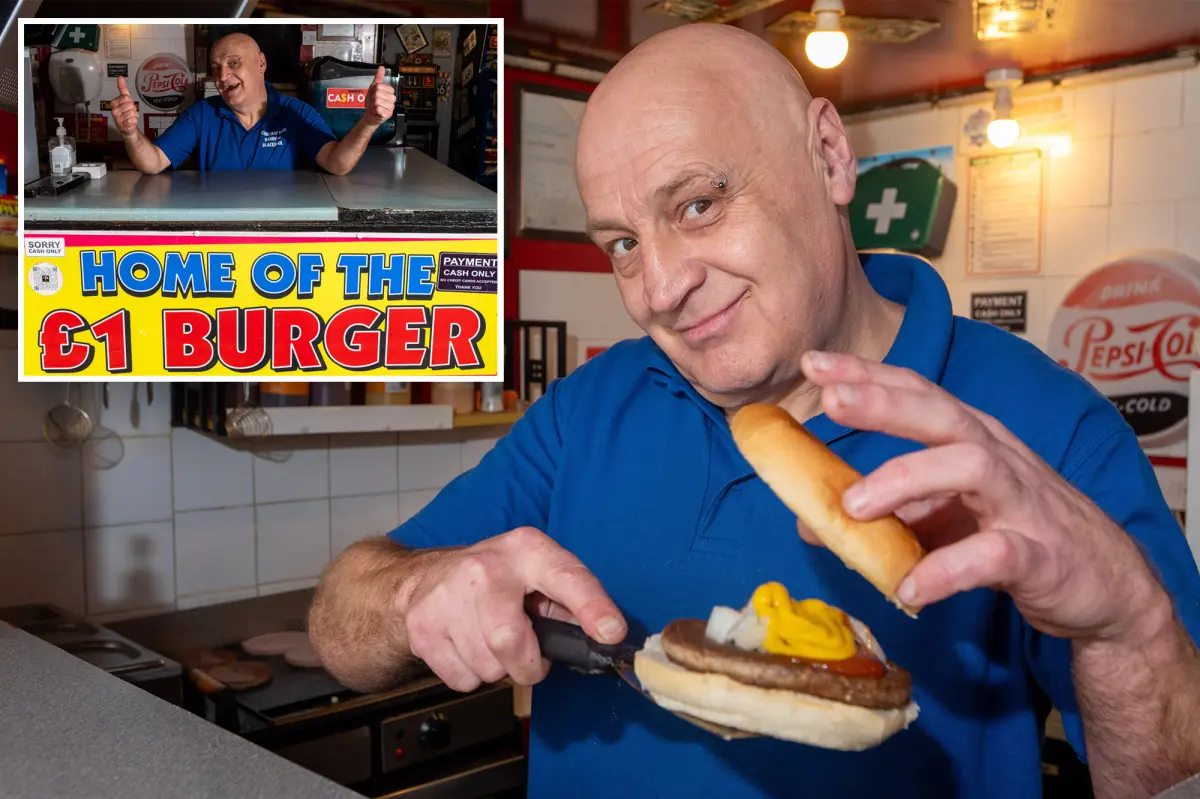
Blackpool has long held a cherished, if beautifully chaotic, place in the heart of the British cultural landscape. Known for its dazzling autumn illuminations, its historic wooden rollercoasters, and its salty, wind-whipped promenades, this iconic seaside resort town has welcomed generations of working-class families seeking a pocket-friendly escape from the daily grind. Yet, as the years have rolled on, the cost of modern life has steadily crept upward, turning once-affordable family holidays into luxury expenditures. Amidst this challenging backdrop of rising prices, energy crises, and soaring inflation, a small storefront situated in the heart of the town’s bustling tourist hub stands as a remarkable monument to stubborn affordability and community spirit. At Higgitt’s Las Vegas Arcade Blackpool & £1 Burger Bar, time has seemingly stood completely still for nearly twenty years. The owner, 58-year-old Chris Higgitt, has managed an extraordinary economic feat that defies the traditional laws of modern commerce: he has kept his signature burger priced at exactly one pound sterling—roughly $1.34 in US currency—since the day he first fired up the grill in 2006. Walking down the bustling street, the rich, savory aroma of sizzling sweet onions and grilling beef serves as an irresistible beacon for hungry holidaymakers, pulling them toward a simple yet comforting culinary experience that has transformed from a quirky local bargain into a legendary British institution. For Chris, this endeavor is not merely a clever marketing gimmick or a temporary promotional stunt; it is a labor of love, a testament to operational efficiency, and a source of deep personal pride that brings a sense of comfort and accessible joy to thousands of visitors each year.
Before the sizzle of burgers on the flat-top became the defining soundtrack of his daily life, Chris Higgitt’s career path was rooted in precision, measurement, and systemic design. He spent his early working years as a processing and quality engineer, a profession that trained his mind to spot subtle inefficiencies and analyze complex metrics with meticulous care. Eventually, seeking a change of pace and a new challenge, Chris and his wife, Karen, decided to try their hand at the hospitality industry, operating a local bed-and-breakfast that allowed them to connect directly with the town’s visitors. In 2006, they took another massive leap of entrepreneurial faith by purchasing a traditional Blackpool amusement arcade. However, they soon discovered that the flashing neon lights and rhythmic clatter of the coin-pusher machines failed to bring in the crowds they had desperately hoped for, leaving the arcade struggling to stay afloat. Facing severe financial uncertainty and the threat of failure, the couple sat down one evening to discuss their options, brainstorming practical ways to breathe new life into their business. It was during this off-the-cuff conversation that the idea of a burger bar was born. Drawing upon his engineering background, Chris immediately began running the numbers on the back of an envelope. He calculated the precise cost of buns, patties, onions, and energy, realizing that if he streamlined the grilling process to absolute perfection, he could sell a hot, fresh burger for a single coin. This mathematical exercise was the quiet spark that ignited their future; what was originally envisioned as a small side-hustle to draw foot traffic into their arcade gradually blossomed into their most lucrative venture, eventually evolving into the primary source of income for the household.
Operating a business on razor-thin margins during a time of global economic volatility requires a unique blend of discipline, logistical mastery, and unwavering dedication. Today, the burger operation accounts for an astonishing ninety percent of the couple’s total business revenue, running tirelessly seven days a week from the chilly onset of March through the golden, crisp days of November. To understand how Chris manages to keep the price of his signature burger at a single pound without sacrificing quality or driving himself into bankruptcy, one must look closely at the fine art of bulk procurement and operational efficiency. Each burger—which consists of a soft burger bun, a savory English beef patty, sweet grilled onions, and a choice of classic sauces—costs Chris approximately fifty pence (about 68 cents) to produce, a figure that incredibly includes not just the raw ingredients, but also the electricity and gas required to cook them. Achieving this level of affordability requires an aggressive, highly organized approach to wholesale purchasing; Chris buys his ingredients in massive, bulk quantities, negotiating the best possible rates with suppliers who appreciate his steady, high-volume demand. Furthermore, the utter simplicity of the menu reduces waste to near zero, ensuring that every penny spent translates directly into a product handed over to a paying customer. It is a high-volume, low-margin game where profit is found in the sheer quantity of transactions, requiring Chris to keep his grill hot and his hands moving at a lightning-fast pace throughout the long summer days.
Beyond the fascinating mathematics of the business lies a deeply human story about community, nostalgia, and the simple joy of shared experiences during tough economic times. In an era where a standard meal at a typical global fast-food chain can easily strain a family’s daily budget, Higgitt’s Burger Bar has become a vital sanctuary for budget-conscious parents, low-income travelers, and nostalgic locals alike. During the peak summer tourist season, the sidewalk outside the arcade transforms into a lively, bustling gathering place where people from all walks of life patiently wait in queues that can stretch down the street, with wait times occasionally exceeding an hour. Yet, there is rarely any frustration or impatience in this line; instead, there is a warm, collective buzz of anticipation. Families chat, strangers laugh, and children wait eagerly, united by the shared experience of waiting for Britain’s most famous budget meal. Chris relishes this social atmosphere, taking immense pride in the fact that he can offer a hot, satisfying meal to a struggling family of four for less than the cost of a single cup of artisan coffee elsewhere. He recognizes that for many of his loyal customers, his stand is not just a place to grab a quick, cheap bite, but a crucial element that makes their annual trip to the seaside financially viable. In a world that often feels increasingly cold and commercialized, Chris’s commitment to his customer base represents a rare act of economic empathy, proving that business success does not always have to come at the expense of human connection.
While old-school word-of-mouth has historically been the lifeblood of seaside businesses, the digital age has catapulted Higgitt’s Burger Bar into a full-blown viral sensation, introducing the charm of Blackpool’s one-pound burger to a global audience. In recent years, social media platforms like TikTok and YouTube have become powerful drivers of intense foot traffic to the stand, as curious content creators and food bloggers travel from far and wide to document their visits. Young influencers film themselves waiting in the famous queue, expressing genuine awe as they take their first bite of a freshly grilled burger cooked by Chris himself, often marveling at how such quality can be sustained at such a low price point. Rather than being overwhelmed or annoyed by the sudden influx of cameras, rings lights, and smartphones, Chris has warmly embraced this modern wave of publicity. He enthusiastically welcomes these internet personalities, posing for photos, sharing his story on camera, and feeding off the vibrant, infectious energy that these young digital nomads bring to his establishment. This organic, crowdsourced marketing has introduced his traditional British burger stand to a brand-new generation of tech-savvy foodies who might otherwise have overlooked Blackpool’s historic promenade. The internet has transformed his humble stall from a local secret into a trendy, bucket-list destination, proving that authenticity and genuine value possess a timeless, universal appeal that resonates just as strongly online as it does on the rainy streets of Lancashire.
As the autumn sun sets over the Irish Sea and the iconic Blackpool Illuminations begin to light up the night sky, Chris Higgitt’s burger bar stands as a quiet triumph of human resilience and entrepreneurial spirit. By expanding his simple menu over the years to include other nostalgic, comforting British favorites like hot dogs, sausage sandwiches, and thick-cut Spam sandwiches—all served with the same commitment to value—Chris has created an enduring culinary legacy that honors the working-class roots of Blackpool. He remains deeply humble about his achievements, preferring to credit his success to quiet hard work, his wife Karen’s partnership, and the unwavering support of the public. At its core, the story of the one-pound burger is not simply about cheap food or clever accounting; it is about a man who looked at a struggling business, applied his mind to solving a problem, and ended up creating a beloved community anchor that has weathered two decades of massive cultural and economic shifts. In a fast-paced world that constantly pressures businesses to maximize profits and raise prices, Chris’s steadfast dedication to keeping his signature burger affordable serves as a comforting reminder of what is possible when a business owner prioritizes people over margins. As long as the shutters are up and the grill is hot, Chris Higgitt will be there, spatula in hand, ready to serve up a taste of nostalgic joy to anyone with a single pound and a healthy appetite.