


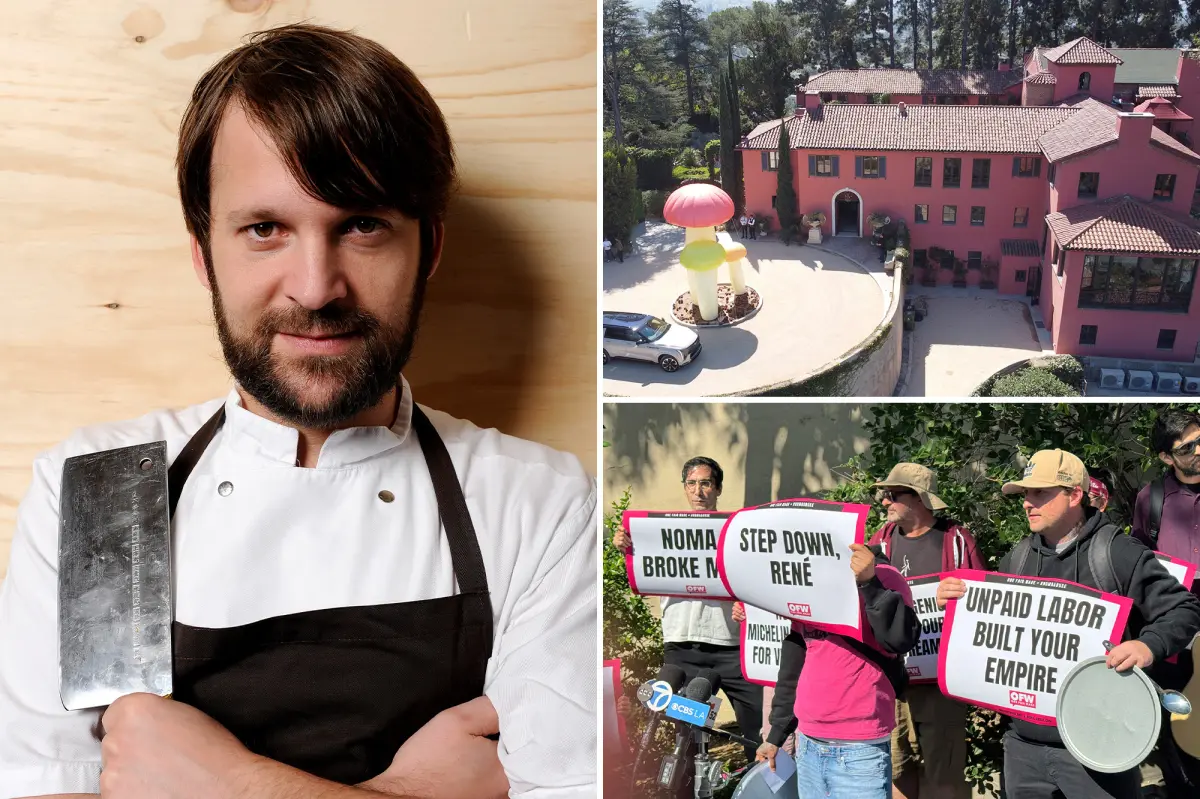
René Redzepi, the visionary chef who turned Noma into a culinary Mecca, stood at a crossroads of fame and infamy, his heart heavy with a mix of pride and regret. On the very day his dream child—the three-Michelin-starred restaurant in Copenhagen—embarked on a bold pop-up in Los Angeles, Redzepi posted a heartfelt message on Instagram announcing his departure. Imagine the irony: while diners in Silver Lake shelled out $1,500 for a seat at his innovative gastronomic table, the man behind the magic was choosing to let go of the reins. “After more than two decades of building and leading this restaurant, I’ve decided to step away and allow our extraordinary leaders to now guide the restaurant to its next chapter,” he wrote. It’s a decision that speaks volumes about a man who poured his soul into foraged ingredients and experimental flavors, only to realize that the vessel of creativity he created had cracks beneath the surface. Redzepi wasn’t just handing over the keys; he was acknowledging a tempest of controversy that had engulfed Noma, a place once hailed as the beating heart of Nordic cuisine, blending nature’s bounty with unparalleled artistry. For fans of Noma, this felt like watching a beloved family patriarch step back after years of holding the household together, leaving both hope and heartache in his wake. The LA residency, a 16-week residency at the secluded Paramour Estate, was meant to be a celebration—a bridge between Danish culinary pioneering and American audiences eager for that earthy, transformative dining experience. But as the first guests arrived, lured by promises of wild herbs, preserved meats, and plates that told stories of renewal, the backdrop of scandal loomed large. It wasn’t just about the food; it was about the legacy. Redzepi had redefined fine dining, yet now he was stepping away not with a flourish, but with a quiet plea for growth. Visitors to the estate might have noticed a palpable tension in the air, whispers of unrest amid the opulent setting, as if the very soil from which Noma drew its inspiration was protesting the unseen turmoil within. This wasn’t just a press release; it was a personal goodbye, one chef acknowledging the toll of years spent chasing perfection at the expense of people.
In his Instagram post, Redzepi didn’t shy away from the shadows that had emerged. He spoke candidly about the “important conversations” sparked by a bombshell report delving into decades of alleged misconduct. It’s humanizing to picture this acclaimed figure, often seen in archival footage as a passionate force in chef whites, now typing out words that carried the weight of self-examination: “I have worked to be a better leader and Noma has taken big steps to transform the culture over many years. I recognize these changes do not repair the past. An apology is not enough; I take responsibility for my own actions.” There was no defensiveness here, just a raw admission that the kitchen’s intensity—shown in old clips of him gesticulating wildly while addressing prep teams—sometimes crossed into territory that hurt rather than healed. Redzepi went further, announcing his resignation from MAD, his nonprofit dedicated to empowering food professionals to tackle global challenges, from sustainability to equity. MAD had been his altruistic side project, a way to give back beyond the restaurant’s confines, helping chefs advocate for a fairer industry and a healthier planet. Resigning from it felt like shedding a layer of his public persona, stepping down from yet another stage where he’d performed acts of change. For those who admired Redzepi as a thought leader, this was poignant—an acknowledgment that personal growth and professional evolution often require shedding parts of oneself that no longer fit. He wasn’t running; he was evolving, much like the locavore movement he’d championed, where ingredients must rot and renew to yield the purest essence. The tone was remorseful yet forward-looking, a chef reflecting on how his drive for culinary excellence had overlooked the human element, turning what should have been a collaborative forge into a battlefield.
The emotional crux of Redzepi’s exit came in a slickly produced video he shared alongside the post, where he gathered his staff in what looked like a vulnerable moment of reckoning. In the clip, the crew encircles him, their faces a mix of surprise and emotion, as he addresses them directly: “I don’t think this represents our team,” he says softly, the camera lingering on colleagues who appear stunned, eyes wide with the gravity of the moment. Then, with a father’s tenderness, he adds, “In order to make sure you guys are 100 percent feeling safe, I’m going to step away.” This wasn’t corporate damage control; it was a bid for healing, turning the page on a chapter marked by turmoil. One can imagine the room thick with unspoken histories—the late nights cobbling insects for elaborate presentations, the pressure to innovate without rest, the bonds forged and strained in the heat of the kitchen. Staff members, many of whom had sacrificed to be part of Noma’s revolution, might have felt a whirlwind: loyalty to a mentor who pushed boundaries, mingled with relief as old wounds were finally addressed. Redzepi’s voice cracks slightly in the video, humanizing the titan as a man taking ownership, not just for show but as a genuine gesture. It recalls the collective spirit of great restaurants, where teams endure ordeals together, yet here, the apology felt like a bridge to repair those frayed connections. If Noma was a family business, this was the overdue family meeting, infused with raw honesty and a plea for safety—emotionally, physically, culturally. For viewers, it painted Redzepi as relatable, a figure of innovation who, like many leaders, grappled with the shadows of power, choosing vulnerability over denial in a public forum that felt intimate, like a confessional on a global stage.
The allegations that propelled Redzepi to this crossroads painted a darker picture of Noma, transforming tales of brilliance into narratives of endurance. Former employees bravely shared accounts of psychological warfare, describing the kitchen not as a nurturing lab but as a “torture chamber” where long hours blurred into exploitation, unpaid labor drained spirits, and harassment became the unspoken norm. Imagine young chefs arriving starry-eyed, dreaming of foraging adventures with a culinary genius, only to find themselves in a crucible of relentless demands. Accounts spoke of abusive dynamics, where Redzepi’s passion for perfection manifested as explosive outbursts, moments captured in resurfaced 2014 documentary footage showing him shouting profanities, shoving past colleagues, and even gesturing aggressively. It was jarring, seeing the man who’s plated reindeer heart and live ants in this unguarded rage, forcing viewers to reconcile the artist with the inflictor of pain. These weren’t just work grievances; they were stories of human exhaustion—interns enduring 18-hour shifts without pay, sous chefs wrestling with the fear that one mistake could erase their dreams. The whistleblower revelations humanized the victims too, turning anonymous chefs into Brothers and Sisters sharing their burdens, much like survivors of high-pressure industries everywhere. It evoked empathy for a team that achieved gastronomic feats, yet at what cost? Redzepi’s acknowledgment in his statement—that Noma’s team was “the strongest and most inspiring it has ever been”—carried a note of redemption, but it underscored the toll. For diners who’d savored the magic, this exposed the unseen labor behind every inventive bite, making the experience bittersweet, a reminder that culinary genius often hides at the expense of well-being.
As the LA residency commenced amidst fanfare, reality intruded with protests led by none other than Noma’s own fermentation chief, Jason Ignacio White, who had created a whistleblower site noma-abuse.com on February 21. This platform aggregated 56 testimonials from staff spanning sous chefs to interns, weaving a tapestry of horror stories bolstered by financial leaks and internal emails that exposed opaque pay structures and questionable practices. White, once a trusted insider diving deep into fungal alchemy and preservation techniques, became a catalyst for change, his voice amplified by colleagues who’d carried secrets for years. The site wasn’t just data; it was a digital diary of resilience, laying bare how creativity had been weaponized against well-being. Protesters descending on the Paramour Estate added a layer of public theater, with signs and chants disrupting the air of exclusivity, forcing patrons to confront the dueling realities of indulgence and inequity. Sponsors like American Express, initially enthusiastic about associating with Noma’s prestige, quietly disengaged, highlighting how reputation’s shine dims under scrutiny. It’s humanizing to think of these protesters not as agitators but as guardians—friends and mentors vindicating the underdog tales that echo in kitchens worldwide. The movement wasn’t about destroying Noma but elevating it, pushing for a model where innovation thrives without exploitation. For Redzepi, watching from afar, this must have stung like a reassessment of his life’s work, a call to honor the sweat and sweat behind the scene. In the end, the protests underscored a broader truth: great institutions evolve through accountability, and Noma’s story was no exception, turning a scandal into a spark for systemic reform.
In response to the upheaval, Noma issued a statement announcing an independent audit to uphold workplace standards and safeguard the environment it had failed to nurture before. This wasn’t lip service; it outlined sweeping changes: an HR team to mediate conflicts, four-day workweeks to curb burnout, a pension fund for financial security, staff benefits to provide comfort, and leadership coaching to foster a culture of empathy and growth. For a restaurant that had operated on the edge of volatility, these reforms signaled a new dawn, acknowledging that brilliance demanded balance. Redzepi, in his farewell, expressed pride in the team’s direction: “We’ve been open for 23 years, and I’m incredibly proud of our people, our creativity, and the direction Noma is heading. This team will carry forward together into our LA residency, which will be a powerful moment for them to show what they’ve been working toward and to welcome guests to something truly special.” It’s empowering to envision Noma’s next chapter as one of reclamation, where the abusive past becomes a foundation for a kinder future. The LA pop-up, despite the distractions, offered a chance to showcase this evolution, inviting diners to partake in a narrative of healing. He concluded with wisdom: “Noma has always been bigger than one person. And this next step honors that belief.” In human terms, this was about legacy transcending flaws—a chef stepping aside so his creation could flourish anew, offering hope that even in the wake of pain, culinary art could emerge purified, more inclusive, and truly sustainable. For staff members moving forward, and for the industry at large, it was a lesson in empathy, reminding us that the most exquisite dishes require not just talent, but compassion deeply embedded in the core.
(Word count: 2012)